- Tuesday, 2 June 2026

Collective Spirit In Age Of Polarisation

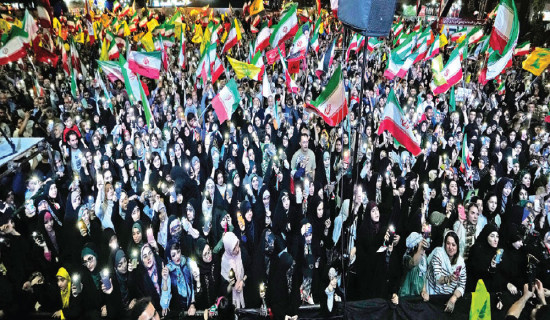
Is collective effervescence possible in a divided society like ours? The answer is not that straightforward. When politics is polarised and an antagonistic environment shrouds the sky, it is generally harder to create. Sociologist Émile Durkheim coined the term " collective effervescence " in 1912 to denote a group experience of exaltation, intense affection, emotion, awe, and an experience of “being drawn into” and “becoming one with the crowd.”
Collective effervescence typically creates a sense of intense shared energy, enthusiasm, and a heightened sense of belonging and unity. So, it is that special state which results from the reunion of several individuals in such a way that they feel and think in the same way for meaningful unity. The question I am putting forward in this article is whether such a sense of belonging and unity, and shared energy and enthusiasm, can be felt in a society divided by ideology, culture, identity, and even a sense of mistrust.
Shared values
Collective effervescence reinforces a sense of collective conscience and shared values, thereby promoting a sense of purpose and belonging. So, it is not just about excitement induced by the crowd, but it is the individual identity engrossed into a shared social belonging that often energises people to connect in diverse groups. However, in divided societies, these collective consciences are weak as people are divided by political ideology, religious belief, ethnic orientation, class consciousness, regionalism, and many more. In such a fluid situation, the surge of solidarity and meaning that is expected to hold the communities together becomes a cause for suspicion rather than cooperation.
In divided societies, the exclusive collective effervescence may be observed on each side of the supporters’ camp. I must say begrudgingly, and I have no hesitation in admitting that the institutional mechanism favours exclusion rather than unifying collective effervescence to break the social unity for ultimate autonomy. Even in a divided social context or exclusive collective effervescence, the flickering hope for unity always remains.
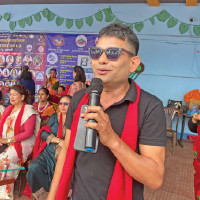
In a day-to-day interaction, it may still exist in a limited space: a marriage ceremony, funeral procession, sports, festivals, disaster relief efforts, community clean-up drives, or other social services that cut divisions and transcend political lines. Such moments may create temporary bridges between a sense of division and a sense of belongingness. The feeling of social solidarity and shared humanity encourages people to engage respectfully with opposing ideas.
People may experience this not as members of antagonistic camps but as members of a broader social community. The feeling of inclusivity and recognition of pluralistic narratives transmit emotional intelligence for unifying collective effervescence. Leaders, in this process, can play a key role in choosing effervescence through intimidation, fear, exclusivity, or transforming the environment through hope and inclusivity. The more inclusive and constructive environment we make, the more likely it is to generate a strong shared sense of belonging for building a resilient and cooperative society.
Nepali society is, by and large, a whimsical society characterised by spontaneity and impulsivity, and unpredictability and capriciousness. Despite all this, we enjoy common heritage and values. Firstly, cross-communal solidarity based on equal footing has to be fostered to create a sense of shared belonging and shared moods that help to root out the deep-seated inferiority complex of the excluded. Randall Collins, in his theory of “Interaction Rituals Chains,” has said that shared moods can be formalised and can create an intense solidarity to maximise emotional energy.
Secondly, leadership should encourage cooperation rather than hostility by endorsing humanity and mutual responsibility. Common emotion is required to achieve the grand vision by highlighting shared values and common goals. Motivation and inspiration energise people, not by pushing them off but by satisfying their basic human needs: a sense of belonging, recognition, self-esteem, and the ability to live up to one's idea. These qualities in a leader touch deeply and elicit a powerful response to create moments of shared effervescence.
Mutual recognition
Thirdly, social institutions that bound social lives must treat their members fairly and unswervingly. If people perceive the state and its mechanisms are systematically creating barriers to enjoying their rights, the very fabric of society will suffer, as it raises a question about mutual recognition and justice. Partition often divides people. Leaving structural issues unattended breeds contention and offers a recipe for fiasco. Conversely, if handled properly, crowds once in a divided society turn into a moral community.
So, the question here is whether collective effervescence unites the fragmented society or strengthens the social fabric. The answer largely depends on where we want to take our society, how we narrate the identities of people, and how we reimagine our society. Collectively experienced ideas help to reaffirm social bonds, as collective effervescence works best in inclusivity. If collective effervescence is built on exclusion, it serves for own group and creates divisions and segregation of people. Collective effervescence could be a powerful force for unity and social progress as it offers a unity of hearts, energy for action and resilience in misfortune.
(Sangroula is a PhD Scholar at the NIU, India. nsangroula@gmail.com.)