- Sunday, 7 June 2026

Unsafe Roads Crisis
The average life span of a Nepali is 71 years, yet the mortality rate indicates the death prematurely before reaching that age. As a Nepali, a so-called short-lifespan recipient, have you ever wondered how many people die daily in road fatalities? Well, this is the most genuine and common question that arises in everyone's mind. According to the report published by Nepal Police and the Asian Transport Observatory, there are more than 75 accident cases occurring daily, resulting in the death of an average of eight people every day. This data reflects the death of 2,900 people on average annually. Seeing this harsh and painful truth raises questions over passengers' safety. We witness such situations but are forced to stay silent, which marks questions over our humanity.
The budget gets allocated for roads and transportation on an annual basis under the Ministry of Physical Infrastructure and Transport, yet no one knows what progress is being made here in this sector or how that budget is being utilised. The questions remain unanswered, and the budget gets into the pockets of those bribed and corrupt position holders, resulting in the least development and the deaths of so many innocent Nepalis every day. Likewise, the obsolete and third-grade transportation means of foreign countries become the first priority of Nepal and its transportation system, leading to a higher probability of road fatalities and transportation mismanagement.
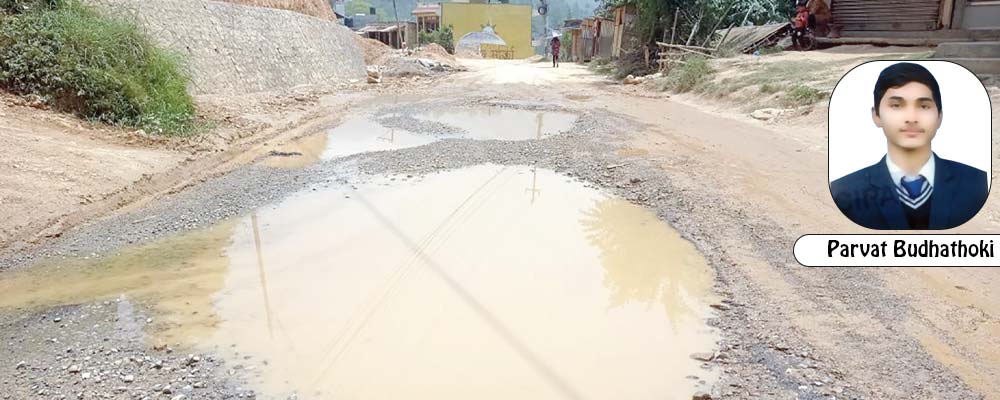
When talking about the road accidents in Nepal, how can we forget our roadways? The budget segregated for road development is divided among several position holders, and the work is completed by the remaining portion after the division among involved parties. Moreover, the foreign grants and other financial support provided by other countries are mismanaged and misused, hindering the development prospects of the road and transportation systems. Furthermore, the country lacks strong law and regulatory implementation. Due to the less availability of traffic signals, unplanned diversion lanes, U-turns and overloaded vehicles increases the probability of such life-taking accidents.
The abovementioned causes have unwillingly pushed us into risks of accidents and fatalities by bringing extreme repercussions. Road accidents not only take the lives of victims but also take the hope, dreams and ultimate support of many families.
Several cases of accidents are still pending in the court where the victimised families haven't got even the corpse of their beloved ones. The transportation system has become so weak and fragile that every parent has to think 100 times before letting their children go out for their work, either in a personal vehicle like a scooter or motorbike or in public transportation like a bus and taxi.
These harsh realities are to be underscored as the primary focus of improvement. When the system is stagnant, the progress vanishes. When the position holder of the system is reluctant, the development is hindered. If this similar tragedy gets continuity, then the numbers might get more massive in the coming days – situations for which we are never ready. As citizens, we have our own rights to fight against injustice and unethical acts. For the sake of those victims and for the safety and prosperity of coming generations.
Bachelor-level, Nepal Business College, Biratnagar