- Friday, 1 May 2026

Citizenship through mother's name still a far cry
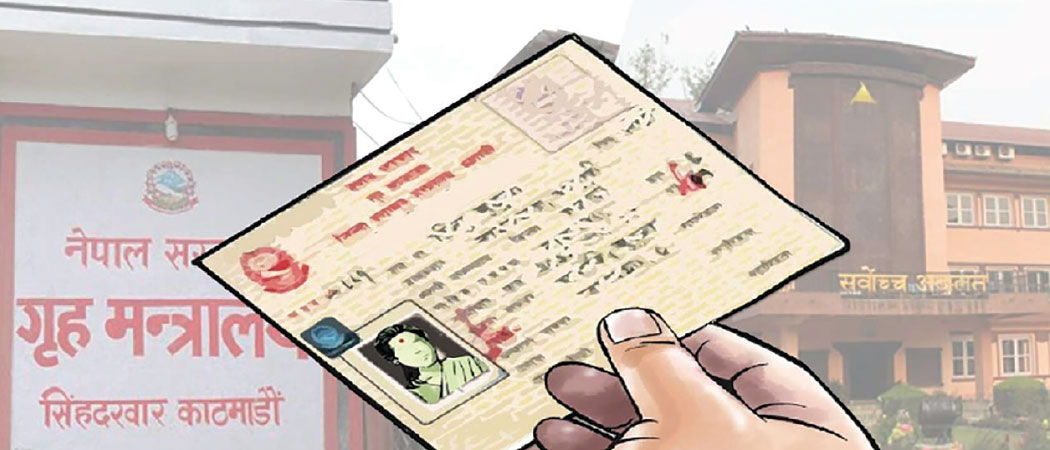

By A Staff Reporter,Kathmandu, April.1: Ramesh Dahal (name changed), 36, from Kaski, has become a stateless Nepali despite being born and raised in Nepal, as government authorities have denied him citizenship. He has been deprived of citizenship because his father was an Indian citizen.
Although the government has introduced provisions to grant naturalised citizenship from the name of the mother, Dahal has still been unable to obtain it. Authorities have asked him to provide proof that he has not acquired citizenship from his father’s country. However, he is unable to do so as his father has already passed away.
“I have already crossed the age of opportunities, including employment and business. How can that be compensated? Now I am taking medication for anxiety disorder,” he said.
Similarly, Ramila B.K. (name changed) from Palpa received citizenship by naming her uncle as her father, as her biological father died when she was just two years old. However, her brother has been unable to obtain citizenship because their uncle refused to be listed as his father, fearing property obligations since he is a male heir.
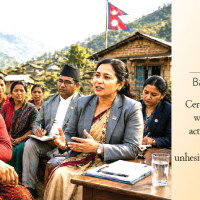
Speaking at an interaction programme organised jointly by the Citizenship Affected People’s Network (CAPN), Nationality For All (NFA), and the Global Campaign for Equal Nationality Rights (GCENR) on “Citizenship through the Mother’s Name: Reforms, Challenges, and Constitutional Amendments,” participants shared that though the new constitution allows to provide citizenship through mother's name many Nepali are still unable to receive it and many are able to acquire citizenship only after long suffering.
Though the constitution has insured the rights to citizenship even from the name of mother, still many Nepali women are unable to pass their nationality to their children, resulting in many Nepalis being compelled to be stateless.
These non-citizens shared their difficulty in finding jobs, pursuing higher studies, and even getting married. Without citizenship, SIM card, PAN card, driving licence and other such benefits are also impossible.
The Constitution of Nepal 2015 has established gender equality and descent-based rights as fundamental rights.
Although recent amendments to the Citizenship Act have shown some positive progress, stakeholders note that challenges remain in practical implementation. Provisions centred around the absence of father’s identity have been limiting the rights of mothers, Neha Gurung, campaigner of Citizenship Affected People’s Network (CAPN) said.
Under Article 11(5) and 11(7) of the constitution, mothers are required to fulfill additional conditions to confer citizenship to their children, whereas no such conditions apply to fathers. This creates a situation where women and their children are effectively treated as second-class citizens, she stated.
In practice, obtaining citizenship through the mother involves administrative barriers, complicated documentation requirements, pressure for self-declaration, and sometimes even legal risks. This has caused psychological, social, and economic impacts on affected families.
Participants of the programme demanded to ensure the right to obtain citizenship through mother’s name in an equal, dignified, and hassle-free manner, and to urge the government to eliminate remaining discriminatory provisions in the constitution.
According to Citizenship Affected People’s Network, various studies have shown that equal citizenship rights play a significant role in a country’s economic and social development. Children and youth who can easily obtain citizenship through their mother gain better access to education, healthcare, banking services, and employment opportunities.
At a time when 172 out of 195 countries worldwide, approximately 88%, have ensured gender equality in their citizenship laws, Nepal still faces legal and practical barriers. Although Nepal’s constitution provides for citizenship through the mother’s name, these provisions are conditional and ultimately dependent on the father’s identity.
It was highlighted that only 24 countries, including Nepal, still maintain gender-discriminatory citizenship laws affecting a mother’s ability to confer citizenship to her children. In the Asia-Pacific region, only four countries including Nepal and in South Asia, Nepal alone retains such discriminatory provisions.