- Sunday, 31 May 2026

Representation Must Lead To Empowerment
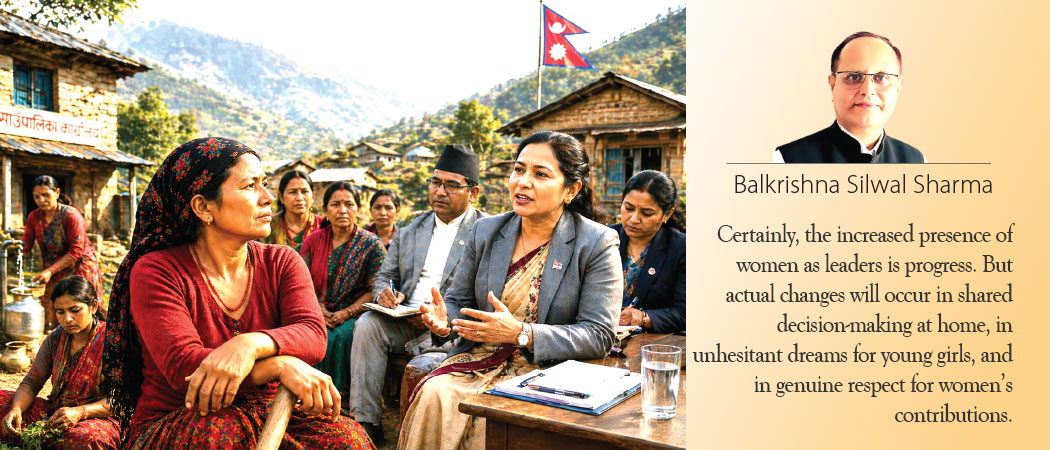

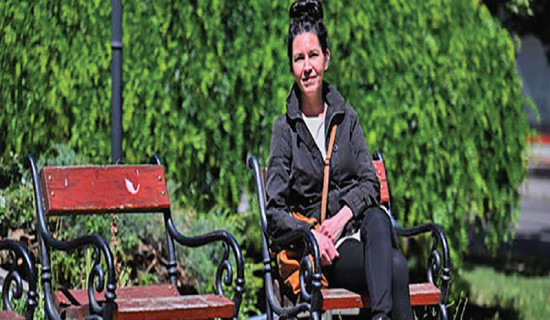
In a small village of the Jumla district in Karnali Province, Rupsari Nepali wakes before dawn. She prepares food, fetches water, cooks for the family, tends livestock and works in the fields. By midday, she has already finished what many would call a full day’s work. Yet when decisions are made—about health, land, income, or her children’s future—her voice is often soft or simply missing. Her husband, Tek Bahadur Nepali, works abroad. The remittance he sends keeps the household running, but the control over that money does not always rest with her. Her story is not unique – it is quietly shared by millions of women and girls across Nepal.
After the March 2026 national elections, women now hold around 33 per cent representation in Parliament and the Council of Ministers. This is, without doubt, an encouraging shift. It reflects years of struggle and constitutional commitment. But the real question is whether this presence in power will translate into change in the daily lives of women like Rupsari.
For decades now, Nepal has made robust laws and structures on gender equality and social inclusion. The constitution of the country ensures that such rights are provided to its citizens. However, there are various plans and structures for the implementation of these rights at the federal, provincial, and local levels. The challenge comes when these promises remain on paper for many Nepali women. The gap between policy and practice remains wide. Federalism was meant to bring governance closer to the people. In some ways, it has done that. However, it has also exposed the inconsistent capability among the various tiers of governance. Local authorities, who are charged with many responsibilities, may be under-resourced, unclear and unsupported. Inaccessibility is the result of this inconsistency. For women living in rural regions, it means inclusion, or even exclusion.
Social conventions have remained influential despite being invisible in day-to-day activities. Women are to take care of people, to contribute, and to adapt themselves to changing circumstances. Women are providers rather than decision-makers. These expectations quietly decide who speaks and who remains silent. Women make up more than 51 per cent of Nepal’s population and contribute significantly to the economy – through agriculture, informal work and unpaid care. Access to land, credit, skills, and livelihood opportunities, however, remains constrained. The trend towards migration has only served to complicate things. With men migrating for work, women have increasingly taken on greater roles within the family and outside of it as well. However, the assumption that greater responsibilities lead to greater empowerment does not hold true. Decisions continue to be made, but by men who have migrated out or by elders within communities.
Empowerment, therefore, goes beyond mere participation and involves recognition, decision-making and resource control. Another point worth considering when dealing with the issue of empowerment among women is that experiences differ according to their context. While women are united through gender, there are other social determinants like caste, ethnicity, geographical isolation, disabilities and even poverty that make matters worse for some.
Even public expenditure has its own narrative. Gender-responsive budgeting is being used in Nepal, but it hasn’t produced any significant outcomes yet. In some cases, funding is not done specifically for advancing gender equality, stating that any infrastructure benefits everyone. This statement might be partially true, but it misses out on the bigger picture, i.e., structural inequalities that need to be addressed. The budget allocation for gender-specific initiatives is often low, untraceable and overshadowed by the larger budget.
In spite of this progress, gender statistics are still underdeveloped in some fields such as unpaid care work and intersectional inequalities. Another development that can be observed is the increasing participation of women, mainly young women, in decision-making processes. This brings about opportunities and should be harnessed effectively. However, merely getting women to occupy certain positions will not bring in any change. Women leaders still have to rely on other people for their power and influence.
Women’s groups or organisations have existed at the community level for a long time now. They provide support to each other, help spread awareness and advocate. Their experience sometimes includes issues that aren’t addressed at the policy level. Increasing their engagement with policies can help bring in necessary changes. Ultimately, gender equality does not have to do only with rules and organisations. Gender equality is about whether women like Rupsari can rise from passive participants to active participants in their own lives.
Certainly, the increased presence of women as leaders is progress. But actual changes will occur in shared decision-making at home, in unhesitant dreams for young girls, and in genuine respect for women’s contributions.
(The author is an international development consultant.)