- Sunday, 3 May 2026

Rafting business on Marsyangdi comes to standstill
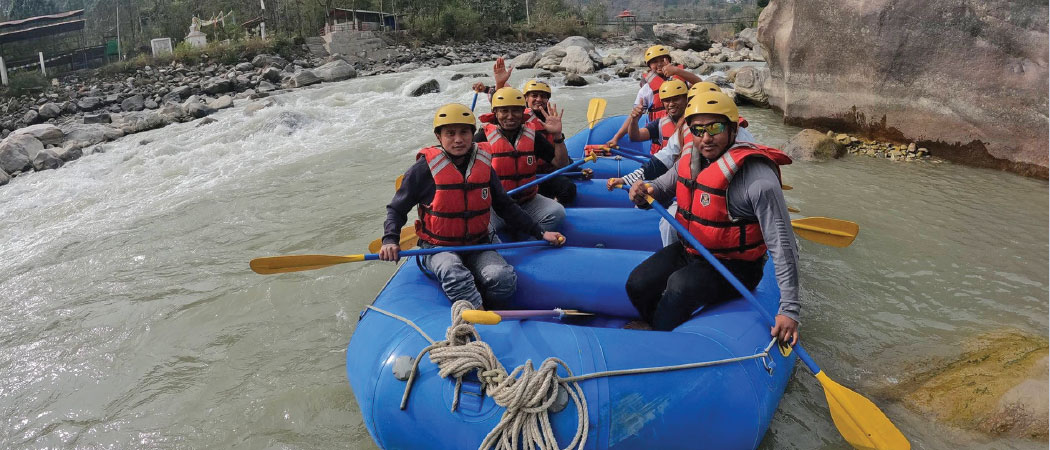
Photo: Nabin Raj Kuikel/ TRN Rafting on the Marsyangdi River during the festival.

By Nabin Raj Kuikel,Lamjung, Feb. 4: Floating on a fast-flowing river is a unique kind of thrill. For the more adventurous, riding a boat adds an extra degree of excitement.
That is why, a few years ago, the Marsyangdi River attracted large crowds of boaters seeking respite in its cool waters during the summer season.
From January/February to May/June and October to mid-December, the Marsyangdi River was teeming with boats, racing in groups (rafting) and individually (kayaking).
At one time, the Marsyangdi was the top choice for adventurous foreign river travelers, as it was considered one of Nepal’s premier rafting destinations.
As rafting flourished, hundreds of hotels were built along the riverbanks. During the peak season, thousands of people found employment in businesses along the Marsyangdi. The riverbanks once had a unique charm that drew both tourists and locals alike.
However, today, the banks of the Marsyangdi are deserted. Rafting professionals report that the number of people rafting on the Marsyangdi has been virtually zero for the past decade.
Bharat Kumar Shrestha, President of the Lamjung Chamber of Commerce and Industry, said that most of the hotels established along the Marsyangdi have closed after foreign river travelers stopped visiting.
Until ten years ago, boatmen would travel from Besisahar, district headquarters of Lamjung, to Ngadi via Bhulbhule, returning by rafting. Before the construction of the Besisahar–Chame road, boats ferried people from Besisahar to Bhulbhule, providing significant employment opportunities.
According to rafting guide and Dordi Rural Municipality Chairman Yuba Raj Adhikari, rafting on the Marsyangdi River used to start from Bhulbhule in Lamjung and continue all the way to Narayangadh in Chitwan.
The journey from Bhulbhule to Narayangadh used to take five days. After the construction of the Marsyangdi Hydropower Project in Khaireni, Tanahun, the trip was shortened to three days. Later, the construction of the Madhya Marsyangdi Hydropower Project in Udipur, Lamjung, reduced the rafting route even further.
Now, with multiple hydroelectric projects along the Marsyangdi, rafters have largely stopped coming. Today, rafting requires arduous journeys between Khudi and Udipur, Paundi and Bimalnagar in Tanahun, and Khaireni to Narayanghat in Chitwan.
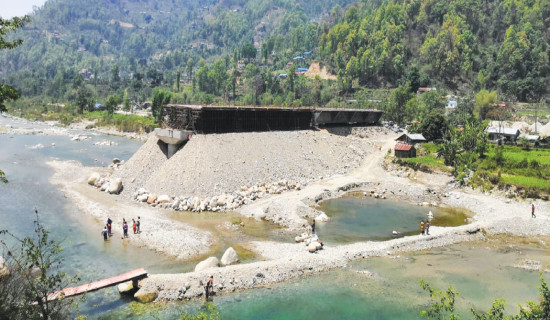
Three large hydroelectric projects built along the Marsyangdi, coupled with stones left uncleared after floods and landslides, has made rafting increasingly difficult. As a result, the river’s charm has diminished, and income from water tourism has disappeared.
Rafting is now no longer a commercial activity and is carried out only during festivals and fairs. The Lamjung Chamber of Commerce and Industry recently organized rafting and kayaking on the Marsyangdi River as part of the ninth Lamjung Festival.
Short-distance rafting packages were arranged during the festival to promote the activity.
Krishna Jung Gurung, coordinator of the 9th Lamjung Festival Tourism Subcommittee, said the subcommittee has launched commercial rafting packages from Pumakhola Dobhan in Besisahar-6 to the pond of the Madhya Marsyangdi Hydropower Project, and from Belauti Bisauna in Besisahar-6 to the same destination.
Ram Thapa, coordinator of the Marsyangdi River Save Campaign, Besisahar, emphasized the importance of preserving the river to protect the rafting business.
He said, “Only a small portion of the river remains in Besisahar. It must be preserved for its natural beauty, aquatic life, and rafting potential. Tourism should also be promoted, rather than focusing solely on hydropower.”
-square-thumb.jpg)
-original-thumb.jpg)