- Saturday, 9 May 2026

Call For Awareness Of Rare Diseases

Rare diseases, often referred to as orphan diseases, affect a small percentage of the population but have a significant impact on the lives of those affected. These conditions, often characterised by their complexity and lack of treatment options, pose unique challenges for patients, their families, and the healthcare system as a whole.
Rare diseases encompass a wide range of conditions, affecting an estimated 350 million people worldwide. Despite their individual rarity, collectively, these diseases create a significant public health concern. Unfortunately, due to their limited prevalence, rare diseases often receive less attention and funding compared to more common ailments. This lack of awareness perpetuates a cycle of neglect, leaving patients and their families feeling isolated and unsupported.
Challenges
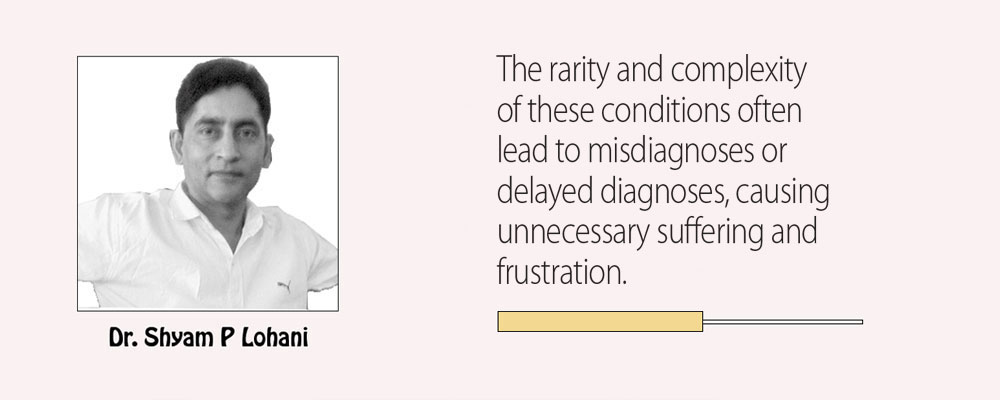
One of the most significant challenges faced by individuals with rare diseases is the difficulty in obtaining an accurate diagnosis. The rarity and complexity of these conditions often lead to misdiagnoses or delayed diagnoses, causing unnecessary suffering and frustration. Moreover, the lack of treatment options for many rare diseases further compounds the problem, leaving patients with limited or no therapeutic interventions. This underscores the urgent need for increased research and development efforts to find effective treatments and potential cures.
Another challenge in studying rare diseases is the scarcity of data. Due to their low prevalence, it is often difficult to gather sufficient information to conduct robust research studies. This lack of data hampers our understanding of the disease prevalence, risk factors, and natural history, making it challenging to develop effective prevention and treatment strategies. This further complicates epidemiological studies, as accurate and timely diagnosis is crucial for identifying affected individuals and tracking disease progression. Improved awareness among healthcare professionals and the development of diagnostic tools can help address this issue.
Rare diseases have various medical conditions and each of them has unique genetic and clinical characteristics. This heterogeneity poses a significant challenge in conducting epidemiological studies, as researchers must account for the genetic complexity and diverse manifestations of these diseases. Collaborative efforts and advancements in genetic sequencing technologies can aid in unraveling these complexities.
The absence of standardised definitions and classifications for rare diseases hinders the comparability of epidemiological data across studies. This variability makes it challenging to pool data from different sources, limiting the ability to conduct meta-analyses and obtain comprehensive insights into disease patterns. The establishment of international collaborations and the development of standardised frameworks can address this issue.
Having a rare disease can be an overwhelming suffering for both the patients and their families. The physical, emotional, and financial toll can be immense, as they navigate a healthcare system ill-equipped to address their unique needs. The burden of managing symptoms, coordinating care, and advocating for themselves can be exhausting, leaving little time for patients to focus on their overall well-being. Furthermore, the rarity of these diseases often means that support networks and resources are scarce.
Raising awareness of rare diseases is crucial to breaking the cycle of neglect and providing much-needed support to those affected. Increased public knowledge can lead to earlier diagnoses, improved access to appropriate care, and enhanced understanding and empathy from society. Additionally, greater awareness can help drive research funding, enabling scientists and healthcare professionals to better understand these conditions and develop effective treatments.
Rare diseases often receive less research funding compared to more prevalent conditions. This scarcity of resources restricts the ability to conduct large-scale research studies and clinical trials. Increased investment in rare disease research can facilitate the collection of robust data, leading to improved understanding and better patient outcomes
Data collection
Establishing global rare disease registries can facilitate data collection and sharing across countries. These registries can serve as valuable resources for studies, providing a comprehensive understanding of disease prevalence, natural history, and treatment outcomes. Encouraging collaboration among researchers, clinicians, and patient advocacy groups can foster advancements in rare disease epidemiology. Collaborative research networks can pool resources, expertise, and data, enabling large-scale studies and enhancing the quality of health research.
Advancements in genetic sequencing technologies and the integration of omics data (e.g., genomics, proteomics) can provide valuable insights into the underlying mechanisms of rare diseases. Incorporating these data into epidemiological studies can enhance our understanding of disease etiology, risk factors, and personalised treatment approaches. Involving patients and their families in research can provide unique perspectives and valuable insights. Patient registries, patient-reported outcome measures, and participatory research approaches can empower patients and enhance the quality and relevance of those studies.
Rare diseases may be individually rare, but their collective impact is significant. It is our moral obligation to shine a light on these conditions, to advocate for increased support, and to promote research efforts. By raising awareness, we can empower patients, provide them with the support they need, and ultimately work towards a future where rare diseases are no longer overlooked or neglected. Let us stand together in solidarity with those affected by rare diseases and strive for a world where no one is left behind.
(Dr. Lohani is the executive director at Health Concern. lohanis@gmail.com)