- Sunday, 10 May 2026

Poor Diet Causes Sleep Disorder

In today's fast-paced world, it is not uncommon for individuals to prioritise work, social commitments, and entertainment over their sleep. As a result, sleep deprivation has become a prevalent issue, affecting millions of people worldwide. However, what many fail to realise is the significant impact that food habits can have on our sleep patterns. Sleep disorders have become a growing concern in recent years, affecting millions of individuals worldwide.
Sleep disorders encompass a wide range of conditions, including insomnia, sleep apnea, restless leg syndrome, and narcolepsy, among others. Epidemiological studies have revealed alarming statistics, indicating that sleep disorders affect a significant portion of the population. For instance, it is estimated that approximately 30 per cent of adults worldwide suffer from insomnia, while sleep apnea affects around 10-20 per cent of adults. These numbers highlight the urgent need for comprehensive research and public health initiatives to tackle this pervasive issue.
Risks
The impact of sleep disorders on overall well-being and quality of life cannot be underestimated. Sleep disorders not only affect individuals' health but also impose a significant socioeconomic burden on society. The economic costs associated with sleep disorders are substantial, including healthcare expenses, reduced work productivity, and increased accidents. Epidemiological research can help quantify these costs, providing policymakers with valuable data to allocate resources effectively and develop targeted interventions.
Understanding the risk factors associated with sleep disorders is crucial for prevention and intervention efforts. Epidemiological studies have identified several factors that contribute to the development of sleep disorders, including age, gender, obesity, smoking, alcohol consumption, and mental health conditions. Besides, all those factors, one of the most important factors is food habits. It is important to note that sleep disorders have been linked to a myriad of health consequences, such as cardiovascular diseases, diabetes, obesity, impaired cognitive function, and mental health disorders.
It is widely recognised that what we eat directly affects our physical health. However, the influence of diet on sleep patterns and quality is often overlooked. Studies have shown that certain foods, such as those high in sugar and caffeine, can disrupt sleep patterns and lead to insomnia. On the other hand, a diet rich in nutrients, vitamins, and minerals can promote better sleep quality and duration. Therefore, it is essential to adopt a balanced diet that supports both physical health and sleep hygiene.
The rise of fast food culture has undeniably contributed to unhealthy eating habits. Fast food chains offer quick and convenient meals that are often high in unhealthy fats, sugars, and processed ingredients. These foods, while satisfying in the short term, can wreak havoc on our sleep patterns. Studies have shown that consuming high-fat meals close to bedtime can lead to disrupted sleep, increased wakefulness, and decreased sleep quality.
Another major culprit behind sleep deprivation is excessive sugar consumption. Sugar-rich foods and beverages, such as sodas, candies, and desserts, are not only addictive but can also interfere with our ability to fall asleep and maintain a deep sleep. The rapid spikes and crashes in blood sugar levels caused by consuming excessive sugar can disrupt our natural sleep-wake cycle, leaving us feeling restless and fatigued the next day.
Caffeine, a widely consumed stimulant, is known to keep us awake and alert. While a cup of coffee in the morning can help kick-start our day, consuming caffeine later in the day can significantly impact our sleep. Many individuals rely on caffeinated beverages like coffee, energy drinks, and sodas to combat daytime sleepiness caused by lack of sleep. However, this only perpetuates the cycle of sleep deprivation, as caffeine can stay in our system for hours, making it harder to fall asleep at night.
Late-night snacking has become a common habit for many individuals, often as a result of irregular eating patterns. Unfortunately, indulging in heavy meals or snacks close to bedtime can lead to digestive discomfort, heartburn, and disrupted sleep. Additionally, consuming large amounts of food before bed can cause fluctuations in blood sugar levels, leading to restless sleep and frequent awakenings. Recognising the detrimental impact of unhealthy food habits on sleep is the first step toward breaking the vicious cycle of sleep deprivation. Adopting a balanced diet that includes whole foods, fruits, vegetables, and lean proteins can promote better sleep quality. Avoiding excessive sugar, caffeine, and late-night snacking can also significantly improve sleep patterns.
Awareness
Despite the prevalence and impact of sleep disorders, they often go undiagnosed and untreated. Public awareness campaigns are essential to educate individuals about the importance of healthy sleep habits and the potential consequences of untreated sleep disorders. Furthermore, research should be prioritized to identify vulnerable populations, understand the underlying mechanisms, and develop evidence-based interventions. Collaboration between researchers, healthcare professionals, and policymakers is crucial to address this public health challenge effectively.
It is important to develop intervention strategies to mitigate the burden of sleep disorders. This may include early screening and diagnosis, promoting healthy sleep hygiene practices, improving access to treatment options, and integrating sleep health into public health policies. Additionally, interdisciplinary collaborations between epidemiologists, sleep specialists, psychologists, and other healthcare professionals can enhance the effectiveness of interventions.
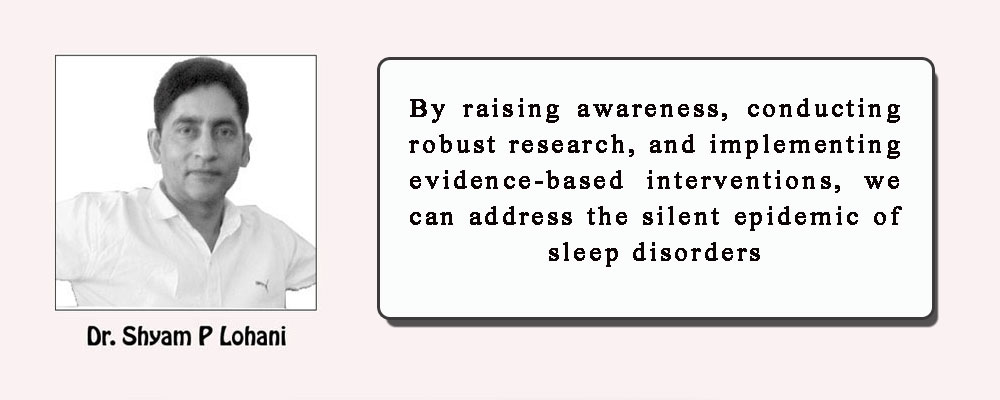
The data on sleep disorders provides valuable insights into their prevalence, risk factors, and impact on public health. By raising awareness, conducting robust research, and implementing evidence-based interventions, we can address the silent epidemic of sleep disorders. It is time to prioritize sleep health as an integral part of public health agendas, ensuring a well-rested and healthier future for individuals and communities.
(Dr. Lohani is the executive director of the Health Concern. lohanis@gmail.com)