- Friday, 29 May 2026

Guard Against False Health Information

A significantly large number of people are using the internet to search for health-related information. In recent times, most of the viral misinformation was related to cancer cures and the treatment of non-communicable diseases. This year, juice from papaya leaf, dates, thyme, garlic, jasmine, limes, okra, and other herbs, vegetables, and exotic fruits were on the viral news as cures for cancer, diabetes, and asthma.
With the current pace of revolution in the internet and social media platform, the general public is inundated with health-related information on their page through notifications from different sources. It is easy to find health information. However, it is equally important to know whether the source is reliable.
Sensational claims
Health information from reputed newspapers, magazines, books, TV, the internet, and social media can be up-to-date and trustworthy. However, there are instances when they are not. The lay public is often misled by sensational yet fake claims about a new product. It is critical for anyone with a health issue or medical condition to have appropriate and reliable information. The most trusted and best place to find health information is from healthcare professionals such as physicians, pharmacists, or allied health professionals.
Oftentimes, an individual may not get an opportunity to see their doctor, pharmacist, or allied health professionals immediately to validate the information and get carried away with the claim being made through an unaccredited source. Therefore, a reliable source of health information is critical in building knowledge on a particular health issue.
During the COVID-19 pandemic, social media platforms were flooded with both misinformation and disinformation. Any information conflicting with the best scientific evidence available at that time is misinformation and coordinated or deliberate efforts to spread misinformation are called disinformation and are found to have a strong link to gaining money, power, or reputation.
It has been estimated that more than 50 per cent of the global population uses the internet and any sensational health information on the internet becomes viral much more rapidly and broadly than ever before. Hence, the general public should be more cautious than any time before to trust such information without a reliability check.
Health information is readily available from reputable sources such as health brochures, telephone helplines, doctors or pharmacists, and reliable health information websites, such as government sites, disease-specific sites, and health professional sites. Information from other sources may not be as reliable as that from healthcare professionals. Therefore, it is critical to evaluate and assess other sources of health information before actually practicing it.
There are procedures to assess the reliability of any health information. The purpose of the site is important. Is the site created to inform the public or sell products or services? A trustworthy website has only goal is to providing reliable and good information. While searching for health information from less well-known online sources, it is important to consider first the source of information. It helps us understand who runs or endorses the content from the “about us” page which gives us an idea about its accuracy. The information is reliable when it is from a legitimate health organisation or an expert in the field.
The second important step is to assess the quality control measures taken prior to publication. The site having an editorial board and being reviewed by a qualified expert before it is posted can be reliable and trustworthy. The third important aspect is to check whether the information is up to date by checking the date posted or when the site was last updated.
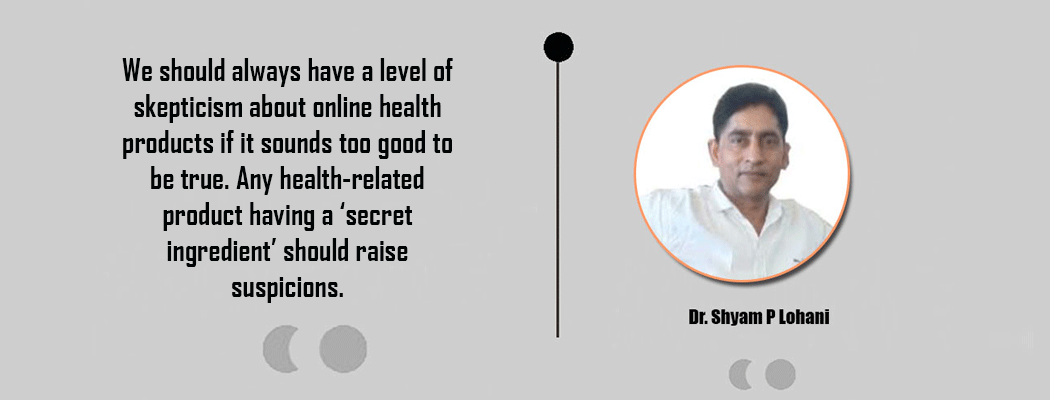
We should always have a level of skepticism about online health products if it sounds too good to be true. Any health-related product having a ‘secret ingredient’ should raise suspicions. The provider is serious only when the ingredients on the products are known. It is important to check if their claims are endorsed on more than one trusted website. The product is often endorsed by testimonials from people whom we may not know and oftentimes they are paid for their endorsement. The health information is confidential. Any website asking for private information may share details without permission and therefore it is prudent to see whether privacy is protected or not.
Steps
In general, good health information doesn't promote one treatment over another. Rather, it gives you balanced facts based on current research. Therefore, we should be aware of sensational news on promises of cures and claims that sound too good to be true. Those could be signs of a health fraud scam and have usually a fake health benefit.
Even a social media post may have come from someone we know, but usually does not give us reliable and appropriate information. Many of the steps taken to evaluate a website also work for social media too. Therefore, always get the answer about where the information comes from, why it exists, and if anyone is funding it. Lastly, it is urged not to get carried away with sensational health information before actually assessing its validity and reliability.
(Dr. Lohani is the clinical director at the Nepal Drug and Poison Information Centre. lohanis@gmail.com)





-original-thumb.jpg)