- Thursday, 28 May 2026

On Inclusive Prosperity

With the formation of the Balendra Shah-led government, Nepal is on the cusp of transformative changes in its governance, economy, politics and diplomacy. The government has secured a huge mandate from the elections to the House of Representatives in March this year. Good governance, corruption control, effective service delivery, stability, policy reforms and depoliticisation of vital state’s institutions have been its primary agenda. Two months into office, the government has made some signs of progress, especially in the field of service delivery, fiscal discipline and protection of public lands based on its ‘100-point reform plan’. There have been significant legal actions in getting rid of undue political influences in the education sector, judiciary and civil service. The government’s promises for meaningful reforms as well as initiatives, reflected in its policies and programmes, have been closely watched and acknowledged at home and abroad.
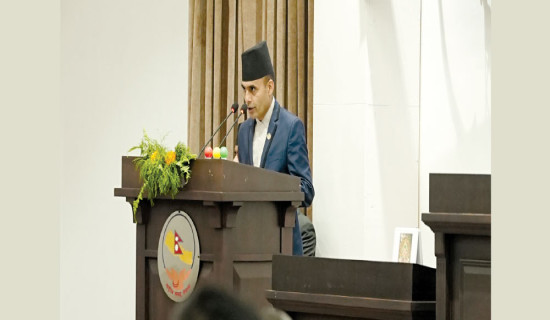
Prime Minister Balendra Shah articulated the government's domestic and foreign policy during his meeting with ambassadors from the European Union at his office, Singha Durbar, on Tuesday. Prime Minister Shah has expressed his commitment to policy continuity and stability. The government has achieved a clear and decisive poll victory but it will follow the policy of the past that is relevant in the present. One thing the PM has emphasised is that the nation's policy direction remains clear, stable and predictable, while committing to democratic values and norms. In the past, the frequent changes of governments led to the policy inconsistency that had negative repercussions for civil service, development and foreign policy conduct. Policy consistency is critical to implement economic and social programmes. This is also important as the government has promised to visibly improve the living standards of people.
European diplomats had their curiosity about the foreign policy of the new administration. The Prime Minister has made it clear that Nepal will follow a pragmatic and balanced foreign policy, which the previous governments had also pursued. Located between two giant neighbours, Nepal has always treaded on eggshells when it comes to relations with neighbours and other nations. The non-alignment policy, principle of Panchasheel, the UN Charter and international laws have guided the country's foreign policy and the current administration has reiterated this diplomatic position that is in the best interest of the Himalayan nation. It is based on principles of mutual respect, sovereign equality and shared prosperity.
We are living in an interdependent globalised world, so cooperation among the nations is essential to realise the common interest. Nepal is in need of international support for poverty alleviation, employment generation, foreign trade, climate change, investment, tourism, digital governance and infrastructure building. Against this backdrop, Prime Minister Shah noted that the government aimed to generate new opportunities for citizens by benefiting from global markets, simplifying procedures to attract investment, encouraging innovation and advancing sustainable development. At the same time, Nepal has always aspired for global peace, stability and cooperation. Prime Minister Shah's interactions with foreign diplomats have further boosted the nation's diplomatic profile, given that there were various speculations with regard to the government's foreign policy behaviour. The government has attached greater priority to inclusive economic prosperity but attaining this goal appears to be difficult if the country does not win support from the neighbours, friendly nations, development partners and the international community.