- Thursday, 28 May 2026

NHRC releases its report on Gen Z protests
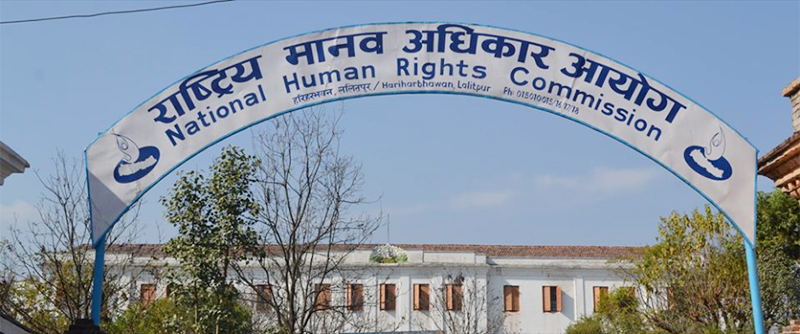

By A Staff Reporter,Kathmandu, May 28: The National Human Rights Commission (NHRC), a constitutional human rights body, has forwarded its recommendations to the government in connection with alleged human rights violations during the Gen Z movement on 8–9 September, 2025 calling for their implementation.
According to the Commission, the decision was taken at a meeting held on Tuesday, following the submission of a report prepared by a committee formed earlier to examine the Gen Z protests on September 8 anpd the subsequent incidents.
The committee formed under the coordination of Commission member Lily Thapa to investigate human rights violations in incidents linked to the September Gen Z movement has identified KP Sharma Oli, Ramesh Lekhak, and Prithvi Subba Gurung, who were in government leadership at the time, as culprits of human rights violations.
Likewise, the Commission also recommended investigations into Rastriya Swatantra Party (RSP) chairman and lawmaker Rabi Lamichhane, Nakkhu Prison administration chief Satya Raj Joshi, as well as RSP lawmakers Manish Jha and Hari Dhakal.
The Commission further recommended an investigation into Sudan Gurung, who is currently a member of Parliament, noting that although permission had been obtained for a peaceful demonstration, he allegedly failed to prevent the protest from turning violent.
The Commission has recommended further investigation into former Prime Minister Sushila Karki. It has suggested further inquiry into whether she was involved in the physical and human losses that occurred during the protests.
The Commission has further recommended an investigation into Gauri Bahadur Karki, chair of the judicial inquiry commission formed by the Government of Nepal to investigate the events of 8–9 September.
It has also called for a thorough investigation while ensuring the right to a fair hearing for the concerned individuals and keeping the public informed, and for action to be taken if they are found guilty.
It also recommended legal action or filing of cases in court against individuals or institutions responsible for human rights violations where necessary.
However, it noted that there is currently no existing law that provides for punishment for such violations. As a result, it has recommended that the government introduce retrospective legislation to ensure accountability for past incidents.
It has also suggested that such legislation include provisions for a maximum penalty of six months’ imprisonment, a fine of up to Rs. 300,000, or both.
The Thapa-led committee had submitted its report on 20 March. However, the Commission only decided on Tuesday to recommend action against those concerned.
The recommendations were formally forwarded to the Prime Minister’s Office on Wednesday.
Departmental action sought against security chiefs
Meanwhile, the Commission has recommended departmental action against the Inspector Generals (IGPs) of Nepal Police, Dan Bahadur Karki, and the Armed Police Force, Nepal, Narayan Dutta Poudyal, over alleged human rights violations during the protests.
During the Gen Z protest, present IGPs Karki and Poudyal were working in capacity of Additional Inspectors General (AIGs).
The report has also recommended placing former senior security officials on a ‘negative list,’ effectively declaring them ineligible for future public service roles. Those named include former Nepal Police Chief Chandra Kuber Khapung, former Armed Police Force Chief Raju Aryal, and former National Investigation Department Chief Huta Raj Thapa.
The report further recommends action against several other senior and field-level officials, including Deputy Inspector General Om Bahadur Rana, then Senior Superintendent of Police (now DIG) Bishwa Adhikari, Armed Police Superintendent Jeevan KC, former intelligence director Krishna Khanal, and then Kathmandu Chief District Officer Chhabi Lal Rijal. Field commanders deployed in Baneshwor and around the Federal Parliament area during the protests have also been recommended for action for alleged human rights violations.
The Commission has cited Article 249 (2) (e) of the Constitution of Nepal, recommending disciplinary procedures against security personnel involved on the ground during the protests. It also stated that those found responsible should be formally recorded in a way that prevents them from holding any future government responsibility.
Army’s role under scanner
The NHRC report further highlights weaknesses in the response of the Nepali Army during the Gen Z demonstrations. It states that the army failed to adequately protect national property as expected during the crisis.
According to the Commission, significant damage occurred to key state institutions including Singha Durbar, the Supreme Court, and the Presidential residence Sheetal Niwas due to vandalism and arson during the protests. The report notes that the army was unable in safeguarding these national assets and protecting citizens’ human rights.
It recommends that the Chief of the Army Staff be instructed to prioritise the protection of national property and human rights in future incidents. Additionally, commanders responsible for security at Singha Durbar and Sheetal Niwas have been advised to be formally warned.