- Thursday, 28 May 2026

Huawei Nepal Hosts Mini MWC 2026
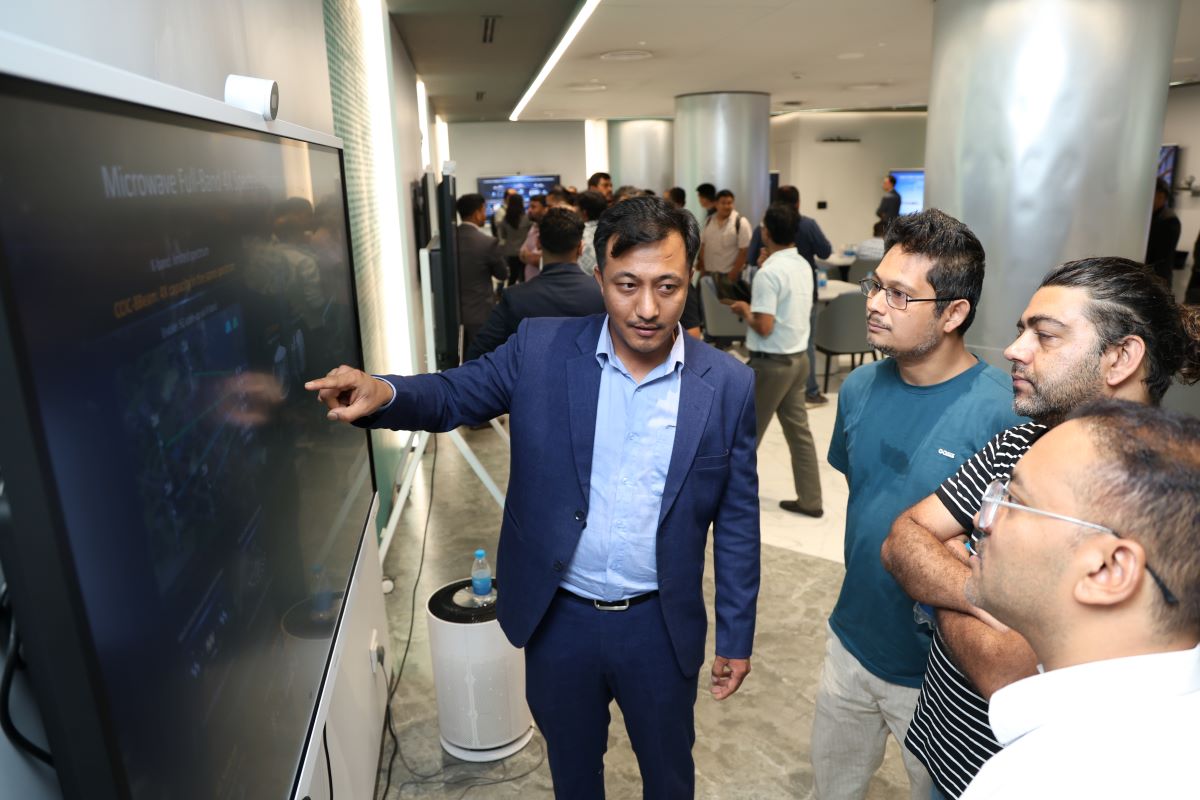
By TRN Online, Kathmandu, May 28: Following the major breakthroughs unveiled at Mobile World Congress (MWC) 2026 in Barcelona, Huawei Nepal successfully hosted its highly anticipated Mini MWC 2026 at Huawei Tower in Hattisar, Kathmandu.
The exclusive event held recently brought together leadership
teams and technical experts from Nepal’s leading telecom operators to explore
the future of the country’s digital ecosystem.
Building on the success of last year’s Mini MWC
2025, this year’s congress focused on the commercialization of Artificial Intelligence
(AI) and the deployment of next-generation network capabilities. Moving beyond
traditional connectivity, Huawei presented a clear roadmap under the global
theme “Now Is Yours,” highlighting strategies to bridge the gap between AI
innovation and real-world telecommunications business value in Nepal, according to the press release issued by
The event served as a collaborative innovation
platform where Huawei showcased actionable insights and tailored solutions
across two strategic dimensions: AI for Networks and Networks for AI.
Key Technology Highlights Presented during the event
1. Agentic Communication Networks (ACN)
Huawei introduced its first AI-native framework for
intelligent network operations alongside its Agentic Core solution. The
technology is designed to enable highly stable, efficient, and autonomous
networks (AN L4), allowing operators to automate workflows and significantly
enhance network optimization.
2. 5G-Advanced (5G-A) and Mobile Broadband
Intelligence
Huawei presented in-depth insights into the commercial capabilities of 5G-A (5.5G) mobile transport architectures. The company demonstrated how ultra-reliable transport systems can deliver comprehensive “fiber healthcare,” proactively monitoring fiber conditions to minimize service interruptions caused by accidental physical fiber cuts.
3. AI-Centric All-Optical Target Networks
To address the rapidly growing data demands driven by consumer applications and cloud computing in Nepal, Huawei proposed the development of AI-centric optical networks designed to maximize bandwidth, reduce latency, and significantly lower network energy consumption.
4. Huawei Digital Power: Enabling Sustainable and Intelligent Infrastructure
A core focus of Mini MWC 2026 was Huawei Digital Power, which addressed Nepal’s unique geographical and infrastructure challenges.
Huawei introduced its next-generation site power facility architecture, “Single Site Power,” along with advanced Energy Storage Systems (ESS). By integrating AI technologies, these green energy solutions create a clean, safe, and intelligent synergy between solar photovoltaic (PV) systems, lithium energy storage, and telecommunications equipment.
The architecture is designed to help local operators transform conventional base stations into energy-efficient and resilient “prosumer” sites capable of mitigating grid fluctuations while reducing the carbon footprint of national telecommunications networks.
Celebrating more than 26 years of partnership in Nepal, Huawei Nepal reaffirmed its commitment to supporting the Government of Nepal’s Digital Nepal Framework.
From expanding rural connectivity initiatives including recent Smart Classroom deployments in remote villages to empowering local ICT talent and fostering innovation, Huawei continues to play a key role in accelerating Nepal’s digital transformation journey.




-original-thumb.jpg)


-original-thumb.jpg)
-original-thumb.jpg)