- Thursday, 28 May 2026

216MW Upper Trishuli-1 (UT-1) Hydropower’s Weir Gate Operation Ceremony held
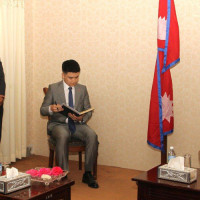
Kathmandu, May 28: Ambassador of the Republic of Korea to Nepal, Park Taeyoung attended the successful operation ceremony of the newly installed weir gate for the Upper Trishuli-1 (UT-1) 216MW Hydropower Project, installed by NWEDC, held in Rasuwa District today.
The Embassy of the Republic of Korea in Nepal announced that the official inauguration of the newly upgraded weir gate marks a significant milestone in the final stage of the construction of the Upper Trishuli-1 (UT-1) Hydropower Project.
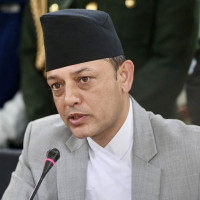
On the occasion, Ambassador Park, said that the Korean government has remained a reliable development partner of Nepal for the past 52 years, supporting the country’s sustainable economic growth and prosperity.
He highlighted Korea’s contribution to Nepal’s hydropower plants, including the construction of three hydropower plants and provision of necessary financing support. He also noted the significant potential for collaboration between Nepal and Korea in the energy sector.
Ambassador Park noted the achievement reflects successful collaboration and dedication of all the stakeholders involved in the project. He described the UT-1 project as a landmark example of long-term energy cooperation between Nepal and Korea.
The Upper Trishuli-1 Hydropower Project is being developed by Nepal Water and Energy Development Company Private Limited (NWEDC), the main sponsors are two Korean Companies namely KOEN (Korea South-East Power Co.) and KIND (Korea Overseas Infrastructure & Urban Development Corporation) together with the International Finance Corporation (IFC) is Nepal's largest foreign direct investment hydro project. The run-of-river project is scheduled for completion by mid-2027.
The project is financed through a mix of 70 percent debt and 30 percent equity. Major international financial institutions providing loans include the International Finance Corporation (IFC), Asian Development Bank (ADB), Asian Infrastructure Investment Bank (AIIB), and the Korean Exim Bank (K-EXIM).
Approximately 250 participants attended the ceremony, including government officials, project stakeholders, media personnel and local residents.
-original-thumb.jpg)
-square-thumb.jpg)
-original-thumb.jpg)