- Thursday, 28 May 2026

Contagion Of Counterfeit Drugs

The World Health Organisation (2022) warned that the deaths of 66 children in the Gambia may be linked to adulterated cough syrup. In 1937, it was known that adulteration of cough syrup with diethylene glycol caused the deaths of 100 American children after consuming a contaminated medicine. In 2011, around 200 people died in Pakistan after taking contaminated heart medication. There was a time in 2014 to 2015 when more than a thousand people were hospitalized in Congo after taking a fake drug containing an antipsychotic used to treat schizophrenia. Those were few reports of counterfeit medicines causing deaths and hospitalisations and only the tip of the iceberg.
The number of counterfeit medications in the market and patients’ reaching beds has been on the rise for years. Most importantly, illicit, counterfeit medicine is fake medication and may be harmful to our health. It has been reported that the global counterfeit market is worth between $200 and $432 billion. The huge sum makes it the largest fraud market in the world. The astounding figures make pharmaceuticals the number one illicit activity, much ahead of other illicit economic activities such as prostitution, human trafficking, marijuana trade, electronics, and even arms sales.
Counterfeit medicines
The WHO uses labels like substandard, falsely labelled, falsified, and counterfeit to characterise medicines that are forged to look alike genuine. Counterfeiting can apply to both branded pharmaceuticals as well as their less expensive generic counterparts. Fake drugs, while seemingly identical to the real ones, most often fail to treat the disease or condition for which they were intended, and can lead to serious health consequences and oftentimes death.
However, there is a difference between substandard and falsified medicines. Substandard products are licensed and approved, but they are of poor quality. Substandard products include medicines that expired, degraded during transportation, or contained the wrong amount of active ingredient.
Falsified drugs, on the other hand, deliberately mislead people about their contents or origin that contain no active ingredients or incorrect ingredients. Regardless of the category, such products can complicate health problems, extend hospital stays, cause antimicrobial resistance, and even kill people. Moreover, the above incidents lead to a loss of confidence in healthcare providers, medicines, and healthcare systems. Those products also include significant impurities and contaminants, generic or branded, and claim to cure life-threatening conditions like malaria, HIV/AIDS, and cancer. They are available via illegal street markets, websites, or even legitimate pharmacies, clinics, and hospitals. WHO estimates at least 10 per cent of medical products, including pills, vaccines and diagnostic kits circulating in low- and middle-income countries, are either substandard or falsified.
A recent report says around 25 per cent of drugs in our southern neighbour are fake, counterfeit, or substandard. Fake drugs could lead to several health-related problems. These problems usually depend on the ingredients that are present in counterfeit medicine. In the case where the counterfeit medicine does not contain the active ingredients, the medicine fails to help the patient get better which ultimately harms the patient and even extends the hospital stay. Oftentimes, counterfeit medicines may cause exacerbation of symptoms of a chronic illness. Reports show illicit trafficking of medicines is increasing at an alarming rate. North America ranked number one among regions with the highest incidents of counterfeit medicine seizures in 2020 (32 per cent), followed by Asia Pacific (23 per cent), and Africa (3 per cent).
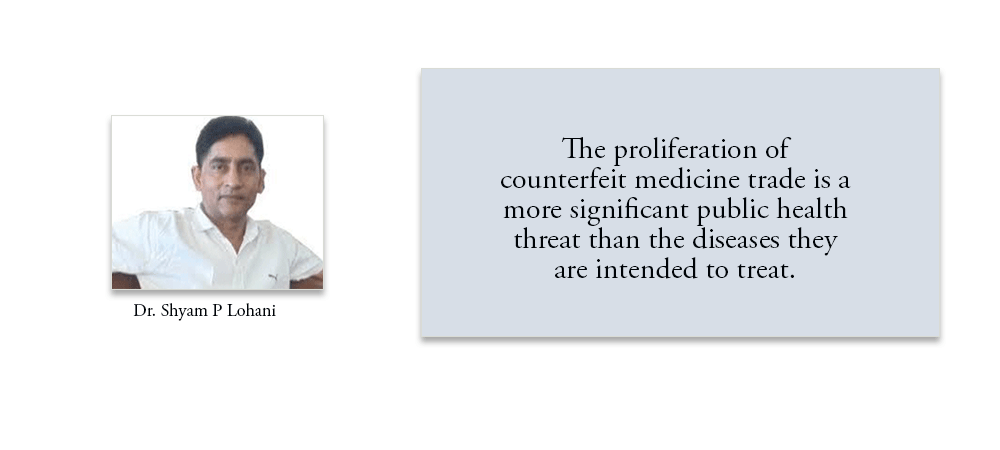
The proliferation of counterfeit medicine trade is a more significant public health threat than the diseases they are intended to treat. Those containing no active ingredients may be just as dangerous as those containing contaminants such as diethylene glycol. At best, such medications do not treat the illnesses they are intended to treat. At worse, they contain toxic ingredients that may cause immediate death due to organ failure. In both cases, counterfeit medications presents brand loyalty, safety concerns and economic challenges for genuine pharmaceutical companies. A growing culture of self-diagnosis and self-prescribing practices among consumers has led to the proliferation of thousands of unregulated websites that provides uncontrolled access to substandard and falsified medical products.
Regulation
But no countries remain untouched by the problem of counterfeit medicines. However, it is in low- and middle-income countries and those in areas of conflict, or civil unrest, and countries where health systems are weak and overstretched bear the greatest burden of substandard and falsified medical products. It has been noted that the major drivers of the trade in fake drugs are a lack of adequate regulations and law enforcement, a shortage of drug inspectors, and a lack of medicine laboratories to check the quality of drugs. Weaknesses in the drug distribution system, and lack of awareness among consumers may have aggravated the situation of counterfeit medicines, particularly in developing countries.
Whatever the reasons for the proliferation in the trade of counterfeit medicines in recent times, the primary duty to check its sale and distribution lies in the regulatory authority. It is also the duty of genuine pharmaceutical companies to follow good manufacturing practices and also to track their moving products in the market. Lastly, consumer awareness also plays a vital role. It is advised that if a consumer finds the price of the drug is way below its usual price, then always think twice before buying it. However, some fake drugs have the same price as the genuine ones.
(Dr. Lohani is the clinical director at the Nepal Drug and Poison Informatin Centre. lohanis@gmail.com)
-original-thumb.jpg)