- Friday, 29 May 2026

Vital Economic Survey

An economic survey paints a comprehensive picture of a nation's economy, revealing sectors where major progress was made over the past year and where gaps exist that need to be filled. This helps the government, businesses, and citizens understand where the economy is heading and, if it's veering towards disaster, what corrective measures are needed to bring it back on track. By explaining the economic growth, inflation, employment situation, agriculture, and industry and service sector performances, among other things, the survey data guide the government, prospective investors, and other stakeholders in policymaking.
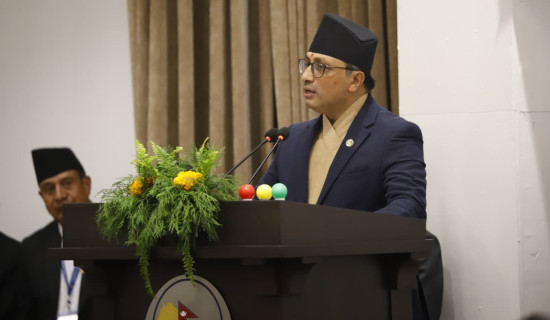
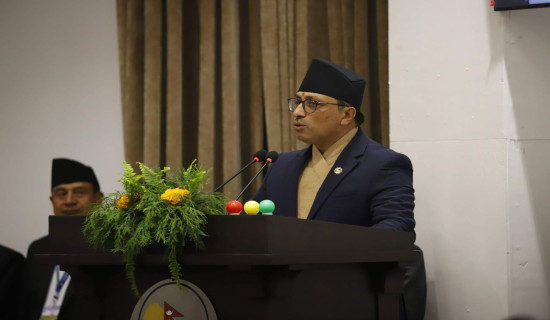
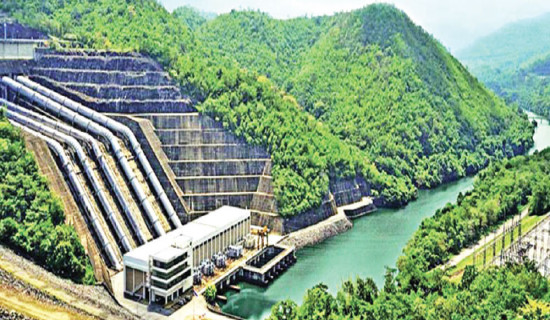
On May 27, Nepal's Economic Survey 2025/26 was presented in the Parliament by Finance Minister Dr. Swarnim Wagle. According to the survey, the hydropower sector continues to be a bright spot in the economy. With installed electricity capacity of 4,105 MW, of which hydropower accounts for 3,798 MW, the nation has steadily made leaps in power generation. Making matters sweeter, projects to produce an additional 666 MW are closing in on completion by mid-July 2026 – strides that have earned us billions of rupees through electricity export. Another encouraging development this progress has spawned is the rise of EVs, which has lowered the consumption of petrol and diesel – the drain on critical foreign exchange reserves – by 10 per cent by mid-March of this fiscal compared to the corresponding period last fiscal.
What’s more, there has been notable progress in absolute and multidimensional poverty reduction, in the Human Development Index (HDI), the expansion of social security health insurance programmes, which have now reached all local levels, and reduction in maternal and infant mortality rates. Likewise, access to basic drinking water has been expanded to 97 per cent of the population – though access to safe drinking water is only 29 per cent. Likewise, irrigation facilities have been expanded to 44.6 per cent of the agricultural land and 62.6 per cent of irrigable land. Remarkable progress has also been made in student enrolment at the basic and secondary level.
Although these strides are laudable, their uneven distribution is worrying. Some provinces have continued to outperform others in economic output, social progress, education, HDI, among other development indicators. Bridging this entrenched inequality is what our federalism has aspired to. It is imperative that the government take concrete steps to this end. Another domain where the government needs to turn its gaze is towards the expansion of access to safe drinking water – something very fundamental to its responsibilities towards its people – from the current 29 per cent of the population to 100 per cent. Needless to say, investment in citizens' health is sure to yield handsome returns.
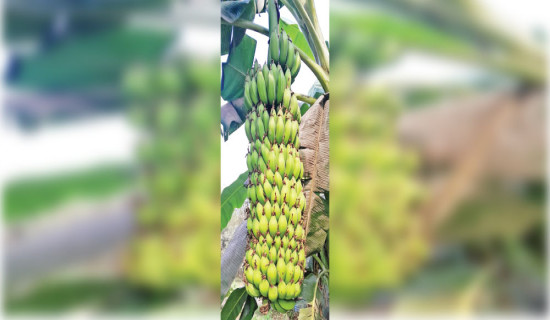
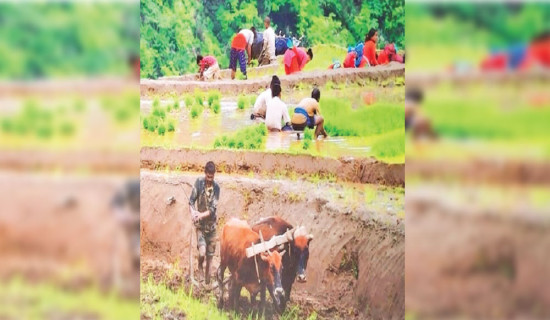
At the same time, the agriculture sector mustn't suffer from neglect. A major source of livelihoods for the overwhelming share of the population, the agriculture sector growth is expected to halve this fiscal. The impact of this doesn't stay within the breadbasket regions; it ripples across the nation in the form of rising food prices, or even food insecurity – conditions that are a recipe for chaos and violent social disorder. As the government gears up to announce the budget, these worries and concerns must be translated into policy interventions to ensure that the sectors that need more investment duly get it, as do those needing subsidies or tax reforms. Drawing on the survey data makes the policymaking pragmatic.