- Sunday, 31 May 2026

Experts urge systematic probe into illicit wealth of high and mighty

Kathmandu, Apr. 12: Since the formation of the government led by Prime Minister Balendra Shah on March 27, the issue dominating public discourse has been the proposed investigation into the assets of senior political leaders, former prime ministers and high-ranking bureaucrats, alongside the implementation of the recommendations arising from such inquiries.
The agenda was prominently outlined in the election manifesto of the Rastriya Swatantra Party, led by Rabi Lamichhane, termed 'pledge with citizens' . The commitment to probe accumulated wealth was subsequently incorporated into the government’s “100-point governance reform agenda”, endorsed and made public by the first Cabinet meeting of the Shah-led administration on March 28.
Under point 43 of the document, the government has pledged to establish, within 15 days, a powerful asset investigation commission under the Office of the Prime Minister and Council of Ministers. The body will be mandated to address entrenched corruption, the concealment of wealth, and the prevailing culture of impunity.
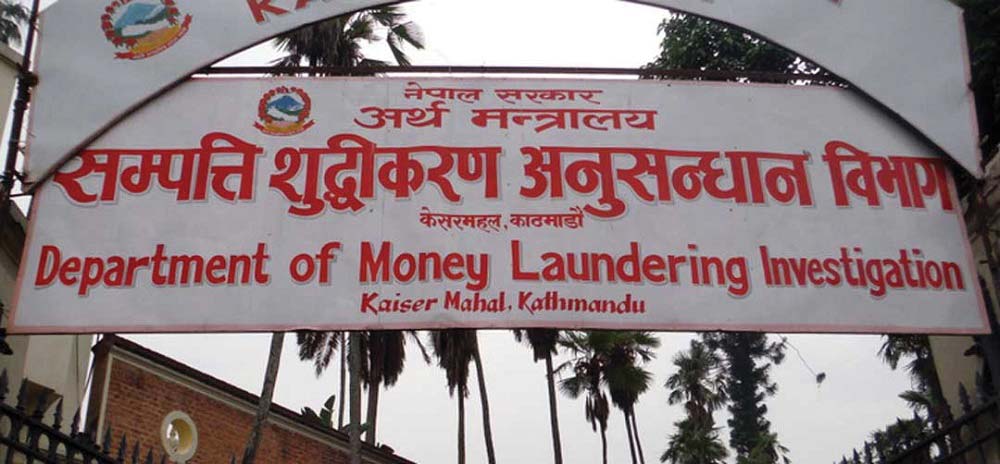
In this context, the government, particularly through the Department of Money Laundering Investigation, is expected to focus its scrutiny on prominent figures, including former prime ministers such as Sher Bahadur Deuba, KP Sharma Oli and Pushpa Kamal Dahal, as well as former ministers and senior bureaucrats suspected of amassing substantial wealth and concealing its sources.
The body to be formed soon is expected to oversee the collection, verification and examination of asset declarations in a phased manner of key political figures and high-ranking civil servants who have held public office since 1991.
The first phase will focus on officials who served between 2006 AD and the present fiscal year (2025/26), while an earlier period, from 1991 to 2005, will be examined subsequently, according to the 100-point governance reform plan.
The political momentum behind the move can be traced to the “Gen Z Movement” that emerged last year, initially sparked by opposition to social media restrictions but quickly evolving into a broader campaign against corruption and entrenched political misgovernance. The protests ultimately led to the fall of the previous government and the dissolution of parliament, paving the way for fresh elections and the current administration’s rise to power.
Still, significant questions remain over how the process will unfold. The scale of the undertaking, covering 34 years of financial activity, poses formidable logistical and legal challenges.
Analysts note that records from earlier decades were largely paper-based, raising concerns about their availability, condition and reliability.
Economist and political analyst Mohan Das Manandhar suggests that the first phase of the investigation, covering the past two decades, is likely to be more manageable due to the digitisation of financial and property records. Land ownership data, bank holdings and registered assets such as vehicles can be accessed with relative ease, he claims. However, unregistered wealth, including cash reserves, precious metals or assets held abroad, may prove far more difficult to trace.
According to Manandhar, the second phase of assets investigation, covering the 1990s and early 2000s, is expected to be significantly more complex. During that period, asset registration systems were less developed, and financial transparency was limited. “Tracing funds held in foreign banks could be particularly challenging,” Manandhar observes, although he adds that records relating to government employees may still be accessible.
According to the 2025 report by Transparency International, Nepal scored 34 out of 100 on the Corruption Perceptions Index, placing it among countries with serious corruption concerns.
The report also linked public frustration, evident during the Gen Z protests, to systemic corruption and its socio-economic consequences.
Time for action
Madan Krishna Sharma, chairperson of Transparency International Nepal, acknowledges the challenges inherent in investigating political figures but maintains that success is possible with strong political will and adherence to the rule of law.
Despite repeated pledges by successive governments and political parties, including the Nepali Congress, to establish high-level commissions to probe illicit wealth, past efforts have largely stalled. This happened merely due to lack of strong political will and strong government.
A probe commission formed in 2001, for instance, failed to produce publicly accessible outcomes, with its findings reportedly withheld, reasons Sharma.
Sharma suggests that clear criteria should be established based on individuals’ assets and that investigations should be conducted on the basis of past reports. “Before initiating any inquiry, a clear standard must be set regarding up to which level of officials, primarily from ministers down to civil servants, should be investigated.
It must also be decided whether all positions appointed by the government in public bodies should fall under scrutiny, or only those in key positions,” says Sharma.
He also states that although there are many challenges in investigating the assets of political figures, it is possible if the leadership proceeds with determination in a lawful manner. He suggests that a strong legal framework should be established to ensure action against those involved in corruption and amassing untraceable money. “Looking into very old records can be particularly challenging,” he says, “but on the other hand, since public office holders are constantly under public scrutiny, it becomes relatively easier to assess them and gather evidence.”
Sharma also emphasises the need to change the prevailing narrative that political figures are beyond the reach of the law regardless of their wrongdoing. While politics is meant to be a form of public service, he believes problems arise when it is treated as a profession. “Politics is not a field for making money but for serving the nation and its people. However, it appears that those engaged in politics have achieved greater financial gains than businesspeople,” he adds.
Categorisation of corruption-prone sector is a must
Constitution expert and former Chairperson of the Administrative Court and also the Coordinator of the Administrative Reform Suggestion Committee formed in 2012, Kashiraj Dahal, says the government has no alternative but to immediately investigate and act against the illicit wealth of political leaders and senior civil servants.
Dahal argues that the current administration, formed on the foundation of a people-backed movement (Gen Z) and enjoying a near two-thirds majority, must prioritise a thorough scrutiny of assets accumulated by those in positions of power.
He suggests that, while examining the assets of politicians, senior officials and administrators, the government should adopt a phased approach by identifying sectors most prone to corruption and prioritising investigations accordingly. Key areas such as revenue, land administration, transport and industry should be examined, with investigators identifying who holds or has held leadership roles, including ministers and prime ministers, during the relevant periods.
“Such a method makes asset investigations more systematic and effective,” Dahal says, adding that completed investigation reports should be implemented sequentially rather than delayed.
He further stresses that administrative bodies and security agencies involved in such probes must fully support the government’s initiative. Any groups or forces that obstruct the process should be identified and sidelined accordingly.
Dahal also recommends setting clear timelines for investigations, such as three months, six months or up to a year, depending on the sector. He says the government can establish commissions or committees to carry out phased investigations, beginning with top bureaucrats, followed by top political leaders.
Additionally, he notes that if there is evidence or suspicion of funds being held abroad, the government can seek international cooperation and assistance. As a signatory to the United Nations Convention against Corruption, Nepal can request relevant countries to provide necessary evidence and facilitate the recovery of illicit assets.
The Lamsal commission report
Efforts to investigate the assets of public officials are not new. On 24 February 2002, the government led by Sher Bahadur Deuba formed the ‘Property Judicial Inquiry Commission’ under the chairmanship of then Supreme Court Justice Bhairav Prasad Lamsal and published it in the official gazette. The commission was established following criticism that public officials had amassed ‘illicit wealth’.
After 13 months of work, the commission submitted its report to King Gyanendra on 18 March 2003. However, the report has never been made public. Nevertheless, for its implementation, the then government led by Lokendra Bahadur Chand forwarded it to the Commission for the Investigation of Abuse of Authority and, in the case of judges and judicial officials, to the Judicial Council. Based on that report, investigations carried out by the anti-graft body (CIAA) led to charges against leaders such as Khum Bahadur Khadka, Jay Prakash Prasad Gupta, Govinda Raj Joshi, and Chiranjeevi Wagle on corruption offences.
The Lamsal Commission had sought asset details from 41,941 individuals who had received state benefits between 1990 and 2002. However, not all of them submitted their declarations. According to the data made public at the time, the assets of 30,599 individuals were investigated. Among them, 602 were recommended for action on corruption charges for possessing wealth beyond their legitimate means. The commission also recommended blacklisting and taking action against those who failed to submit their asset details.
The report further mentioned that the sources of wealth for around 50 per cent of the political leaders and officials investigated could not be identified. Those with suspicious wealth included the then police chief, ministers, officials of constitutional bodies, heads of offices, police and army officers, court staff, and judges.
In particular, the sources of income of those working in customs, land revenue, and tax offices -- positions directly connected with the public, were not transparent.

-square-thumb.jpg)