- Friday, 29 May 2026

Strategies For Curbing Pollution

Pollution is one of the most discussed hazards worldwide because it directly affects human health. Pollution not only spoils the landscape of a city but also affects human health. Air pollution is the progenitor of various diseases, especially respiratory diseases or disorders such as bronchitis, emphysema and asthma. Colds, sneezing, rhinitis and sinusitis are also respiratory disorders. Air pollution also gives rise to heart diseases, brain diseases, diabetes, hypertension, cancer and the like.
Kathmandu, the capital city of Nepal, frequently features on the list of the most polluted cities in the world. The other day, the Ministry of Health and Population issued a notice warning the denizens of the capital city to take precautions against adverse weather conditions such as haze and smog. In fact, Kathmandu is a dirty city despite claims that it has been much cleaner than in the past. The public places, roads and rivers are still dirty. There are several factors responsible for this. Urban sprawl is taking place at an accelerated pace. The flow of people migrating to the Kathmandu Valley from outside has not come to a halt. More people mean more strains on the Valley in terms of cleaning, sanitation and other facilities.
Appropriate strategies
Moreover, it has not dawned on the people that they should keep the city clean. Throwing refuse and scraps into the rivers and streams has yet to be controlled. Once, those who dirty the rivers and streams by throwing refuse and scrap were punished. Such a punitive action is nowhere to be seen now. Besides, there is air pollution plaguing the Kathmandu Valley. The main sources of air pollution are exhaust fumes from vehicles, smoke from factories and brick kilns and open burning. The government should adopt appropriate strategies for curbing pollution. A multi-pronged approach to curbing pollution by adopting various measures is more than necessary now.
Nepal is trying to introduce more and more electric vehicles as replacements for petrol or diesel vehicles, which is a good idea. But the government has failed to offer attractive incentives for the purchase of electric vehicles. When the prices of electric vehicles and petrol or diesel vehicles are similar, people go for the latter. That is why it is imperative to incentivise electric vehicles by reducing taxes. Import taxes on vehicles are huge in Nepal. Such taxes can be reduced to some extent to encourage the purchase of electric vehicles.
With a constant rise in the number of vehicles, emissions of noxious gases such as carbon dioxide and carbon monoxide are also on the increase. The particulate matter in the city is far above the guidelines recommended by the World Health Organisation. The government should discourage private transport by introducing a mass transit system. But it seems the government will not take this step because it is earning big revenue from the transport sector by way of import taxes, annual taxes and other taxes. Introduction of a mass transport system means an increase in public transport and a decrease in private transport.
The government should strictly implement the National Air Quality Management Plan by electrifying transport, reducing industrial emissions, discouraging open burning and expanding green spaces. As far as controlling exhaust fumes from vehicles is concerned, vehicles should be serviced and maintained regularly. Just having green stickers is not enough; one can see vehicles with green stickers spewing forth black smoke. On the other hand, the quality of petrol or diesel also matters. There should be a robust mechanism for ensuring that fuels are not adulterated anywhere.
Factories produce not only effluents that pollute the environment but also smoke. Factories should be located in places far away from human settlements. They should adopt a mechanism for disposing of effluents in a safe way. So they should be encouraged to adopt new technology and industrial standards should be enforced. Brick kilns should shift to cleaner technology to reduce smoke. Open burning is another source of pollution. The Kathmandu Metropolitan City (KMC) has banned such a practice. However, the local government should take steps towards halting open burning through a better waste management system, such as recycling and composting.
The KMC has such a strategy in place but it has not been implemented. Municipal waste can be used to generate electricity and produce compost. The KMC has broomers. They are sometimes used in the city. Broomers are used to remove very fine dust particles. When the roads are already dirty, the use of brooms cannot make the city roads clean. To check the level of air pollution, it is necessary to have in place real-time air quality monitoring stations in various places. As a city undergoing rapid urbanisation, Kathmandu has construction works and repairs going on all the while.
Lack of coordination
But there seems to be a lack of coordination between government agencies. One agency repairs a road and another digs it. Moreover, once roads are dug, backfilling does not take place in time, which gives rise to dust pollution. There should be proper coordination between government agencies to eliminate, or at least reduce, dust pollution. It is also necessary to control dust pollution at construction sites by properly covering them. As far as household pollution is concerned, people should be encouraged to use cleaner technology, such as electricity.
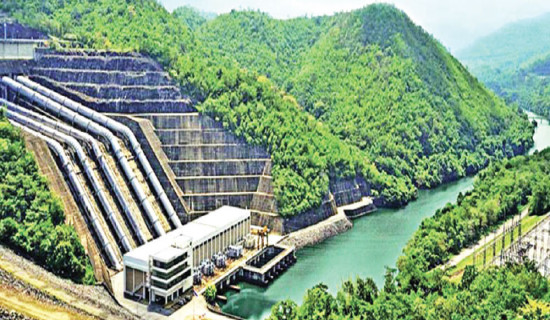
The government has been instructing the people to use electric appliances. But the supply of electricity is still erratic, although there is no load-shedding. As long as there is no uninterrupted supply of electricity, people cannot depend solely on electricity for cooking and other purposes. It may be pertinent to note that the new government under the leadership of the Rastriya Swatantra Party (RSP) is in the offing. Being a party that has won the hearts of the people through the just-concluded general election, the relatively new party can take drastic measures to reduce pollution not only in the Kathmandu Valley but also elsewhere.
(Maharjan has been regularly writing on contemporary issues for this daily since 2000.)