- Sunday, 3 May 2026

Gaur sees decline in horse-drawn carriages
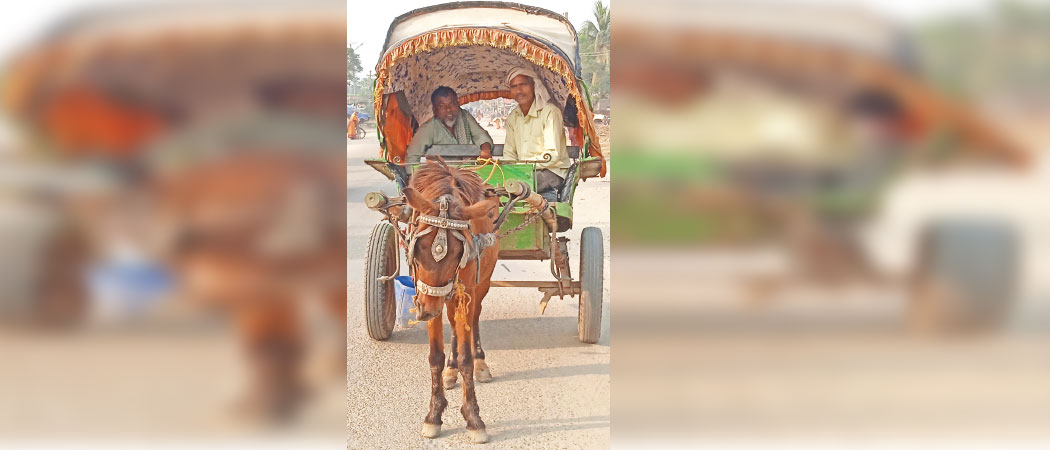

BY SANJAY KUMR MISHRA, Gaur, Feb. 9: Horse-drawn carts, locally known as tangas (once the oldest and most common means of transportation), are gradually disappearing, leaving those who depended on this profession increasingly vulnerable.
In the past, the tanga was the only means of transport used to travel from the district headquarters in Gaur to the surrounding rural areas. With the arrival of tempos, however, tangas have steadily faded from use. Passengers now prefer tempos and e-rickshaws, which are faster, more convenient and cheaper, resulting in a sharp decline in the use of horse carts.
Panilal Mahato, a tanga operator who once supported his family by driving a cart daily, said the profession has been shrinking as passenger interest continues to decline, forcing many operators to switch to other occupations. “I supported my family for a long time by operating a tanga, but with the arrival of jeeps, Boleros, Scorpios and tempos, the importance of tangas has diminished. I was compelled to turn to farming and buffalo rearing for my livelihood,” he said.
Another former tanga operator, Sheikh Israil Miya, stated that tangas, which had been in operation across various parts of the Tarai since ancient times, have lost much of their utility in recent years. He added that after the decline in tanga usage, he abandoned the ancestral profession and now supports his family by selling chicken meat.
Tangas were once preferred for comfortable travel, especially in areas with poor or dilapidated roads and in places inaccessible to motor vehicles. However, as tempos have now begun operating even in such areas, tanga operators said they had been left with no option but to seek alternative livelihoods.
Previously, tanga operators would leave their villages as early as four or five in the morning, carrying passengers while guiding their horses over a distance of nearly 10 kilometres to reach the district headquarters, Gaur. After arriving in the district centre, they would spend the entire day transporting passengers to various locations within the district as well as across the border to the railway station in Bairgania, India. Social worker Arun Singh said that this work is now being done by tempos, reducing tangas to little more than a symbolic presence.
-original-thumb.jpg)