- Thursday, 28 May 2026

Nepal adopts modern data system with first agriculture survey

Kathmandu, Jan.1 : In a major institutional shift aimed at strengthening evidence-based policymaking, the government has launched Nepal’s first-ever Annual Agricultural Survey using statistically validated and technology-driven methods.
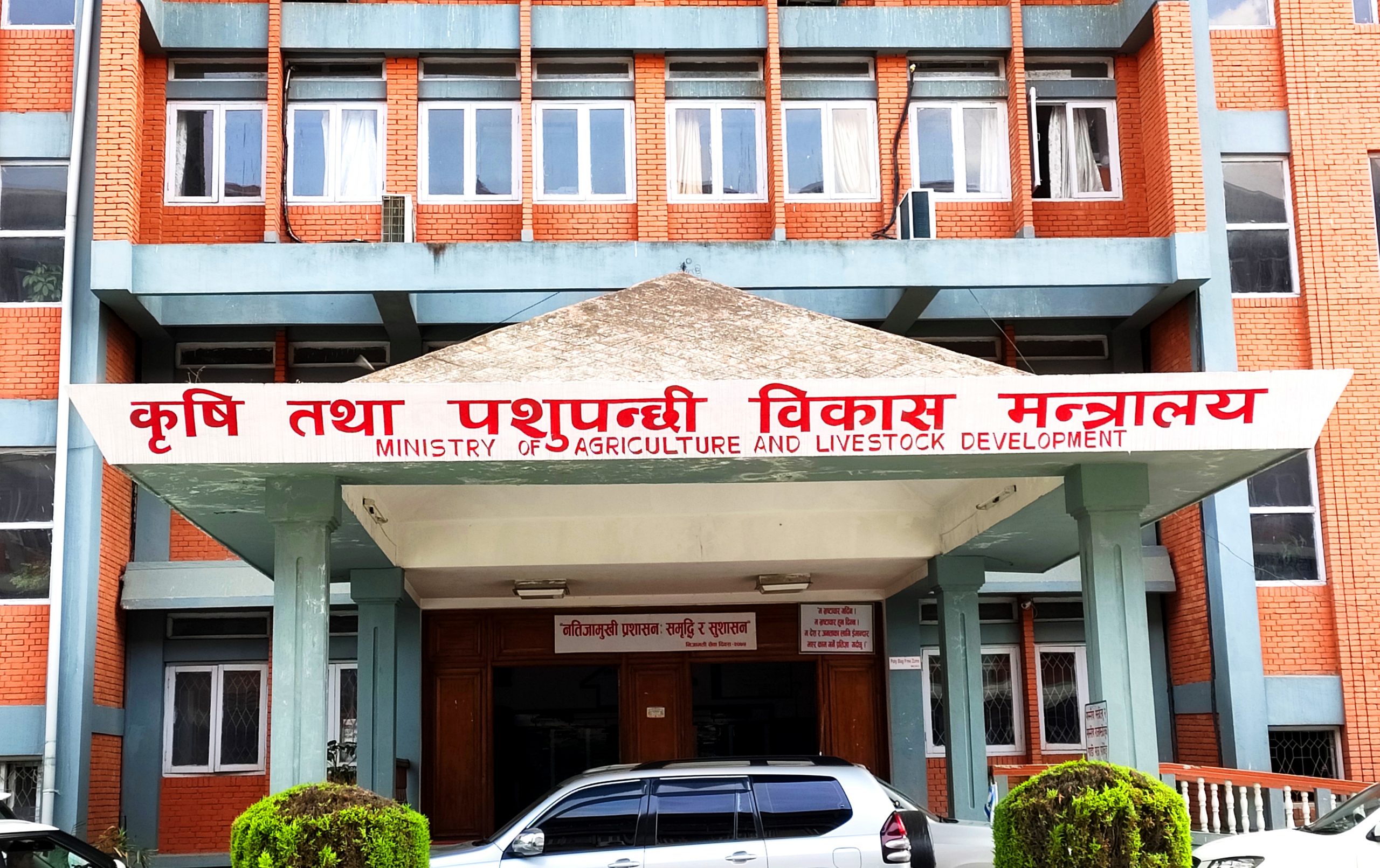
Led by the Ministry of Agriculture and Livestock Development, the survey seeks to generate accurate, reliable and realistic data on the country’s agriculture and livestock sectors.
The initiative replaces the long-standing practice of relying on estimates, which policymakers and experts have long criticised for failing to reflect ground realities.
Recognising the limitations of the old system and the growing data deficit, the government has begun deploying tablet-based technology and electronic questionnaires to collect data directly from farmers at their doorsteps, said Ram Krishna Regmi, Senior Statistics Officer at the Ministry of Agriculture and Livestock Development.
According to Regmi, on-site data collection will ensure a more reliable and evidence-based dataset.
“Collecting data based on estimates is no longer realistic. We have prepared a detailed and comprehensive questionnaire to capture the actual situation of agriculture and livestock in the country,” he said.
Previously, the ministry collected agricultural data through estimates, while the National Statistics Office conducted a national agricultural census once every ten years.
From the current fiscal year, however, agricultural data will be collected annually through sample-based surveys using modern technology. “The ministry will collect agricultural data every year by reaching farmers’ doorsteps using tablets and electronic questionnaires,” Regmi said, adding that detailed data will now be collected on-site based on scientific sample selection.
The survey is being conducted in coordination with all three tiers of government. Local governments will handle field-level data collection, provincial governments will coordinate the process, and the federal government will oversee and manage the survey.
51,000 samples from 700,000 listed households
Under the new system, a nationwide survey is being conducted based on a representative sample of farmers across the country.
Around 700,000 households will be listed from 3,400 sample calculation areas in 71 districts. According to the latest agricultural data, Nepal has about 4.13 million farmer households.
From the listed 700,000 households, 51,000 farmer households will be selected for the survey sample. Regmi said the survey will include farmers ranging from smallholders to commercial producers across 751 local levels, excluding Kathmandu Metropolitan City and Lalitpur Metropolitan City, out of the country’s 77 districts.
"These two metropolitan cities have not been included in the sample survey as they have negligible agricultural land,” he said.
Use of technology, trained personnel
“Agricultural data will be collected using tablets. A comprehensive questionnaire has been prepared covering a wide range of agricultural and livestock indicators,” Regmi said.
The questionnaire includes information on seeds used by farmers, fertilisers, production and consumption, sales and distribution of agricultural products, production costs, market access, financial access, use of agricultural mechanisation, effectiveness of veterinary services, agricultural subsidies and soil testing.
Around 1,000 government employees will participate in the survey, including about 800 staff from 751 local and provincial governments who will be deployed for data collection. The ministry began preparatory work for the survey in the previous fiscal year.
Nearly a year was spent developing the questionnaire to cover multiple indicators of the agriculture and livestock sectors, Regmi said. Final-level training has been completed for survey personnel in 72 districts, except Khotang, Solukhumbu and Okhaldhunga in Koshi Province. Training in these districts will be conducted shortly.
The ministry has already initiated the farmer listing process in Madhes, Bagmati, Gandaki, Sudurpashchim and Lumbini provinces. So far, data from 165,000 households have been entered into the central database, he said.
The household listing phase is likely to complete within two months, followed by the actual survey, which will take another three months.
The ministry is working to publish a preliminary report within current fiscal year, with the final report expected in the early months of the next fiscal year.
Significance for policy, food security
The launch of the annual agricultural survey marks a critical reform in Nepal’s agricultural governance, a sector that employs a majority of the population but has long suffered from weak and unreliable data.
The survey will cover a wide range of indicators, including farm characteristics, production and productivity, food-surplus farmers and districts, crop prices and farmers’ access to credit.
For decades, policies on subsidies, fertiliser distribution, crop insurance, mechanisation and food security have been designed using estimated figures that often masked regional disparities, productivity gaps and emerging risks.
As a result, public spending has frequently been inefficient, with support failing to reach the farmers who need it most.
The annual survey is expected to bridge existing data gaps in agriculture and livestock, help identify food-surplus and food-deficit areas, and support assessments of national food security.
The findings will also assist in formulating evidence-based policies and programmes for the sector. “This year’s survey may take more time as it is the first of its kind, but from next year onward the process will be smoother. Once the 700,000 households are listed, sampling and data collection will be much more efficient,” Regmi said. From next year, samples will be selected from the already listed households to generate annual agricultural statistics.
This landmark initiative is expected to transform the way agricultural data is collected and used in Nepal, supporting better planning, targeted subsidies and improved food security across the country.






-original-thumb.jpg)