- Monday, 25 May 2026

Misuse of social media, AI is major challenge for us
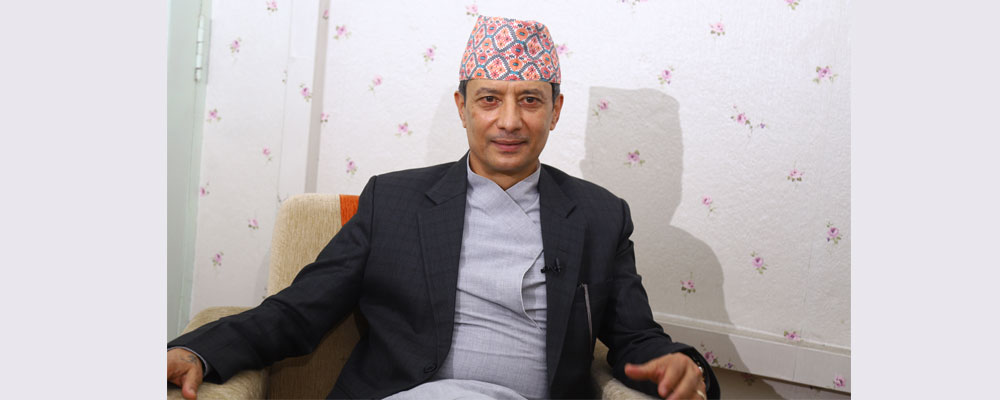
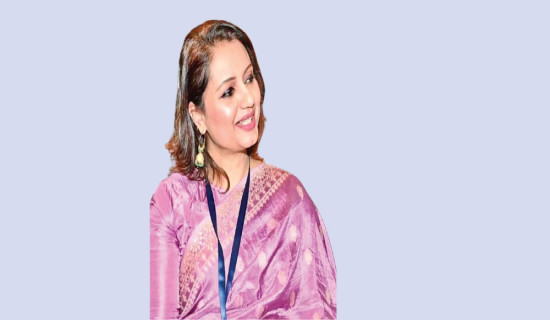
The Election Commission (EC) is in the final stage of preparation for the House of Representatives election scheduled for March 5, 2026. Recently, the election commissioners have been engaging in discussions with political parties, security forces, and media representatives. Additionally, the EC is developing a mechanism to monitor potential activities on social media that may interfere with the election. With all preparations and strategies in place, Raman Paudel from The Rising Nepal and a team from Gorkhapatra had a conversation with Sagun Shamsher JBR, one of the election commissioners. Some excerpts from that discussion:
Who are temporary voters? From where can they vote?
The Voter Registration Act-2073 has clarified who can vote and under what circumstances. Employees at the federal, provincial, and local levels, along with teachers and security personnel, are eligible to vote as temporary voters. Election Commission has already drafted a proper procedure.
However, they must be listed in final voter list realesed by the commission.
In the previous elections, there was an issue where the same person’s name was repeated, the names of the deceased were not removed, and voters who were employed abroad were not allowed to vote. Has the EC made any new arrangements for the upcoming election?
We have just published the final voters’ list. IT experts at EC have worked more efficiently than ever before using our modern technology and equipment. Similarly, we have eliminated many problems such as double nominations and not removing the names of deceased persons in this election. Our IT team has also presented a report, collecting reliable data, regarding these issues.
What technology has been developed so that the general public can check whether their voter list is included or not?
We have created an app for this. Through this app, a voter gets information about where they are and which polling station they should go to vote. The IT section of the Election Commission has developed this technology.
You can check your name right now. It is placed on our website. Voters can check whether their name is there on the Election Commission website. There is no problem with this.
Please tell us where voters can get their ID cards to vote in the current election, and how they are printed?
We are not repeating the election voter ID cards we have already distributed in previous elections.
However, for the approximately one million new voters who have been added now, we will print voter ID cards and distribute them to their respective districts and polling stations ahead of the election. They will vote using the same ID cards.
What about the possibility for voters abroad to participate in the upcoming election on March 5?
There is a question of method and procedure in this regard. The major problem for those living abroad is that there is no law at all.
However, we are in consultation with the government on this issue. There are four main laws -- the Voter Registration Act, the Election Act, the Election Commission Act, and the House of Representatives Members Act.
At the same time, we have said that they should be amended. Or an ordinance should be brought. As far as the issue of voters living abroad being able to vote is concerned, it is not that we cannot make arrangements.
But the major reason is that we are under time pressure currently. It is a difficult task to get everything from voter registration to holding the election. Again, I want to say that our team can conduct this. But the only problem is the time pressure.
What do you think are the major challenges facing the Election Commission?
As for security challenges, there is no problem now as most political parties will participate in the elections. A minor problem is the geography.
Because Himalayan districts experience cold weather in March, there may be problems in terms of logistic arrangement and geography.
In some circumstances, a question of security challenges also arises regarding the issue of escaped prisoners and weapons.
However, a meeting was held with the security agencies only a couple of days ago. They have informed that most of the weapons have been recovered. So it's not a big problem anymore.
But I have to tell one thing, the key challenge is more about the activities that are done through AI or by misusing social media than the traditional ones.
When there is communication warfare all over the world today, social media is being misused. Rather than people going to the booths and looting, propaganda or influencers can disrupt elections.
Fake news or rumours on social media and digital propaganda are challenges.
However, the commission is developing a mechanism to control and regulate it.
For this, we have collaborated with UNDP and the Asia Foundation and have also acquired software from them.
We are developing software and using it in our media centre during this election.
Using that, it censors what you say on social media and gives it to us. It filters out the negative content.
We believe that monitoring tools that censor bad words will be very helpful for us. To the extent that if a person has spoken against the code of conduct or against the election, this tool will remove it.
Media plays an important role in elections. What kind of structure is the Election Commission creating for media monitoring to create an environment for elections?
We have our own component in this current media centre. For that, we have consulted with the army, police, and national investigation department.
We have formed a team including experts and members of the Federation of Nepali Journalists, and the Press Council to use social media monitoring tools, including their equipment.
We will also be able to easily take action on where and how to monitor code of conduct violations. This time, the consultation with the media will also be different from before.
The Commission has said that some changes have been made to the Election Ethics Committee when it comes to the legal framework. What changes has the Commission made to the new Election Ethics Committee this time?
AI is meant to be monitored. We have kept the AI's words so that they are not misused by AI. We have to make the election manifesto public.
We have made a provision that when any candidate goes on a campaign after announcing their candidacy, they must make their manifesto public. It has been said that the candidate must fulfill the promises he/she has made.
Additionally, the practice of parties and candidates transporting voters from one district to another during elections will now be stopped. For this, we are also activating the Election Offences Act.
Once it is in the code of conduct, that offense is also attracted. We can also seek punishment or some explanation.
Even after the candidates won the election and came back saying ‘I spent so many millions,’ the commission did not cancel the candidacy of any candidate, or even cited the provisions in the law. What is the commission doing this time?
In the previous elections, we had set a limit. Any candidate can only spend a limited amount in their constituency.
However, officially, no candidate shows that they have spent more than they are allowed. They do the same with the same expenses when they audit the accounts. They give us the same expenses.
Now our monitoring system has not reached a stage to monitor the expenses made under the table without our knowledge. They have also adopted a new method. This time, we have adopted a slightly new method to counter them too.
This is not just about canceling the candidacy. Asking a candidate or leader for an explanation for a simple mistake is also a stigma for them in the future. Asking a leader for clarification is also a big deal.
The commission focuses on reducing mistakes rather than taking action. As long as there are parties and leaders, they all know what to do and what not to do.
But this time it will definitely be different. My request to them is that they should not violate the code of conduct as far as possible.
For example, in the last election, there have been allegations that spending limits are being exceeded and black money is being used openly. They also said that they have been very strict. Having said that, this time, will the commission take action against those who use black money?
If there is evidence of using black money or using foreign funds, we will take action. But there is no indication of that.
The Election Commission has made some changes to the time frame for implementing the Code of Conduct. After how many days, when will the Code of Conduct be implemented?
We have finalised and published the draft of the code of conduct. Now we will also sit down with the political parties and inform them that we have done this, and how many things will be banned after the code of conduct is implemented.
We do this in a way that they don't have any problems, and no one else has any problems. And the National Assembly elections are also underway. That's why we are preparing to impose a code of conduct by the end of this month. And that will continue until the House of Representatives elections are over.
The constitution mandates women's participation, but parties field women candidates where women lose. Has the Commission made any provision to prevent such a situation? Or has the Commission made any legal provision that only women can contest in that constituency and only Dalits can contest in that constituency?
This is a matter entirely up to the political party. It is up to the party concerned to decide which candidate to field. The commission can only push and support it.
Our electoral law stipulates 33 per cent female participation. While we say that we should make it 50 per cent women, the commission maintains its stance on this as stated in the law.
However, we have always welcomed the participation of women. The commission cannot make laws on this. But the commission can make suggestions. But this is entirely up to the political parties to decide.
The practice in neighboring countries is also 33 per cent. Overall, the choice of candidates, whether they are women or men, is a matter for the political party leadership.
The Election Commission has always been on the side of women and all other minorities and marginalized groups who are left behind. The Commission says that it should be inclusive.
It is not about how far the polling stations and polling centres have been determined, but how voting is being ensured in the mountainous and remote districts. Earlier, you also raised the issue of some 28 districts?
As the coordinator of the polling station, I would like to say that in the districts, there is a polling station determination recommendation committee under the Chief District Officer.
There is a committee of political party security agencies. That committee works in the field and decides on what is most convenient for voters, based on their suggestions and advice.
After sending us the recommendation, there have been 75 changes in polling stations. There are about 10,000 now. There are about 24,000 polling centres.
It is definitely a bit difficult in the Himalayas.
But now we are giving instructions to the local levels. There should be women-friendly, disabled-friendly, senior citizen-friendly polling stations as a basic requirement. They will get the facility of not having to stand in line there.
However, based on the geographical complications as well as our remaining resources, the polling stations will give first priority to the sick, disabled, or helpless. They will not have to stand in queue.
March 5 is the time of heavy snowfall in the Himalayan districts. And no elections have been held in the Himalayan region so far during this time. Has the Commission prepared to hold the second phase in the Himalayan districts and the first phase elsewhere?
About this, we also talked to the security agencies.
When talking to Nepal government, they did not seem to be in favour of it. It can be adjusted, but the date cannot be moved. Now, March 5 is the last date. March 6 cannot be done either.
We have no plans yet to hold elections in the first and second phases. The security agencies have not said that the date should be postponed due to the cold. We also have no plans to postpone the date.
Is the Commission developing any new plans or strategies to increase the participation of women, persons with disabilities, and sexual minorities in voting?
We urge women and men to exercise their right to vote, no matter what. And for the first time in their history, political parties have been registered with the Election Commission.
Now they too will go out to campaign. When they said they would nominate their candidates, their voices became heard in society. We will also campaign to increase their participation.
The commission is starting voter education campaign. In previous elections, many ballots have been invalidated. What is the plan this time to make the voter education campaign more effective and reach the real voters?
Earlier, it was 6 and a half per cent. But the participation is increasing. Now, if the number of voters increases, errors also might increase. Not only because of voter education, but also because of handling, votes were invalidated in the past. A little more than voter education can be overconfidence or a little inattention. But we sensitise them and awaken them. Now we are spreading the campaign about it by sending correspondence to the local levels and deputing volunteers.
In order to make the election credible, not only Nepal but also other countries have a tradition of observing it. External as well as internal observers observe the election. For that, is the Commission doing something new this year or is it the same old tradition?
In accordance with the laws of the Election Commission, according to the instructions of the supervisors, we have called for renewal. It has different parameters. One is national and another is international. We have called upon Nepali organizations and international organizations that have met those standards to be observers. According to this, there are four foreign observers. National observers have reached 34. Regarding foreigners, Carter Center has been added this time. And some new ones from Nepal have been added. Overall, observers have been added.
We have talked about the proportional electoral system. In this election system, it is criticized that it has become a way to bring in the people close to the leaders. Is the Election Commission playing any role this time to prevent this and strictly implement the legal system?
From the cluster specified in the constitution to the provision of proportionate representation, it is the duty of the political party. The Election Commission will check whether it is correct according to the cluster. If they are not cluster-wise we give them time to correct them. But the Election Commission cannot interfere in deciding who they will make a candidate. According to the cluster, we check whether the candidates of the proportional cluster have been given to the closed list or not. We cannot do more than that. The commission cannot make a law for this.
Is the commission able to convince that independent candidates and small parties have received fair treatment from the commission?
It is quite capable. We have interacted with political parties at various stages. We did it in the past and will do it in the future as well. But we cannot call someone a big party and someone a small party. All the parties are equal. If their number increases by winning the election, it will be a big political party and it will be a small party if it gets less votes. But the Election Commission has respected everyone. We interact with all parties. We received everyone's advice and we have given everyone a chance to speak. The Election Commission has not acted in a partisan manner.
Finally, is there any important message that the Election Commission should convey to political parties, all voters, and the government of Nepal?
Thanks to the government of Nepal for their support. All political parties are also going to participate. I request that they too start their campaign fairly. I request the political parties in particular not to violate the code of conduct. Don't accuse each other. I would like to express my hope and confidence that they will help us to conduct the elections in a clean manner. I appeal to the voters to use their voting right and choose the right candidate.
-square-thumb.jpg)