- Friday, 29 May 2026

One in every four child aged 15–19 is still out of school: Report
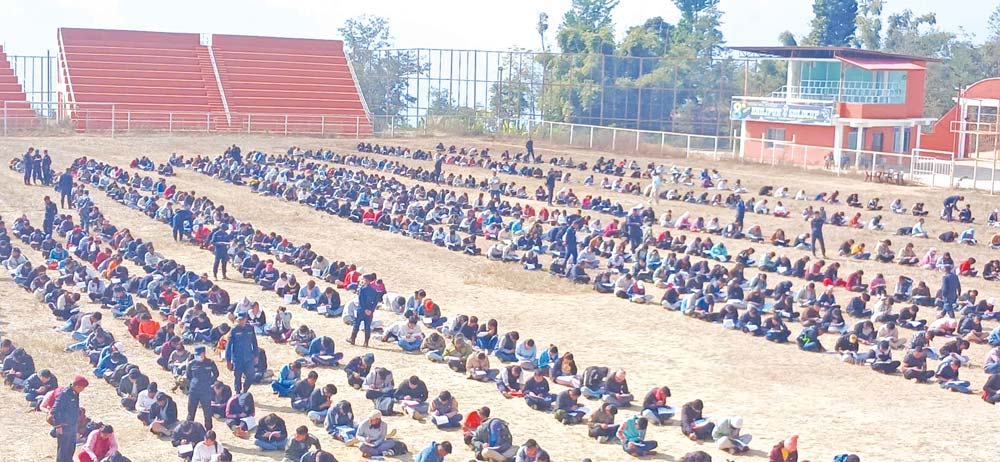

Kathmandu, Jan. 22: The Office for National Statistics released a report this week revealing that many children aged five to 17 are out of school. Presenting a report titled “Education and Inclusion in Nepal,” the Office of Statistics identified that 50 per cent children are never enrolled in school, while the rest discontinue their studies.
It was also identified that while the school attendance rate is high after the age of five, the attendance rate after secondary school is low. The report states that one in every four children aged 15–19 is still out of school.
According to the report, the highest number of children who do not attend school or drop out is found in geographically remote districts and marginalized communities with low income levels.
However, the literacy rate has increased by 16 per centage points over the 10 years from 2068 BS to 2078 BS. Similarly, the literacy rate for children under 18 years of age has reached nearly 100 per cent. In terms of provincial ratios, the literacy rates in Bagmati and Gandaki provinces are higher compared to other provinces.
With this report, one certain reality has emerged: the Sustainable Development Goal of providing access to education for all children by 2028 cannot be achieved, as indicated by the latest findings.
Following the report’s release, experts have raised serious concerns about the large number of children who are out of school. They argue that there is a significant gap between policy and practice.
According to the latest report, the situation is troubling, with thousands of students being forced to drop out of school and not return.
Speaking to The Rising Nepal, Prof. Dr. Bidyanath Koirala said that this situation was created by local and federal governments, including political parties.
“All local governments and political parties are responsible for this result. Regarding the situation, I spoke with several representatives, including heads of the Federation of Rural Municipalities and the Federation of Municipalities. However, they seem uninterested in addressing this condition,” said Prof. Dr. Koirala.
He also argued that affected people should file cases against representatives and political parties, demanding the right to education, as Article 31 of the Constitution ensures that every child has the right to education.
“No seriousness has been shown by political parties and local representatives, although all parties committed to addressing the issue before the previous elections,” he added.
He also pointed out that the Compulsory Education Act, Article 19, ensures that basic education will be provided to all citizens by 2028. Not only political parties, but the constitution itself guarantees the right to education.
However, local governments and political parties must be held accountable for the situation in which a large number of young people are deprived of education, Prof. Dr. Koirala added.
Laxmi Devi Pandey, President of the National Association of Rural Municipalities, agreed that it would be easier to identify specific facts at the local levels regarding the location of children.
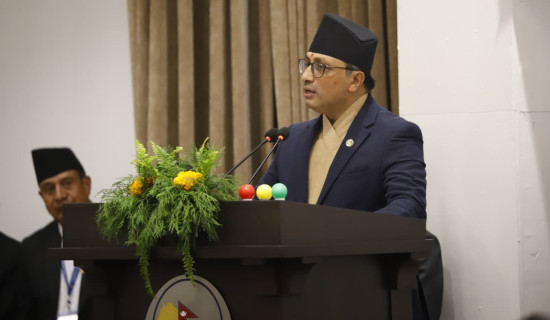
Speaking to The Rising Nepal, Pandey, who is also the Chair of Hukse Rural Municipality, stated that local governments have been integrating school dropouts through equivalent skills training programmes.
“Most municipalities have been assessing the skills of children who have not been able to attend school and issuing certificates of educational qualification. Hukse Rural Municipality itself tested the skills of 50 individuals and distributed equivalent certificates last year,” President Pandey stated.
However, she added that further efforts are needed. She said that every local government must discuss the issue and accelerate initiatives to integrate those who have dropped out of school or who were never enrolled.
-original-thumb.jpg)