- Monday, 25 May 2026

Parliament gallery not ready for new assembly
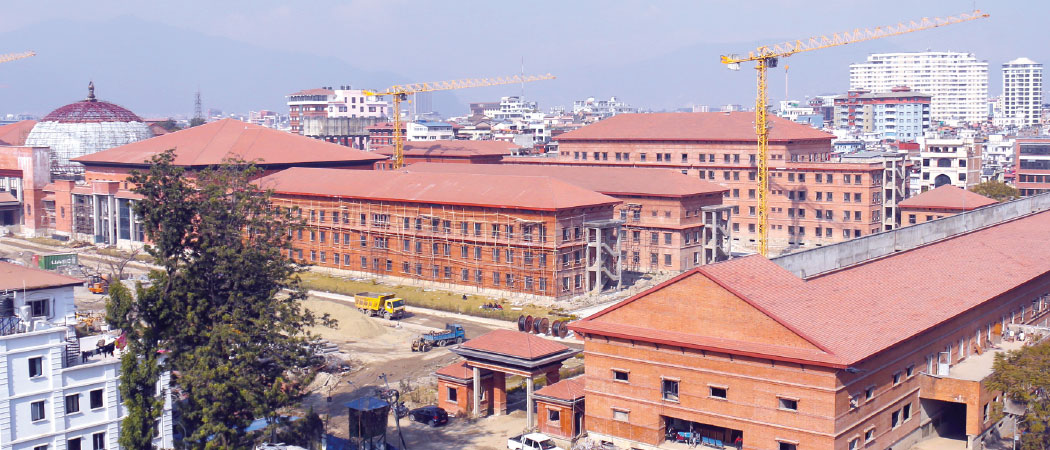

Kathmandu, Mar. 10: An alternative venue will be arranged for the swearing-in of the members of the House of Representatives, as the construction of the new parliamentary building at the Singha Durbar premises will not be completed on schedule.
According to government officials at the Ministry of Urban Development, the construction of the new parliamentary hall could not be completed on time due to technical complications.
Although the Ministry of Urban Development had committed to complete the construction of the new building and preparing the hall for parliamentary meetings by the third week of March, officials said the work will not be finished on time due to sudden complications with the false ceiling.
Speaking to The Rising Nepal, Roshan Shrestha, Deputy Director General at the Department of Urban Development and Building Construction, stated that they would not be able to hand over the new parliament hall by the third week of March.
However, preparations are underway to arrange an alternative hall for the swearing-in ceremony.
More than 300 workers are currently working 24 hours a day, day and night, to complete the hall.
“We are going to arrange a new hall inside the new building, which is still under construction, for the swearing-in ceremony of the new assembly. However, the hall specifically built for House of Representatives meetings is scheduled to be completed only in April, which means it could be about 10 days later than originally planned,” Deputy Director General Shrestha said.
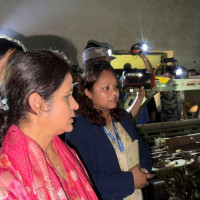
Last Monday, a team of senior officials, including Chief Secretary Suman Raj Aryal, General Secretary of the Parliament Secretariat Padma Prasad Pandey, and Joint Secretary and Spokesperson of the Parliament Secretariat Ekram Giri, inspected the under-construction parliament building.
During the inspection, they were informed that the new hall would be prepared by the third week of March.
Spokesperson of the Parliament Secretariat Ekram Giri said that the Parliament Secretariat had urged the Ministry of Urban Development to complete the parliament hall by the third week of March.
“In a meeting, the Ministry of Urban Development informed us that it is preparing the meeting hall by the third week of March. I believe they are arranging an alternative hall inside the new building,” Giri said while speaking with The Rising Nepal.
He added that parliamentary meetings will not be affected despite the delay in the building’s construction. After the government assured that a hall would be arranged inside the new building, the Parliament Secretariat began preparations to conduct the new assembly.
Deputy Director General Shrestha also said that the alternative hall will have all necessary facilities, including an audio-visual system.
He further informed that the entire construction of the new building would be completed within a month despite the technical complications.
The House of Representatives meeting hall has a seating capacity of 700, including 400 seats in the Assembly Hall and 300 seats in the balcony.
The National Assembly has a seating capacity of 290 in its balcony, while there is a joint lobby with a seating capacity of 350.
Ministers won’t be able to live in quarters for few months
Ministers of the new government, which is expected to be formed within a month, will require
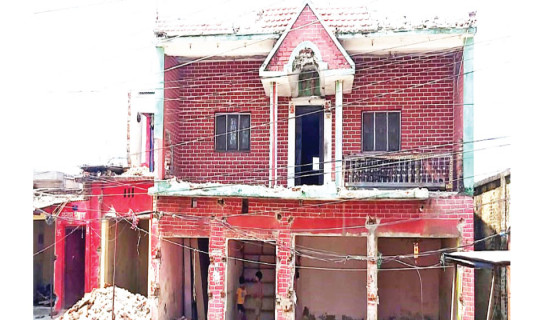
alternative residential arrangements, as the ministerial quarters in Bhaisepati were set on fire during the Gen Z movement on September 9, 2025.
During the movement, 27 blocks were damaged by the fire. However, the government has yet to begin renovation work on the quarters.
Chakrawati Kantha, Superintendent Engineer at the Federal Secretariat Construction and Management Office, said that the renovation of the ministers’ quarters will take time and is expected to be completed only by May.
According to Superintendent Engineer Kantha, bids have been invited for the reconstruction of 11 buildings. However, the reconstruction work has not yet started. Preparations are also underway to invite bids for the renovation of another 15 buildings.
Until the buildings are renovated, the government may provide alternative residential facilities for the new ministers.
“The renovation of the ministers’ quarters in Bhaisepati will take a few months as certain official procedures must be followed. Ultimately, the timeline depends on a high-level government decision on whether to arrange rented housing or provide residential allowances,” Superintendent Engineer Kantha said.
He added that ministers who own private homes in Kathmandu can stay in their own residences until further arrangements are made, while the government may arrange rented accommodation for those who do not have houses.