- Monday, 25 May 2026

Experts urge 55% tax hike on cigarette in upcoming budget
Lalitpur, May 25: Experts have demanded a raise in cigarette excise duty by 55 per cent in the upcoming budget of 2026/27, and recommended continuing with annual tax increase above inflation on all tobacco products.
This will increase the government revenue by Rs. 11-12 billion and is likely to be a catalyst in reducing tobacco use, according to estimates.
"Simplify the 5-tier cigarette tax structure and gradually move toward a uniform specific excise tax system," they said while speaking at a policy dialogue on 'Rationalising tobacco, alcohol and sugary drink taxes' organised by Nepal Development Research Institute (NDRI) in Lalitpur on Sunday.
The NDRI said that the country should aim for strong reduction in tobacco use with ambitious tax rates.
The World Health Organisation (WHO) has recommended raising tobacco excise duties up to 70 per cent of the retail price. But Nepal is lagging much behind this target.
The tobacco tax activists also suggested to introduce a licensing system for tobacco retailers and distributors through local governments. Currently, any retailer, individual or café can sell tobacco products while licensing is implemented in case of alcohol distributors and retailers.
Dr. Jaya Kumar Gurung, Coordinator of Tobacco Control Programme at the NDRI, said that the government, in the past three years, has raised tax on tobacco and alcoholic products by 2-5 per cent making negligible increase in the overall retail price. This rate is also way below the average annual inflation rate which generally hovers above 5 per cent.
It means, tobacco and alcoholic products are actually becoming cheaper.
Demanding for a system to automatically adjust the excise duty on alcoholic products in line with the Consumer Price Index, the NDRI said, "Currently, due to tax rate adjustments made through the annual budget in Nepal, excise duty rates are failing to keep pace with the rate of inflation. As a result, it appears that alcoholic products are becoming even more accessible and affordable over time."
Positive impact on revenue
In FY 2021/22, the government increased the excise duty on tobacco products by 25 per cent which resulted in a rise of Rs. 4.1 billion in government revenue. The following year, excise duty went up by another 17 per cent.
Statistics have shown a positive impact of alcohol on revenue – in the last decade the sector saw about three-time growth in such revenue. Currently, Nepal is implementing the lowest tax (41 per cent) on cigarettes while it is 58 per cent in India, 61 per cent in Pakistan, 73 per cent in Bangladesh and 68 per cent in Sri Lanka.
A raise of 10 per cent in retail price of alcoholic products will send down its consumption by 5-8 per cent. For example, alcohol's consumption had decreased by 64 per cent in Sri Lanka after the country increased tax rate by 20 per cent in 2023. However, it should also be noted that the country was trying to come out from a disastrous economic recession then.
The NDRI recommended that adopting the WHO's '3 by 5' initiative, tax on alcoholic products should be increased by at least a significant percentage. Token tax increases, such as the current 2 per cent, cannot bring about any significant reduction in alcohol consumption, instead, the state is losing out on the opportunity to collect large amounts of potential revenue.
Likewise, a demand was also made to expand the tax base to carbonated, non-carbonated drink, energy drink, sweet tea/coffee and flavoured milk and syrups.
Tax expert Dr. Rup Khadka suggested an administrative setup to effectively implement the tax rise while consumption discouragement campaigns should also be carried out at the same time.
Economist Professor Shiva Raj Adhikari said that the high tax on tobacco and alcoholic drinks not only reduces the consumption but also increases savings of the family, and they need to spend less on such products and health treatment.
"The tax hike decreases consumption of tobacco and alcohol especially in youth and low-income group," he said.
According to recent statistics presented by the NDRI, Nepal has 34 per cent tobacco use prevalence in above 15 years age. This means 6.7 million Nepalis consume tobacco. It kills 39,200 lives each year.
Sin-tax to health insurance
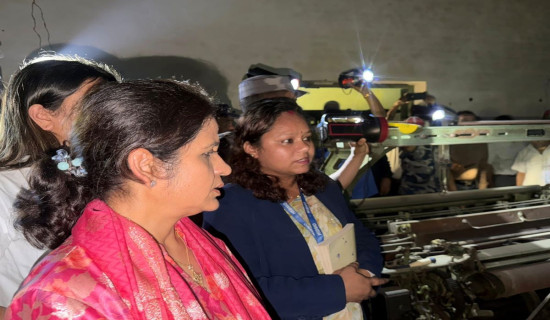
Speaking at the programme, former health minister Dr. Toshima Karki said that the government is in discussion if the revenue raised from 'sin-tax' could be mobilised in health insurance programmes.
Lawmakers from various political parties said that the government should implement step-wise taxation, via the budget of FY 2026/27, on tobacco and alcohol to make it 75 per cent in the next few years. Children should be strictly prohibited from buying and consuming such harmful products, they said while adding, "Government's focus should be public health and greater social benefit, not the revenue."
According to them, it is high time to raise tax on tobacco, sugar and alcoholic products.



-original-thumb.jpg)