- Sunday, 31 May 2026

Equivalence hassles dishearten young experts
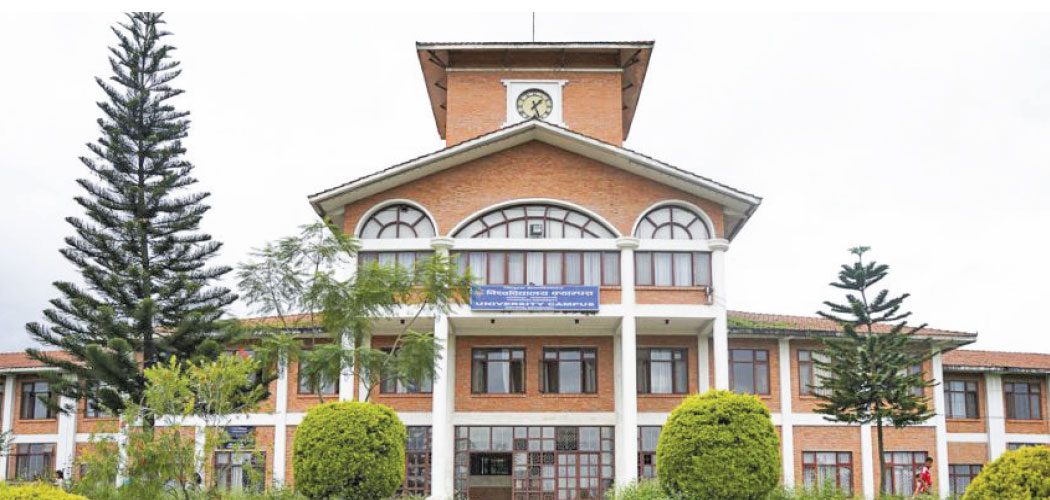
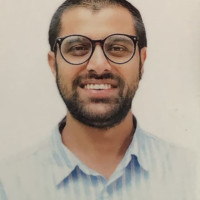
Kathmandu, May 11: Sachin Ghimire, who completed his MPhil and PhD in Medical Anthropology from the Department of Social Medicine and Community Health from Jawaharlal Nehru University, applied for the position of assistant professor at Tribhuvan University six years ago.
He passed the examination and was placed on the waiting list, but his MPhil and PhD marks were not counted.
While applying for the position, Ghimire received an equivalence certificate from the Office of the Dean at the Department of Anthropology.
However, the TU Service Commission later requested further clarification regarding his subject. Ghimire claimed that the office of the Dean, led by Dambar Chemjong, declared that his subject was not specifically related to the required field, even though the TU Administrative Act suggests that only the subject committee can decide whether an obtained degree is related to the required subject.
Ghimire filed a writ petition against the TU Service Commission, including former Head of Department Chemjong.
For the past six years, Ghimire has been fighting against what he describes an injustice by the university. During this period, he staged protests and submitted memorandums to TU officials.
Speaking with The Rising Nepal, Ghimire claimed that corruption has taken root within the university system. He stated that some of his research papers have even been taught in the TU Anthropology Department, yet his subject has still not been recognized as a relevant discipline despite his experience of delivering lecture classes at TU.
“Not an individual, but the entire system is responsible. TU still requires hundreds of teachers, yet many young experts have either remained abroad or returned overseas,” Sachin said.
Like Ghimire, Harsha Man Maharjan completed his PhD from a Japanese university and applied for the post of assistant professor. After failing to secure a position in the Department of Mass Communication and Journalism, he returned abroad to teach.
Laxman Kafle is another individual who suffered due to delays and barriers in receiving equivalence certification from TU. Kafle, who is currently pursuing a PhD at Massachusetts Institute of Technology, USA, said he left Nepal after TU failed to issue his equivalence certificate for over a year.
After graduating in Civil Engineering from Pulchowk Engineering Campus, he pursued a Master’s degree from Tsinghua University, China and later began a fully funded PhD in Geotechnical and Geo-environmental Engineering in the United States.
Kafle said he spent an entire year attempting to obtain equivalency from the TU Curriculum Development Centre (CDC), but without success. Frustrated by the delays, he eventually left the country to continue his academic career abroad.
During the process, Kafle said he experienced not only frustration but also mistreatment. He complained that some employees behaved rudely toward applicants seeking equivalence certificates.
Similarly, Krishna Pokharel, who completed his Master’s degree in Zoology from Tribhuvan University and later earned a PhD in Ecology from Germany, also faced difficulties. After returning to Nepal in 2017, he applied for equivalence for his PhD in Zoology, arguing that Zoology overlaps significantly with forestry and environmental studies. However, he was denied equivalence in the environmental field.
Ghimire added that his PhD certificate, issued by JNU, clearly states that it was an “ethnographic study” conducted within the health system of Rolpa during the conflict period, which he argues lies at the core of anthropology. Despite this, the Head of the Department of Anthropology at Tribhuvan University allegedly refused to recognize it as anthropology without even reviewing the thesis.
“It is like seeing a river but refusing to acknowledge the water,” Ghimire said.
It is estimated that TU issues around 20,000 equivalence certificates annually and receives thousands of applications every year. At the same time, the university has long faced a severe shortage of manpower. As a result, Nepal’s oldest university has struggled to focus adequately on knowledge production and other essential academic responsibilities.
Speaking with The Rising Nepal, Ramsharan Tiwari, Executive Director of the Curriculum Development Centre, acknowledged that several structural barriers exist within the university. He said many of the current issues stem from those systemic problems.
According to Dr. Tiwari, several equivalence-related cases are currently pending in court. An official at the CDC stated that approximately three equivalence-related cases are filed every week. Most complaints are received through Hello Sarkar, while some cases eventually proceed to court.
Dr. Tiwari also expressed concern that, because of these challenges, the CDC has been unable to fully focus on knowledge production and other core responsibilities.
“Basically, we are facing challenges at three levels: manpower, curriculum, and infrastructure,” Dr. Tiwari stated.
Meanwhile, all responsibilities related to equivalence certification are expected to be transferred to the University Grants Commission from July onward. In addition, the government has recently formed a three-member committee led by Prakash Man Shrestha to address the structural barriers within the system.
According to Dr. Tiwari, the newly formed committee will recommend the necessary reforms for the CDC.
“After receiving the committee’s recommendations, the CDC will move forward with policy reforms,” he said.
He further added that at least 20 staff members are required in each central department, while many of the university’s 42 central departments continue to suffer from inadequate manpower.
“Rather than establishing central departments without proper feasibility studies, it is essential to strengthen manpower and encourage new ideas,” he said.



-original-thumb.jpg)