- Monday, 25 May 2026

Constitutional amendment
Eagerly awaited but a challenging task
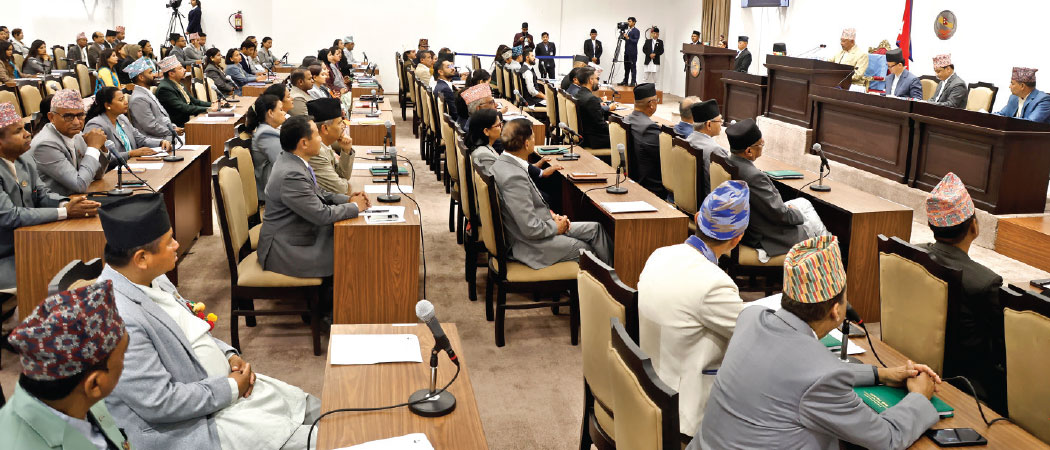

By Raman Paudel, Kathmandu, April. 5: Prime Minister Balendra Shah has initiated a process to amend the constitution by forming a task force led by Ashim Shah, who serves as his political advisor.
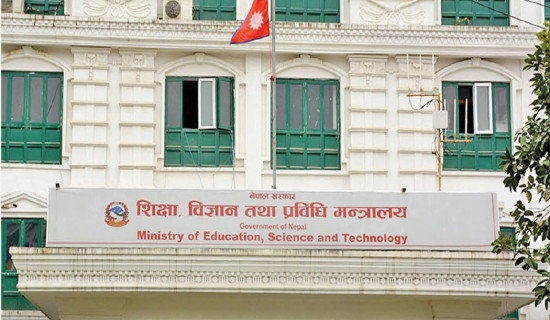
The task force will include members of parliament from various political parties. According to Minister for Education, Science and Technology Sashmit Pokharel, who also serves as the government spokesperson, a consensus of all political parties will be required to amend the constitution.
He added that a discussion paper on the amendment will be prepared through national consensus.
As the task force, led by Ashim Shah, a former filmmaker, began its work, a major concern emerged regarding which articles of the constitution would be amended. The ruling party, the Rastriya Swatantra Party, had made constitution amendment a key agenda in its election manifesto ahead of the March 5 elections. Its agenda includes proposals such as a directly elected chief executive, reforms in the provincial structure, and non-partisan local governance.
A few days ago, Prime Minister Shah held consultations with several members of parliament from different political parties to seek their views on current issues. However, while addressing the matters raised during the discussions, he made no mention of any plan to amend the constitution.
During the dialogue, the Prime Minister emphasised governance reforms. However, in his brief speech, he did not indicate any plans for a constitutional amendment. According to participating MPs, his remarks suggested a focus on improving service delivery rather than hinting at constitutional changes.
Meanwhile, stakeholders, including constitutional scholars, have expressed concern that the government has approached this serious and sensitive issue in a somewhat casual manner. They argue that the process is not being led by individuals with adequate legal expertise or parliamentary representation. Some experts also fear that the issue of constitutional amendment is being overshadowed.
Ashim Shah is not an elected representative in the current parliament and has a professional background in filmmaking and documentary production. Adding to the controversy, a social media post he made five years ago, stating, “Come, King, save the country,” and suggesting that the monarchy should be given another chance, has resurfaced. This has raised questions about his appropriateness for leading such a weighty task.
Khimlal Devkota, a leader of the Nepali Communist Party and former member of the Constituent Assembly, expressed skepticism about whether the task force’s work will lead to actual amendments.
Speaking to The Rising Nepal, Devkota noted that while forming a task force may be part of preliminary work, constitutional amendment is far more complex in the current context.
“If we truly expect representation from all parties for constitutional amendment, the task force must reflect that level of inclusiveness,” he said.
Constitutional expert Bhimarjun Acharya has criticised the government’s approach, stating that it goes against constitutional norms and values. He argued that the government appears insensitive to constitutional ethics and principles.
“It seems that the government is trying to divert attention from a complex and serious issue like constitutional reform,” Acharya said.
Similarly, Pradip Gyawali, a former minister and CPN-UML leader, remarked that the ruling party and the government appear to be treating constitutional amendment too lightly.
“It seems the government considers constitutional amendment to be an ordinary issue. Prior consultation with political parties was necessary before forming such a task force, but that does not appear to have been done,” he said.
Devkota explained that immediate amendment is unlikely due to potential obstruction in the National Assembly and the complexity of securing consent from provincial governments.
Constitutional amendment requires a two-thirds majority in both the National Assembly and the House of Representatives, as well as approval from provincial governments. Since traditional parties hold majorities in the NA and provinces, and the RSP does not, the process becomes even more challenging at least before the local level election.
However, constitutional scholar Bipin Adhikari welcomed the government’s initiative, suggesting that it could be an opportunity to reconsider the monarchy. In a recent television interview, he argued that constitutional amendment could help correct the course of Nepali politics, linking it to national sovereignty and state identity.
In contrast, Devkota argued that the mandate from the March 5 election does not support constitutional amendment. In stead, he emphasised that the public mandate focuses on good governance and corruption control.
“While certain provisions can be amended, the achievements made so far should not be undone.
We need around 200 new laws to institutionalise the current structure. The public mandate is clearly for good governance, not constitutional amendment,” he said.
Many stakeholders remain uncertain about the effectiveness of the task force, despite acknowledging the need for constitutional amendment. Several constitutional scholars and political leaders believe that the task force, under Ashim Shah’s leadership, lacks the qualifications necessary for meaningful deliberation.
Raman Kumar Shrestha, former Attorney General and former President of the Nepal Bar Association, stated that traditional parties do not seem to trust the task force.
“It is important to move forward with constitutional amendment, but the key issue is how much work the task force can actually accomplish. Without the support of traditional parties, amendment will not be possible,” he said. Similarly, constitutional scholar and former National Assembly member Radheshyam Adhikari suggested that an advisory committee is essential for the amendment process. Nilambar Acharya, a senior constitutional scholar and former minister, also argued that the task force lacks the credibility needed to generate serious discourse on constitutional amendment.
Although several political parties, including the ruling RSP, have included constitutional amendment in their election manifestos, they have yet to clearly specify which provisions they intend to amend. Additionally, conflicting statements from RSP leaders on issues such as provincial structure, local governance, and the executive system have created confusion.
Madhes-based parties and constitutional amendment
The issue of constitutional amendment has long been central to Madhes-based parties. During earlier political movements, these parties initially rejected the constitution and only withdrew their protests after an agreement was reached to amend it. As a result, constitutional amendment has become closely linked to their demands for political rights.
During the tenure of former Prime Minister KP Sharma Oli, negotiations on constitutional amendment with Madhes-based parties remained a priority. Prime Minister Shah has also consulted these parties while forming the task force.
Although Madhes-based parties failed to achieve national party status in the March 5 election, their leaders are still expected to exert pressure on the government regarding constitutional amendment. Likewise, PM Shah, who originally belongs to Madhes, had sought votes to ensure that the ‘son of Madhes’ won the election.
The same election campaign in Janakpur spread so widely that the RSP emerged as the largest party with by far the most popular votes in the current parliament. This is why the Madhesi community now expects a constitutional amendment from the new government.

-square-thumb.jpg)