- Monday, 25 May 2026

JEMC completes printing of school textbooks, all set to begin distribution
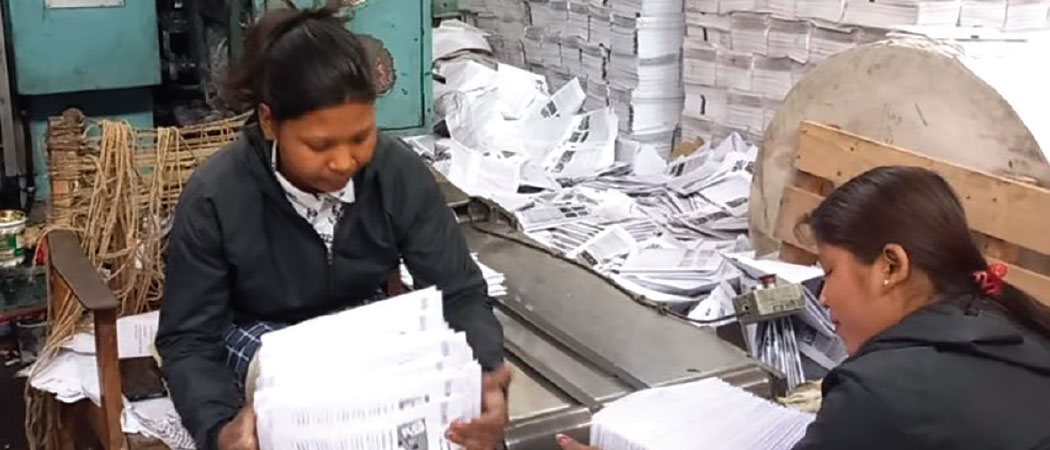

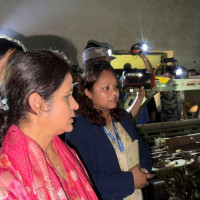
Kathmandu, Mar. 22: The printing of text books for the academic session 2083 has been almost complete, according to Janak Education Materials Centre (JEMC).
It is also learnt that textbooks will reach schools across the country by the second week of April, in time for the new academic session starting in mid-April.
Officials at JEMC stated that the printing of new textbooks has been completed. According to Yadu Nath Paudel, Managing Director, the Centre was assigned to print 18 million textbooks for the new academic session.
For the new session, Janak Education has printed textbooks for Grades 3 and 5-12, while textbooks for Grades 1, 2, and 4 are being printed by private publishers.
There were concerns about whether the Centre, which was also tasked with printing ballot papers for the recently concluded House of Representatives elections, would be able to deliver the textbooks on time.
However, Paudel said that despite the busy schedule, the textbook printing work has been almost completed.
Officials at the Centre also stated that all students across the country would receive textbooks ahead of the new academic session. To facilitate distribution, the Centre has listed private distributors, with more than 1,200 distributors selected.
Til Bahadur Adhikari, Chief Director of the Production and Distribution Directorate at JEMC, said that the printing task is nearly complete, with more than 4.5 million books remaining in stock from last year.
Speaking with The Rising Nepal, Adhikari said that more than 16 million textbooks have been printed and preparations for distribution are under way.
According to him, students across the country require at least 17 million textbooks annually, and the remaining 4.5 million books from last year will also be distributed.
“We have completed printing the textbooks for the new academic session. Now we are preparing for distribution across the country. Distribution procedures have already begun in the Himalayan regions. From next week, we will begin distribution through all 1,200 distributors across all districts,” Adhikari stated.
He added that the printing of textbooks for Grades 11 and 12 will also begin next week.
The Centre stated that textbooks for Grades 1, 2, and 4 have been printed by the private sector, while those for Grades 3, 5, and 6-12 have been printed by Janak Education. Although most of the required books have been printed, there are concerns that a large number of books may remain in storage.
To address this, the Centre has set a schedule to distribute books to schools nationwide. The Curriculum Development Centre (CDC) is preparing to deliver books to all districts by April 1.
According to Im Narayan Shrestha, Director General at the CDC, new textbooks for three additional subjects -- Mathematics, Computer Science, and Economics -- for Grade 9 have been introduced this year.
He also noted that corrections suggested in previous years have been incorporated into the new editions.
Textbooks delivered on time, but negligence remains
Although the government claims that textbooks have been distributed on time, several private publishers have been printing and selling books without authorization.
While the government outsources textbook printing to selected private publishers based on strict criteria, some unauthorized distributors are selling books more quickly than the official system. This has made it challenging for government agencies to regulate such wrongdoing.
Last year, monitoring teams deployed by the CDC identified unauthorized sellers in several regions and imposed fines. Only publishers who meet the prescribed standards and obtain official permission are allowed to print and distribute government textbooks.
In the past, delivering textbooks to schools especially in Himalayan regions was difficult. Many students were forced to sit for exams without having access to textbooks for an entire academic year.
Although the situation has improved in recent years, there are now widespread complaints about the quality of textbooks.
The quality of textbooks provided to community school students has been criticized for deterioration. Issues include unclear images and illustrations, weak binding, and poor-quality paper. Some teachers reported that the binding was so weak that the books do not last the entire academic year.
Other common problems include shadowed or blurred text, overlapping prints from adjacent pages, upside-down pages, misaligned cuts, and disorganized content that doesn't match with the table of contents.
There are also concerns about the quality of paper used. Although the CDC sets standards for paper quality, laboratory tests in recent years have found that some textbooks use paper below the required specifications.
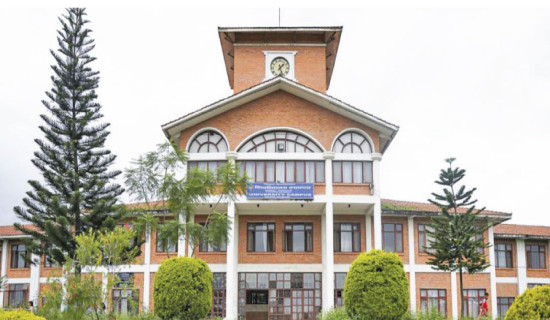
Education expert Dr. Bidhyanath Koirala, former head of the Central Department of Education at Tribhuvan University, stated that negligence by some private publishers and distributors has negatively affected students and parents.
He noted that while assigning private distributors is not inherently problematic, their carelessness must be stopped.
“Many private publishers sell books faster than the government system, but often compromise on quality for profit, sometimes in collusion with school headmasters. This reflects a lack of professional integrity and must be discouraged. Such practices should be regulated by the government,” Dr. Koirala said.
He added that although only a few publishers are negligent, their actions impact students and parents significantly. At the same time, he emphasized that involving private publishers remains necessary.
“Assigning multiple private publishers is important, but there must be a strong monitoring mechanism to ensure quality and protect students’ rights,” he said.
Similarly, every year, textbooks use outdated and irrelevant facts, and in some cases, articles are published that blame certain castes or communities. Some textbooks even contain incorrect information.
Last year alone, dozens of teachers and parents pointed out errors in the textbooks.
The CDC has been correcting such errors, but every year some errors are spotted. In addition, there has been criticism from various parts that there is bias in the selection of subject matter in the textbooks.
Some research has also concluded that textbooks are biased against Iconic Nepali women leaders compared to foreigners. Similarly, there has been criticism that some content is biased against Dalit and underprivileged communities.
Meanwhile, CDC officials stated that they have selected seven private publishers based on specific criteria for printing and distributing textbooks.
Purusottam Adhikari, Director and Information Officer at the CDC, said that the selected publishers have met all required standards, including paper quality. However, monitoring will continue after the academic session begins.
“In the past, some publishers were found negligent. This time, all selected publishers have met the standards. After the academic session begins, we will form a monitoring committee.
If any publisher fails to meet the standards, action will be taken according to the Curriculum Distribution Guidelines, including blacklisting, if necessary,” he said.
Meanwhile, Nim Prakash Singh Rathour, Director and Information Officer at the Centre for Education and Human Resource Development (CEHRD), stated that the textbooks will be reviewed once Janak Education submits its report.
“If any errors are found, they will be corrected, or necessary action will be taken,” Rathour said.