- Tuesday, 28 April 2026

Right Decision To Scrap Partisan Unions

The government, under the leadership of Prime Minister Balendra Shah, has decided to scrap politically affiliated unions in educational institutions across the country. On April 20, the Prime Minister instructed vice-chancellors of universities to immediately implement the decision. The Prime Minister has taken a firm stand that the decision must be implemented in its entirety as it is a means for purging educational institutions of the dirty game of politics being engaged in by teachers, professors, students and employees. The Prime Minister, declaring that no law would preclude the abolition of politically affiliated unions rooted in the education sector, dared those teachers, professors or employees engaged in politics to step away from their professional responsibilities and engage in active politics.
It may be noted that in the past, too, various leaders spoke about the need for abolishing unions affiliated with one political party or the other. But no concrete action was taken to practise what they preached. Former Education Minister Sumana Shrestha sought to end the politicisation of the education sector by targeting teachers and professors involved in politics. For this, she sought details of teachers and professors engaged in politics from the Election Commission and district education units. The move was bold, but she had to collect brickbats from the top leaders of the Nepali Congress, the CPN-UML and the then CPN-Maoist Centre. Former Education Minister Bidya Bhattarai, too, tried to continue the move, but to no avail.
Political interference
Former Education Minister Mahabir Pun also tried to free the education sector from the shackles of political interference. He declared that no law allowed teachers and professors engaged in the education service to get involved in politics and the law allowed them only to collectively bargain for their rights and interests. He went as far as to say that his ministry would no longer recognise teachers’, professors’ or employees’ unions affiliated with political parties.
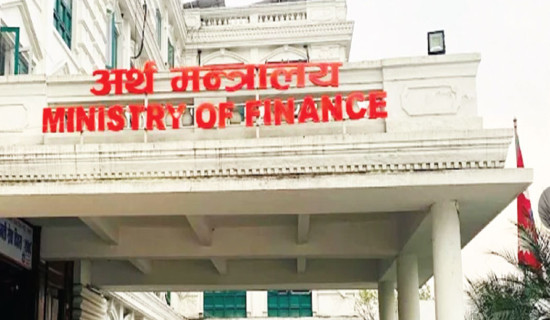
The government has decided to ban student unions, which will be replaced by student councils. Student councils will be independent, non-political and non-partisan and will focus on the interests of students. Such action will prohibit students from forming unions associated with one political party or the other and enhance the quality of education by promoting an effective teaching-learning environment. The Ministry of Education has declared that it will no longer recognise teachers’, professors’ or employees’ unions affiliated with any political parties, seeking to have in place independent professional bodies without a tinge of political affiliation.
Educational institutions are sacred places of learning. But they had been used as political platforms for producing political cadres or even leaders. With the reinstatement of multi-party democracy in 1990, many political parties arose. With this, unions affiliated with one political party or the other also emerged not only in the education sector but also in the health sector and in factories. The unions members were loyal to the political parties they were associated with, giving short shrift to their institutions. They allowed the political leaders or parties they were affiliated with to influence or interfere with the policies and practices of their institutions to the advantage of the latter. The teachers, professors or employees grew irresponsible under political protection and they often enjoyed impunity for dereliction of duty. One of the reasons for the collapse of one factory after another after 1990 was unionism. The demands put forth by multiple unions were so unconscionable that the factories had no option but to close down. The major parties responsible for this still have no regret.
The drastic measure initiated by the government as part of its 100-point governance reform agenda is highly praiseworthy. The abolition of politically affiliated unions will enhance academic excellence, meritocracy and professionalism. Some people may argue that higher educational institutions are forums for political debates that encourage students to gain insight into political ideologies and developments. But they need not involve themselves in active politics at the cost of their studies for such purposes. Yes, everyone is influenced by politics and they can familiarise themselves through various means. Moreover, those who are very eager for politics can study political science as a subject in university.
Given that efforts to depoliticise the education sector miserably failed in the past, the recent move of the government may face challenges in its implementation. Students and teachers have already protested against the move. There may be security and other threats against the educational institutions. However, the government has taken a bold step towards implementing the move at any cost. The Prime Minister has instructed the vice-chancellors to report such threats to his Secretariat or the ministry concerned.
Right time
The government should, under no circumstances, back down from its decision. This is the right time for the government, with a near two-thirds majority, to maintain the sanctity of educational institutions. Further, it may not be out of place to mention that there is a provision of the Prime Minister becoming the ex officio Chancellor of universities. Accordingly, the Prime Minister is the Chancellor of multiple universities, including Tribhuvan University, Kathmandu University and Pokhara University. In this capacity, the Prime Minister has the right to appoint vice-chancellors, rectors and registrars on the recommendation of a selection committee. This provision, however, gives rise to a breeding ground for political interference in university affairs.
Former Prime Minister KP Sharma Oli also once said that such a provision should be extirpated but he did not take the initiative in eliminating the provision. The government should now remove this provision and promote vice-chancellors to chancellors, allowing them to run the universities academically and professionally free from political interference.
(Maharjan has been regularly writing on contemporary issues for this daily since 2000.)