- Thursday, 11 June 2026

Ajeet Cour, A Creative Dreamer
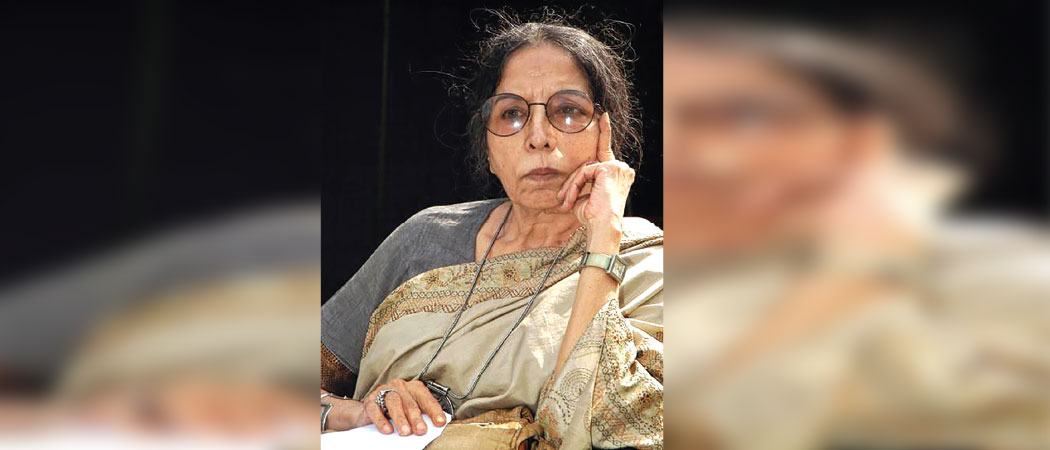

When the South Asian Association for Regional Cooperation (SAARC) was founded in 1985, its primary focus was economic expansion, smooth trade, and cooperation. Though the notion of cultural connectivity was an underlying theme, it wasn't prominently featured in its foundational papers. Ajeet Cour, a renowned Panjabi writer, astutely observed that this regional organisation of seven countries underestimated the importance of culture and the shared civilizational ethos connecting its people.
Then, she chased a dream of creating an organisation that would bring together writers, poets, scholars, artists, thinkers and social activists who would contribute to peace and fraternity in the region, passing through turbulent times. In 1987, she organised a Writers’ Conference of Indian and Pakistani writers to establish a platform for sensitive and creative minds to come together. It set a historic milestone, giving birth to the Foundation of SAARC Writers and Literature (FOSWAL).
Visionary drive
Her visionary drive became a reality with the first-ever SAARC Writers Conference in April 2000. In her welcome address, she said, "We are the mad dreamers of the SAARC region. Let governments do their political and diplomatic work. Let us, the writers and the creative fraternity of the region, endeavour to build bridges of friendship across and beyond borders.” The establishment of FOSWAL heralded a new era of cultural connectivity in the region plagued by poverty, political mistrust, ethnic division and recurrent border disputes.
“Creating FOSWAL was virtually an impossible dream but it eventually came true,” Cour, 91, told this writer in an interview in 2024. FOSWAL is now the cultural wing of the SAARC Secretariat and is authorised to work under the official SAARC banner. It is the first and only non-governmental organisation working for Track II ‘Public Diplomacy’ in the specific area of culture. Every year FOSWAL Literature Festival is held at the Academy of Fine Arts and Literature in New Delhi.
The expenses of literary meets are borne through the sale of paintings of Arpana Cour, a celebrated artist and the daughter of Ajeet Cour. This sounds like a crazy idea but the grand benevolent initiative inspires millions of people bound by a common cosmopolitan value. This is an example of high idealism that can be translated by only those who have courage, compassion and vision.
With 33 books to her credit and a recipient of several honours, including Sahitya Akademi and Padma Shri, Cour is a novelist, poetess, editor, philanthropist, pacifist, and crusader for women's rights. She is one of the 1,000 Women Peace Crusaders across the globe for the collective Nobel Peace Prize. Her autobiography, Khanabadosh, is a fascinating collection of reminiscences about the momentous events in her life that had considerable, even decisive, significance and influence in shaping her personality and destiny, according to a brochure received from the FOSWAL.
“Her voice rings clear and loud because she has been standing up against injustice and discrimination in every sphere of life, be it personal, social, professional or political, even pro-human. Her tales portray life in the raw, in all its naked beauty and ugliness and her literature lifts the oppressed,” it states.
Cultural connectivity
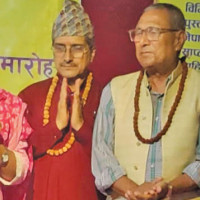
The 66th FOSWAL literary festival was held in New Delhi on November 9-12, with the theme of ‘Cultural Connectivity in South Asia. The motto aims to bridge the perceived or real divisions witnessed in the region. It holds potential to melt the geopolitical tension between the nations. In her opening speech, Cour said, “We, the writers and dreamers of the SAARC region, have always believed that culture heals where politics divides.” A total of 11 Nepali poets and writers presented their works at the literary gala, attended by poets and scholars from all SAARC member states, except for Pakistan and Afghanistan.
Spirituality has been a defining element of cultural bond expressed through art and literature. In 2006, FOSWAL organised a three-day international conference on the theme of Sufism to promote peace, co-existence and harmony in the region, which creative giant Cour has been pursuing throughout her life.