- Monday, 25 May 2026

Govind Narain: A Paragon Of Power And Decency
 Madan Kumar Bhattarai
Madan Kumar Bhattarai
Madan Kumar Bhattarai
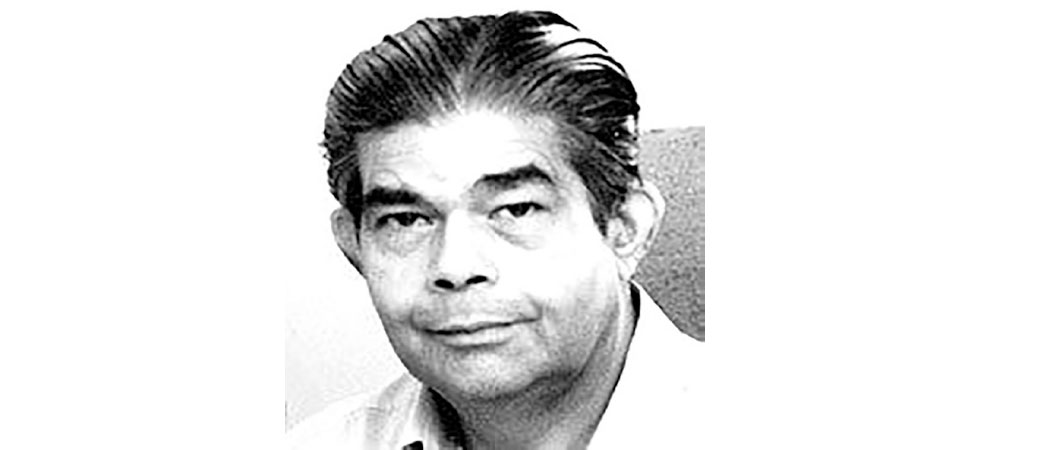
I first met Govind Narain (May 5, 1916 - April 3, 2012) in 1989 after arriving on deputation as First Secretary in the Embassy in New Delhi. I will first briefly go over the circumstances that led to my meeting with the senior Indian bureaucrat.
In the appointment letter, the Foreign Ministry had clearly designated me as First Secretary to aid and assist Minister (Economic) Shanta Ram Bhandary, who was considered to be an expert on foreign trade, having spent a long time as Director of the Trade Promotion Center. My Kolkata experience for nearly five years as consul and stint as an officer looking after trade and transit relations with India might have played a role in giving me the responsibility.
But to my surprise and utter disbelief, Ambassador Bindeshwari Shah (who sadly died on January 2, 2025), on the very first day of the assumption of work, allocated my duty as an officer to exclusively look after the political section authorising to draft monthly political reports and other papers related to bilateral relations. To be very honest, she probably overrated me, but I tried to help her in the best possible way.
She also instructed me to read newspapers and periodicals and, as and when necessary, refute stories that may appear contrary and prejudicial on policy terms to our official position. My initial experience in The Rising Nepal and some degree of supposed flair in writing might have also led her to assign me the task. I also used to accompany her to her high-level meetings as a note taker. Besides, I had to attend seminars and workshops relating to Nepal, making my schedule a highly crowded affair. To be honest, I could hardly attend to my specified work as number two to the economic minister, and I used to handle these matters either in late hours or at home. As political relations between Nepal and India were not on the right track at that time, all sorts of activities against the establishment were taking place both in Nepal and outside, especially in India.
This was the major reason that I had to cultivate ties with people both inside and outside the government. I had, therefore, gone to Govind Narain to seek advice and discuss potential reasons for the stalemate in our relations and possible solutions, as he was a senior bureaucrat with experience of Nepal. We had a huge generational difference in age and experience, as he was at least a generation older than my father. He survived for long, and that too in the most active sense. We are really grateful for his feedback on the nitty-gritty of government machinery in India and India's traditional posture towards Nepal. This association lasted for a long time, with more regular contacts during my second innings in New Delhi as deputy chief of mission, and continued until his death in his mid-nineties.
A man of sophistication and manners, Narain liked me so much that he used to invite me and my wife regularly. One human angle of our mutual ties is reflected in the way he arranged the treatment of the son of his driver during his stay here, Bekha Bahadur Maharjan, as per my request, as it was otherwise impossible for the poor man to do so.
An ICS (Indian Civil Service) officer of the 1939 batch, he served under two masters, British colonial officials and post-independence leaders. He was also educated literally in two Oxfords, old (London) and new (Allahabad, now Prayagraj), as Allahabad University, which was the successor to Central Muir College, was called the Oxford of the East.
Ambassador Professor Surendra Bahadur Shrestha, who sadly passed away recently and studied in that iconic institution, told me that hostels in Allahabad University had prominently displayed names of alumni who rose high in public life, and Narain was one of them.
The senior administrator neatly divided his long administrative and constitutional career into four important phases. The first pertained to his home state, Uttar Pradesh, where he served as Collector of Aligarh, Home Secretary and Chief Secretary. Historian Rasheed Kidwai credits him for saving Aligarh Muslim University during the communally charged politics of the early days of India's independence.
The second and possibly the most powerful position he ever enjoyed in his long bureaucratic career related to his posting as Secretary to King Tribhuvan and Adviser to the newly established Public Service Commission (PSC) of Nepal. My interactions with many top Indian bureaucrats showed that Narain was the second choice for the Nepal posting after Dharma Vira, quite senior to him in the ICS roll, pleaded inability owing to his wife's illness. Narain not only earned the fullest confidence of the Nepali monarch but also cultivated good relations with royals, politicians and the Indian Embassy.
He thus became an effective go-between between King Tribhuvan and Prime Minister Nehru. He also eased the matter relating to unnecessary rumours relating to the second marriage of then Crown Prince Mahendra. The third epoch of his impressive career graph was top civil service positions in the government of India, such as secretary of defence production, home secretary during the Bangladesh war, and defence secretary. He was involved in the recruitment and deployment of Mukti Bahini. He also played a leading role in boosting India's defence cooperation with Moscow. The fourth was, of course, his post-superannuation appointment as Governor of Karnataka from 1977 to 1983. This period saw four changes of governments in addition to a short spell of President's rule putting him in the focus. He was taken as one of the most effective governors of his time.
The last but not the least feather in his cap, which the suave and self-effacing gentleman did not like to mention, was his active life as a retired administrator but re-attired civil society activist involved in many public causes and concerns, including his role in the investigation of the massacre of Sikhs in Delhi following Prime Minister Indira Gandhi's assassination in 1984.
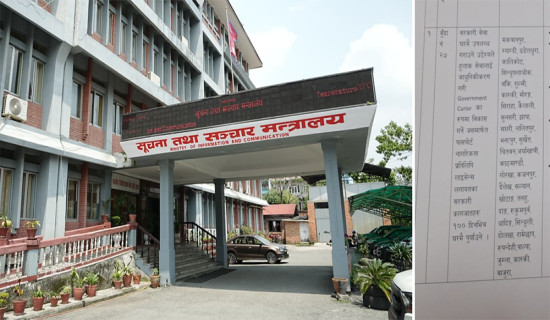
To go back to his Nepal days, there is always an impression that he was the actual ruler during the period he served as King Tribhuvan's close associate during 1951-1954. He is possibly the only civilian authority in post-1951 Nepal to get full terms of reference in the name of the monarch, T. B. Shah (King Tribhuvan Bir Bikram Shah Dev), that was published in the Nepal Gazette on October 24, 1951. This notification gave him wide-ranging powers, making him the topmost and most powerful bureaucrat of Nepal for three years.
There is absolutely no doubt that he commanded sweeping powers in the palace administration and government bureaucracy that was just trying to shape after a century of Rana oligarchy, and minutes of cabinet decisions were prepared in English in those days. First Foreign Secretary Sardar Narendra Mani Acharya Dikshit used to often accuse him of engineering his eventual resignation.
Dikshit was firm in his belief that the Indian administrator was dead against him. To my query about the complaint, Narain replied that it was just a matter of misunderstanding and misconception on Dikshit's part, as the latter "badly misunderstood" his eventual promotion as a demotion, and there was no other "conspiracy angle" to this matter as Dikshit alleged.
Interestingly, Dikshit's son-in-law, Kul Shekhar Sharma, was one of Narain's favourites, as he and Ishwari Man Shrestha were his handpicks. Narain said that Sharma and Shrestha could be compared to any competent member of the Indian Administrative Service, IAS. It is to be recalled that both bureaucrats reached the top of their careers and assumed ambassadorships.
To his credit, Narain laid down the framework of Nepal's administration, including drafting Nepal's administrative and legal statutes, rules, regulations and manuals. First Chairman of PSC Sardar Nagendra Man Singh Pradhan told me that he had smooth sailing with Narain but frosty relations with legal adviser Balkrishna Ganesh Murdeshwar, another top official who helped in legal and constitutional aspects.
It is to be recalled that Murdeshwar's youngest daughter is Ambassador and author Lakshmi Puri, who spent long years in the Indian foreign service and international organisations. She is the spouse of her batchmate and senior diplomat, and currently cabinet minister in the Indian government led by Prime Minister Narendra Modi, Hardeep Singh Puri.
To go back to Narain, one joke prevailed during his stay in Nepal from 1951 to 1954. Nepal was ruled by a king taken as an incarnation of Narayan, with Kathmandu Valley protected by four Narayans as guardian deities, Changu Narayan, Bishankhu Narayan, Ichangu Narayan and Shesh Narayan. Govind Narain was, however, taken as the fifth but most powerful human, Narayan, calling shots in state affairs.
Besides Narain, another powerful Narayan was, of course, Ambassador Sir Chandreshwar Prasad Narayan Singh. One more adviser was Brij Narayan, not to speak of Ambassador Shriman Narayan, a Gandhian economist, who later became Ambassador. In the fifties, there were some important Narayans in Nepal's political landscape too, Ram Narayan (Mishra), Parashu Narayan (Chaudhary) and Mahendra Narayan (Nidhi). Many other Narayans have also loomed large in later days, including three foreign ministers, Narayan Kaji Shrestha, Dr Narayan Khadka and Narayan Prakash Saud, in recent years.
In Narain's rating, King Tribhuvan was his best boss, followed by Jawaharlal Nehru and Lal Bahadur Shastri. He calls the Nepali king an open book and at home with all his associates, ministers, advisers, secretaries and other officials. He found in Indira Gandhi a leader full of energy and versatility but not always consistent and prone to changing her mind at any time. His estimate of the then Crown Prince Mahendra was different, as the latter preferred to observe and maintain silence and did not speak his mind easily despite being homely and cordial after close acquaintance. His evaluation of King Birendra, which he gathered during his visits to Nepal and the king's visits to India, was that he was a patient listener, enjoyed exchanging ideas and was quite accommodative and prone to easily change his position once he was convinced of the bona fides.
To conclude, for his exceptional services, Narain was awarded the Padma Vibhushan. One of his two daughters was married to IAS officer Yogesh Chandra, who rose to become Cabinet Secretary, and his grandson Vikram Chandra is a senior TV journalist. Our tributes to Narain. In a nutshell, he exercised enormous powers but maintained a simple and decent profile with an exemplarily amiable disposition worthy of emulation.
(Dr Bhattarai is a former Foreign Secretary, ambassador and writer. kutniti@gmail.com)