- Saturday, 9 May 2026

Elected Leaders Must Be Accountable

With the establishment of federal democratic republic in 2015, the country has witnessed making and breaking of coalition governments several times, damping the people's hope that the new political set-up would usher in an era of stability and democratic order. A coalition government is a government where political parties enter a power-sharing arrangement for the executive role. Its bottom line should always be the need to govern and develop the nation and provide a safe and secure chain of livelihoods to the citizens.
Therefore, the power-sharing of different political parties is actually to have a check and balance among each other and the different ideologies they represent to come up with strategies to improve the lives of the people. It is not to give authoritarian approach to politicians to control different governance and executive branches of government. In Nepal, the exercise of forming and dismantling coalition governments has become a common phenomenon. However, this exercise seems more of retention of power by the politicians in the governance and executive roles of the nation than focusing on development and prosperity.
Retention of ministers
The political parties, who parted ways, have come together to form yet one more coalition government. The ministers have been changed again. So, how can policies and implementation of strategies formed during their term be completed? With the new coalition, new ministers were inducted into the Cabinet. However, if the intention of the new government is actually to develop the nation, then one strategy could have been to retain the ministers of the political parties that continued in the new coalition, who had already been given responsibilities of certain ministries so that they could continue the strategies and policies that they planned to be implemented by their ministries.
The regular change of the head of different ministries gives rise to instability. The civil service staff have confusion as to what strategy to follow. The new government should now focus on the basic reason why they are there. It is to serve the nation and make lives of the people more comfortable and happier. They should focus on how the people suffering from various difficulties, including the impact of earthquakes, floods and other different forms of adverse climate impact have access to their entitlements. The country is witnessing a series of corruption cases which have been exposed by the media and the Center for Investigative Bureau (CIB). However, the state of impunity is such that action against the perpetrators are very rare.
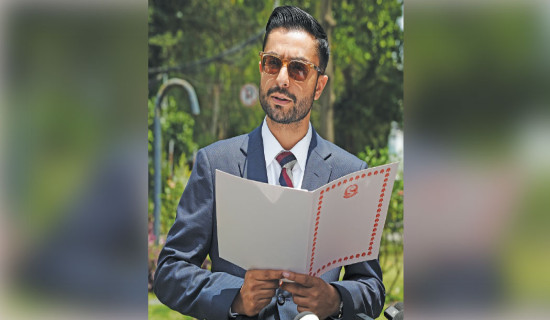
In an interesting political development, the Rastriya Swotantra Party (RSP) has again entered the government. The celebrity TV anchor-turned-politician RSP president, Rabi Lamichane, has become Deputy Prime Minister and Home Minister. The Nepal Police have arrested Krishna Bahadur Mahara, the former speaker of the House of Representatives and vice-chair of CPN-Maoist Centre, on charges of gold smuggling as soon as Lamichhane assumed office. While this was an action that the general public were waiting for since a long time, there have been questions raised on how it will be resolved.
RSP president himself has been mired in a case of being a non-Nepali, having to give up his parliamentarian role, getting a new Nepali citizenship, re-contesting by-election and getting reelected, and is now back to where he was. There are several cases of corruptions where former executives have been accused of being involved in. Will action be taken against all? The Nepali Congress who was in the government till last month is now in the opposition and has already started planning to disrupt the newly formed government.
Responsibility
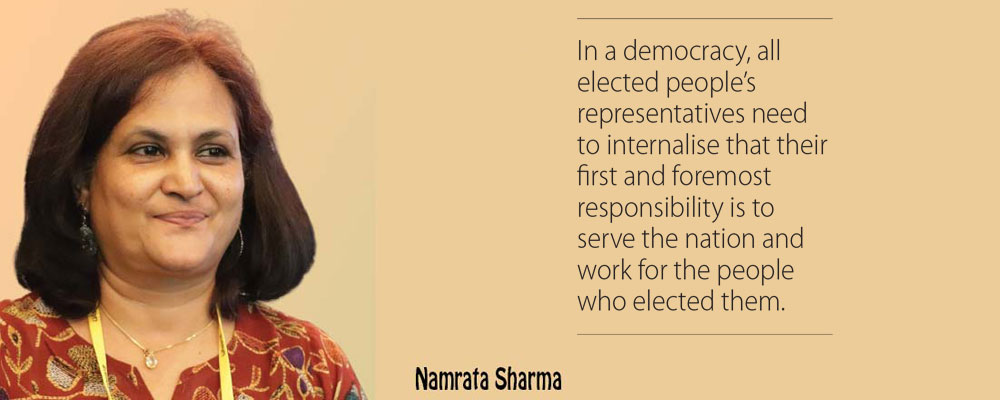
In a democracy, all elected people’s representatives need to internalise that their first and foremost responsibility is to serve the nation and work for the people who elected them. Whether the people’s representatives are in government or in the opposition, the development of the nation should be their priority. In Nepal, sadly this does not seem to be their priority at all. The exercise of toppling one government after another has been done several times. Now a reflection needs to be done on where the system is going wrong and how to focus on the progress of the country.
The western region of Nepal was hit hard during 2023 by a series of earthquakes. Floods and landslides have been creating havoc in different parts of the country due to adverse impact of climate change. Infrastructures like roads, bridges and houses have been repeatedly destroyed, in all over the country, creating more and more difficulties in the lives of those who are the most vulnerable in terms of resources. It is therefore now important that the newly formed government becomes stable and focusses on development. Political instability has a negative impact on the progress of a nation. Therefore, the new leadership of government needs to prioritise to stability, inclusive development and effective service delivery to the citizens.
(Sharma is a senior journalist and women rights advocate namrata1964@yahoo.com Twitter handle: @NamrataSharmaP)