- Sunday, 10 May 2026

Ecosystem Restoration


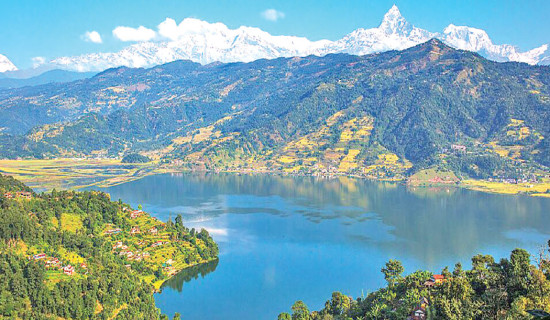
Nepal is endowed with rich biodiversity. This is because of diverse topography, climatic zones and altitudinal variations. 86 per cent of its land consists of hills and high mountains, and 14 per cent the flat lands in the Tarai region. It covers only 0.1 per cent of the world’s area but has over 3 per cent flora and 1 per cent fauna of the globe. According to National Trust for Nature Conservation (NTNC), around 208 mammals, 890 birds, 123 reptiles, 55 amphibians, 230 freshwater fish and 651 butterfly species are found in Nepal. People, animals and plants form an inalienable part of nature’s ecosystem. But growing human activities have threatened rare species, plants and water resources. The habitat loss, poaching and illegal trade of animal parts, conflict between animal and humans and climate-induced disasters have brought multiple crises to the existence of plants and animal species.
This situation indeed calls for sustained efforts to conserve the country’s unique biodiversity. It is not that there are no initiatives to protect it. Various national and international agencies, state mechanisms, conservationists and local communities are doing their best to save and grow the species and plants. Their commitment, hard works and campaigns have yielded positive outcomes. The UN Environment Programme (UNEP) and the Food and Agriculture Organisation (FAO) have recognised the Tarai Arc Landscape (TAL) as one of its seven World Restoration Flagships. It is the part of the UN Decade on Ecosystem Restoration that seeks to prevent, halt, and reverse the degradation of ecosystems on every continent and in every ocean. It is a matter of happiness that TAL has earned international acknowledgement, becoming a significant landscape-level conservation practice. This has further encouraged the concerned stakeholders to handle existing and new challenges facing forests, wildlife, and communities.
Spread over 24,710.13 square kilometres, the Arc Landscape stretches from the Bagmati River in the east to the Mahakali River in the west, covering six protected areas, four forest conservation areas, three Ramsar sites and several critical corridors. It is also transboundary region extending over 900 km from the Bagmati River, Nepal, in the east to the Yamuna River, India, in the west, covering an area of 51,002 square kilometres. According to a news report carried by this daily, TAL stands as a unique landscape where biodiversity is conserved, ecological integrity is safeguarded, and the socio-economic well-being of the people is secured. TAL intends to conserve ecosystems of the Tarai and Churia hills while addressing the economic and livelihood concerns of the indigenous and local people as per its 50-year vision.
Initiated in 2001, the Tarai Arc Landscape Programme has restored 66,800 hectares of forest, helped increase the population of rhinos from 409 in 2005 to 752 in 2021, and nearly tripled its tiger population from 121 in 2010 to 355 in 2022. The first 10-year TAL Strategy and Implementation Plan (2004-2014) focused to deal with conservation management issues so as to develop TAL as an ecologically functional landscape. The second Strategy and Action Plan (2015–2025) has built on the conservation successes to ensure TAL's socio-ecological integrity over the next decade and beyond. Nepal has now claimed the result-based payment of USD 45 million through REDD+. The TAL programme has enhanced nature-based tourism, homestays and green enterprises, benefiting the local community as well as supporting the national economy. This exceptional conservation practice must be emulated in other ecological zones of the country.