- Tuesday, 2 June 2026

Momentous Peace Deal In W Asia

China has brokered a momentous peace deal between long time arch opponents Iran and Saudi Arabia on March 10, virtually coinciding with Xi Jinping’s election for an unprecedented third term as president of the world’s most-populous country that is certain to elbow out the United States for the spot designating the world No. 1 economy before the end of this decade.
And this comes just about the time when China is being projected by its rivals as making aggressive move in South China Sea and a potential war monger. The concern thus aired by the West far outstrips any concern expressed by any other country in the region. After closing their embassies in each other’s capital in 2016, Saudi Arabia and Iran concluded the recent agreement for restoring full-fledged diplomatic relations, including reopening of their embassies.
Unofficially, the breakthrough has stunned Washington over the dramatic success China achieved as a successful peace broker in West Asia. Governments all over the world have hailed the development in the strategically very important region of West Asia, the biggest of its type in the new millennium. Americans in particular and the rest of the world in general witness the monumental development as also sidelining of the United States in a region where the No. 1 superpower had the key voice when it came to reaching pacts and setting agendas for more than seven decades.
Positive response
In an admission of the positive impact the breakthrough is likely to have across the globe, the US President Joe Biden’s White House swiftly welcomed the re-establishment of diplomatic relations between Riyadh and Tehran. This also set the tone for especially governments considered to be Washington’s close allies. Both Saudi Arabia and Iran expressed appreciation of Iraq and Oman’s roles in hosting many rounds of dialogue in the period 2021-22.
The United Nations’ Secretary General’s Office also issued a note of appreciation of the West Asian feat. The UN estimates that some 350,000 persons have been killed in the Yemen war, in which Riyadh and Tehran have been supporting opposing groups. China is keen in expanding its international presence and influence. In 2015, Russia fired a clear shot that hit the mark in that it sent military troops to Syria in support of President Bashar al-Assad who faced a raging civil war.
To its advantage, China has good ties with both Saudis and Iranian rulers, whereas the US has been clamping sanctions against Tehran since long. Once a close ally, Saudi Arabia’s Crown Prince, considered to be the de facto ruler, has been distancing himself from the West and drawing close to China and Russia particularly in the past couple of years. China is Saudi Arabia’s largest trading partner. It is also Iran’s major oil importer. Not long before being reelected, President Xi Jinping emphasised the need for China to step up its defence resources so that the country could “win wars”.
On the other hand, US President Joe Biden risks looking a jaded leader whose idea of throwing his hat in the ring next year for a second term at the White House might get dimmed. Age has been his handicap. Performance will have to be of high grade to even this on this score. The rise and rise of China and the Sino-Russian superpower rapport on the one hand, and a series of setbacks domestically and internationally for the US keep the speculation mills busy.
Some analysts even see the Tehran-Riyadh agreement as a rebuff to Washington and major European capitals, given the secrecy maintained on the progress made in the talks between the two that till recently acted as belligerents. The rapprochement after all these years fetches a prestige that Beijing will savour not demonstratively but in a calculatedly subdued manner.
The posture presents China as distancing itself from taking too much credit for its role in not only bringing a volatile region’s two powers together in negotiating the peace pact, whose impact can be drawn from the swift manner it was hailed so enthusiastically worldwide. It is, therefore, an occasion of massive significance that will make the international community members to review and reassess their global policies, alliances and long-term interests. They will weigh which side of their bread is likely to be better buttered in the days ahead.
On the strength of Beijing’s recent success in brokering peace, attempts by rival capitals to portray Xi as a likely war monger might be blunted to quite some extent. This comes shortly after the American Pulitzer prize winning octogenarian investigative journalist Seymour Hersh’s bombshell pointing finger at the US government for damaging the Nord Stream 2 oil pipeline in Europe.
Consistent course
Within the next two decades, the world would have witnessed the balance of power shift from the West to the East. Not that the conditions will be congenial for one bloc dominating the overwhelmingly larger part of the world any more.
The US could redeem its image, for instance, by resolving the decades old Palestinian issue. The West could also set aside their ideological biases and endorse Xi for the Nobel Peace Prize that in the past was embroiled in controversies over less than deserving winners being awarded or highly eligible personalities like India’s Mahatma Gandhi deprived of it. In recent years, how Barack Obama, then the US president, came to lift the Peace prize is a tale in itself.
Beaming with success at last week’s summit assembly of the Communist Party of China, Xi impending visits to Tehran and to Moscow are an indication of how he is cultivating an image of a global statesman. Xi’s loyal and trusted Prime Minister Li Qiang takes the No. 2 powerful position, with the chief responsibility of focusing on steering the economy out of the impact of the pandemic and also blunting the effects of dubious strategies the communist country’s competitors are likely to unveil, covertly or otherwise.
Western reactions and comments from various quarters in the world at large have generated considerable anticipation regarding the role that the Xi-led China is most likely to play in a visibly emerging multipolar global stage. Dramatic changes in the international landscape are clearly ahead.
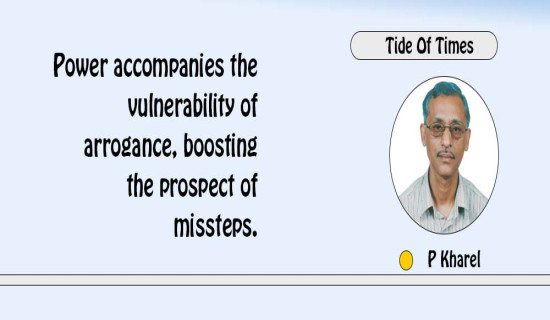
(Professor Kharel specialises in political communication.)