- Tuesday, 2 June 2026

Janakpur Cigarette Factory struggles for survival

By Laxmi Chaudhary, Janakpurdham, June 2: Once regarded as a symbol of Nepal’s industrial pride and an important pillar of the national economy, the Janakpur Cigarette Factory Limited is now struggling to preserve its very existence.
At one time, the factory was among the country’s highest revenue-generating industries and directly or indirectly provided employment to more than 5,000 people.
The livelihoods of thousands of families depended on the industry. However, the same factory is now gradually falling into ruins due to a lack of preservation, with its future hanging in uncertainty.
Established in 2021 BS through the initiative of the late King Mahendra and with financial and technical support from the former Soviet Union (Russia), the factory was once one of Nepal’s leading state-owned industries.
It produced well-known cigarette brands such as Deurali, Gainda, Laliguras, Lahure, Singha and Yak, making a significant contribution to the national economy for many years.
However, following the political changes of 1990, weak management, increasing competition and shifting market conditions gradually weakened the industry, eventually leaving it defunct.
Although various governments have repeatedly discussed reopening the factory, those efforts have failed due to the lack of a concrete plan and effective implementation.
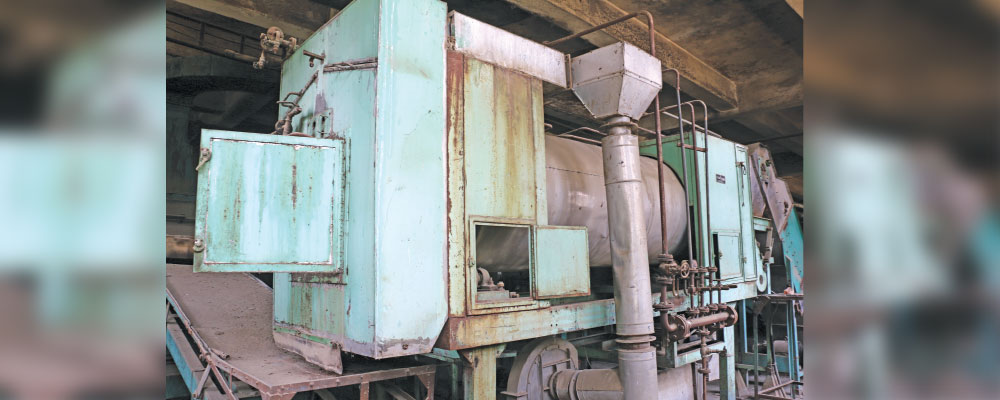
At present, most of the buildings within the factory premises have fallen into disrepair.
Machinery, equipment, workshops, a modern printing press and power-generation infrastructure worth millions of rupees remain unused.
Former employees claim that many of the factory’s machines are still operational and could be brought back into use.
According to 72-year-old former employee Seth Sahu, most of the machinery imported from Russia could be restarted after basic repairs and servicing.
“When the factory shut down, many of the machines were still functional. Some equipment had not been used even for six months,” he said.
He added that the factory’s modern printing press still appears capable of handling various printing tasks. Likewise, lathe machines and metalworking tools in the workshop could potentially be used to manufacture spare parts for motorcycles and other vehicles.
Former employees also claim that the power house within the industrial complex still retains engines, dynamos and control systems necessary for electricity generation.
Following technical assessment, these facilities could potentially be restored for use. According to the factory’s security in-charge, Tula Khadka, the prolonged lack of use has increased the risk of equipment deteriorating into scrap.
“If the factory could be revived through government initiative or private partnership, thousands of young people could gain employment and state revenue could increase,” he said.
Currently, only seven staff members remain employed to provide security for the premises.
Khadka said that although some buildings sustained damage during the Gen Z Movement protests on September 8-9 last year, the main machinery remains intact.
While some smaller components have reportedly been stolen, the core structures are still said to be operational.
Another important issue surrounding the factory’s future is its extensive property holdings. In the Janakpurdham area alone, the factory owns 33 bighas and six katthas of land, while it also possesses assets in 22 other locations across the country. For this reason, there is growing debate over its preservation, ownership management and long-term utilisation.
Locals, industrialists, businesspersons and stakeholders have suggested redeveloping the factory as a modern industrial enterprise, an industrial museum or a multi-purpose economic centre.
According to them, such initiatives could help preserve industrial heritage while generating employment and revitalising the local economy.
Despite Nepal now having a three-tier system of government, no concrete initiative has been taken to revive the factory, which has awaited restoration for years in Janakpurdham, the capital and religious city of Madhes Province.
Meanwhile, according to Joint Secretary Kalpana Shrestha of the Ministry of Industry, Commerce and Supplies, a detailed study is under way regarding the factory’s assets, liabilities, machinery and equipment.
She said a clearer conclusion regarding the possibility of reopening the factory and future plans could only be reached after the study report is completed.
The factory also appears to have received no allocation in the federal government’s budget.
At present, the factory premises house offices of the Madhes provincial government, as well as residences for the provincial chief, chief minister and ministers.
As the factory continues to await revival, its physical infrastructure and assets are increasingly at risk due to the absence of a clear policy, effective ownership management and long-term planning.
Therefore, a coordinated plan and firm decision between the federal and provincial governments appear necessary regarding the future of the Janakpur Cigarette Factory.
Otherwise, an important chapter of Nepal’s industrial history may be consigned to memory.