- Tuesday, 2 June 2026

Demand for nettle, latte rising in cities makes villagers hopeful

By Sher Bahadur Sarki/Rajan Rawat, Bajura/Humla, June 2: Although demand for organic nettle, popularly known as sisnu in local language, is increasing in urban markets, large quantities of the plant continue to go to waste along riverbanks and hillsides in villages across Bajura.
Despite its well-known health benefits, nettle remains largely underutilised as younger generations show little interest in its use and value.
Locals consume small amounts of nettle as a vegetable during the winter months, but much of the naturally growing nettle is left unused.
According to locals, a lack of knowledge and skills related to processing and marketing nettle has prevented them from making better use of this valuable resource.
Man Bahadur Lohar, a local of Budhinanda Municipality, said that organic nettle continues to grow abundantly in streams and open areas but is mostly ignored due to limited awareness and interest among locals.
“People said nettle is very beneficial for health, but it is rarely used here,” he said. According to older generations, nettle is believed to help relieve colds and coughs, so it is occasionally consumed during the winter season.
Nettle must be boiled before consumption because of its stinging hairs. It is rich in nutrients, including vitamins A, C and D, as well as potassium, manganese and calcium. Health workers said that it can help people with high blood pressure, support hair health, improve skin appearance, reduce blemishes and strengthen the body's immune system.
They also said that nettle may help relieve urinary tract infections and discomfort during urination. It is also believed to support joint health, aid people suffering from kidney problems, asthma and diabetes, and contribute to blood production by increasing haemoglobin levels.
It is also considered beneficial for women experiencing irregular menstruation and other gynaecological issues, while some health professionals say it can improve eye health as well.
Given its nutritional and medicinal value, locals believed that proper production, processing and marketing of nettle could create significant income-generating opportunities. However, communities currently lack the skills and facilities needed for drying, powder production, packaging and value addition, limiting their ability to commercialise the product.
Nettle grows abundantly throughout the district and often goes to waste during both winter and monsoon seasons. Residents mostly collect it only when suffering from seasonal colds or coughs.
They said that if local governments helped establish marketing systems and processing facilities, people could potentially earn substantial incomes from nettle-based products.
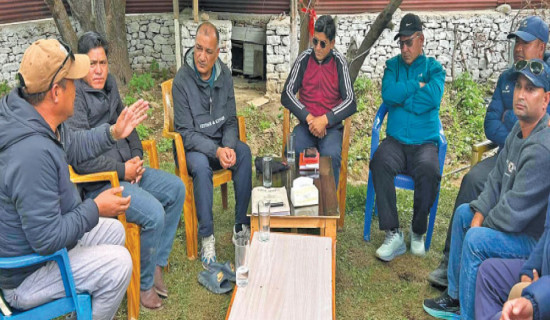
Chairperson of Himali Rural Municipality, Govinda Bahadur Malla, said that although nettle grows extensively across the municipality, it has rarely been used in the past due to a lack of knowledge and skills among local residents.
He said the municipality has begun providing training on nettle processing, including powder production and packaging, to encourage greater use of the plant and help create economic opportunities for local communities.
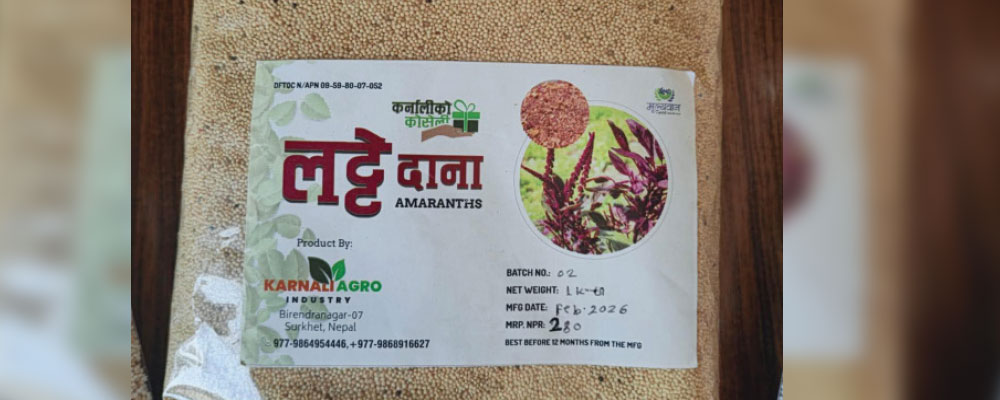
Meanwhile, our Humla correspondent Rajan Rawat reported that market demand for products made from latte, a traditional indigenous crop grown in the country’s Himalayan districts, has been increasing. However, declining cultivation has led to reduced production, making it difficult to meet growing demand.
According to Dhanlal Chaulagai, proprietor of Karnali Agrovet Industry, demand for latte products has risen while production remains low because local consumption has declined and farmers have gradually stopped cultivating
the crop. Although latte was once widely grown in Humla, many farmers have abandoned its cultivation due to reduced local use.
At present, limited quantities of the crop are produced mainly in Sarkegad and Chankheli rural municipalities. Chaulagai said he sells around 15 quintals of latte annually, but obtaining sufficient supplies requires visiting households across villages to collect the produce. Traders currently purchase latte from farmers at around Rs. 60 per kilogram.
He said his company processes and sells latte both as grain and as ready-to-eat puffed snacks in packaged form. Despite strong market demand, insufficient supplies from farmers have made it difficult to meet the orders. Demand currently comes from Kathmandu, Pokhara, Nepalgunj, Surkhet and several districts in the Tarai region.
Among indigenous crops grown in the Himalayan districts, including proso millet, foxtail millet, bitter buckwheat, sweet buckwheat, beans, naked wheat, barley and finger millet, traders generally earn profits of 20 to 25 per cent.
However, Chaulagai said profits from latte grain and value-added products can reach 40 to 45 per cent.
Farmers currently cultivate latte mainly as a mixed crop rather than on a commercial scale. Chaulagai said efforts are now needed not only to expand sales and distribution but also to increase cultivation and production to meet the growing market demand.