- Thursday, 28 May 2026

Women’s participation in sci-tech stressed
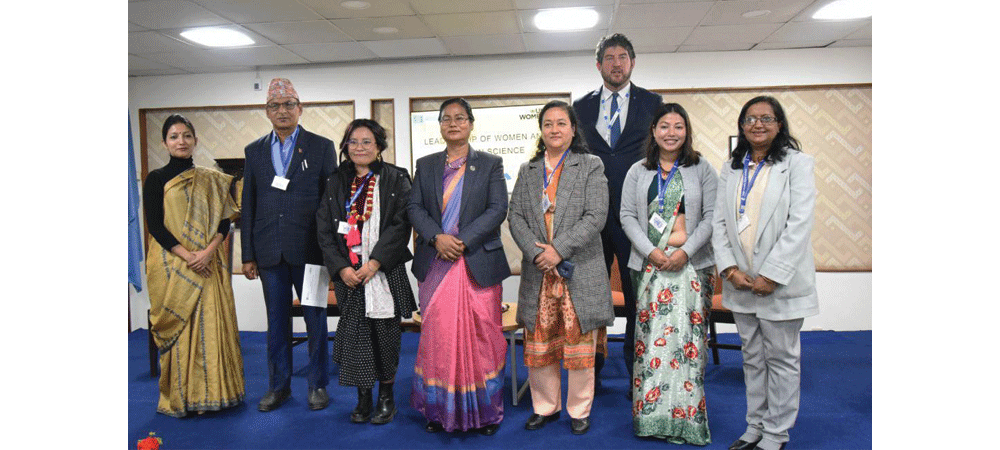

By A Staff Reporter,Kathmandu, Feb. 11: Scientists and researchers have called for the equal participation and leadership of women and girls in science and technology to address the challenges faced in the science and technology sector.
Participants at a dialogue programme on “Leadership of Women and Girls in Science”, organised to mark the 8th International Day for Women and Girls in Science, said for every four men employed in professional, scientific and technical activities, there is only one woman.
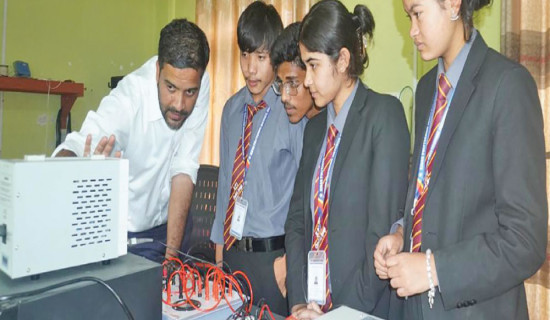
The lack of effective participation in Science, technology, engineering, and mathematics (STEM) education and careers is not just a loss for women and girls, but a missed opportunity for communities and nations to find sustainable solutions to common problems.
Speaking at the programme, Minister of Women, Children and Senior Citizens Bhagbati Chaudhary said, “If given the opportunity, women will get success in every sector. “We need to ensure that we have at least 33 per cent representation of women in all sectors including government bodies, development agencies, political representation and private sectors,” she added. The government needs to incorporate this in the policies and ensure its implementation so that we have more women and girls in leadership.”
Michael Croft, the UNESCO Representative to Nepal said, “As we look around at our world, and see the discord and disharmony, we understand something is wrong, something is not in balance. We are missing the contribution and leadership of women and girls in so many areas, and science is no exception. Our sustainable development, our very future depends on what we do to promote and ensure the participation of women and girls in science.”
Navanita Sinha, Head of Office, UN Women Nepal, urged everyone to stand together, in a collective struggle to smash stereotypes, defy gender bias, and defeat discrimination that holds women and girls back in science.”
The panelists — Nawa Raj Dhakal, Acting Executive Director at Alternative Energy Promotion Centre under the Ministry of Energy, Water Resources and Irrigation, Nuva Rai, Programme Officer at National Indigenous Women Forum, and Dr. Tista Prasai Joshi, Senior Researcher at Nepal Academy of Science and Technology, called for action from the government, international development partners, and civil society to include more indigenous women and girls in research, honoring the fact that indigenous women are repositories of knowledge on land, environment, and biodiversity. They underscored the need for increased investment for women and girls to pursue education in STEM.
They also asked to break harmful gender norms prevalent within families, communities and formal structures that prevent women and girls from pursuing and leading careers in science and technology.
Pramila Devi Bajracharya, Secretary of Science, Ministry of Education, Science and Technology emphasised that science and technology are the primary tools for prosperity in society and we need to amplify the voices and participation of women in STEM.
Rameshwor Prasad Yadav, Deputy Secretary General, Nepal National Commission for UNESCO, stressed that social structures have prevented women from realising their full potential. “A woman can be anything – a scientist, a social scientist, or scientist at home,” he said in his closing remarks.
Gender equality and the empowerment of women and girls is crucial not only for economic development but also to meeting the 2030 Agenda for Sustainable Development.
The programme was organised by UNESCO and the United Nations Entity for Gender Equality and the Empowerment of Women (UN Women).
-original-thumb.jpg)
-square-thumb.jpg)