- Thursday, 28 May 2026


The Rising Nepal

Need For Innovative Journalism
Despite different platforms and medium of expression, journalism has played an innovative role with the passage of time. Media have been constantly evolving, and today the new media have cultivated human behaviour around the world. Online mass media, which serve edited contents, and social media or Social Network Sites, which ventilate individual opinions, go hand in hand in this digital era.
Inflation Robs Kids Of Nutritious Food
Inflation remains to be one of the growing issues in the majority of economies around the world. Inflation is understood as the general increase in prices and a fall in purchasing value of money. Its effect is evident in both developed and developing countries, highly affecting food, nutrition and lifestyle related matters. In an article published by CNN recently, it has been reported that schools in Japan are providing children with cakes and jellies to substitute seasonal fruits and vegetables. This is because of inflation and the subsequent hike in the prices of ingredients. So, nutritionists are facing difficulties in coming up with a holistic meal plan for children. And since the government has set certain regulations concerning school meals, there is no flexibility for nutritionists.
Government working on tourism revival plan
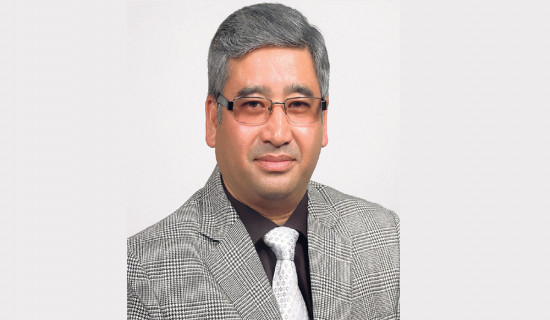
Minister for Culture, Tourism, and Civil Aviation Jeevan Ram Shrestha has said that his ministry will work to promote nature-based tourism. Speaking at a programme organised to release a documentary "Women's Voice from the Himalaya" organised by SaathSaathai on Wednesday, Minister Shrestha said that the ministry is going to start a campaign of waste management in the Himalayas to manage tourism well as to help minimize ice melting.

Gunjan to be screened in January
Gunjan is scheduled to be released on January 13 next year. Production unit of the film has reached an agreement with GGA Group to distribute the film in Kathmandu while FD Company is given the responsibility to distribute it outside the Kathmandu Valley.
Nepalgunj to manage e-rickshaws
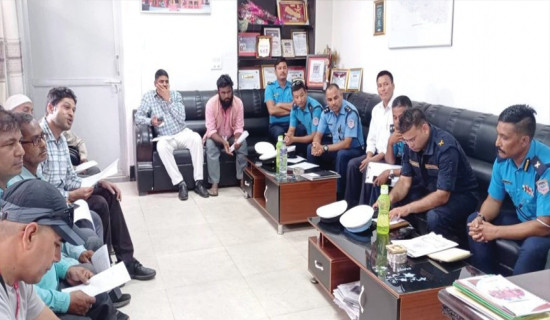
It is expected that there are around 15,000 electric rickshaws operating in Nepalgunj and nearby areas. However, none of the authorities has details about the three-wheelers. Excessive numbers of e-rickshaws on the road have also led to traffic congestion across the city. In an effort to properly manage them, Nepalgunj Sub Metropolitan City has decided to register and manage the three-wheelers.
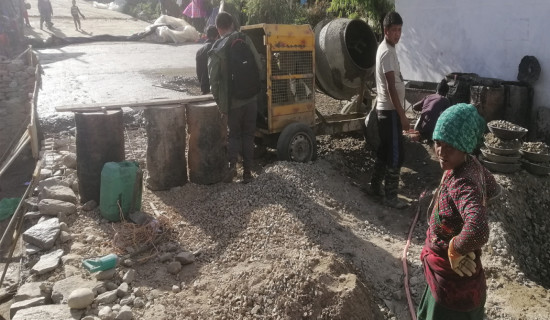
Construction of metalled road to Simkot starts
Construction of metalled road, under market management project, has started at Simkot Bazaar, district headquarters of Humla. Narendra Rawat of Simkot Rural Municipality-5 said that the construction was being carried out from the Sunvalley Hotel area. He added that the sewage is also being managed alongside the construction.
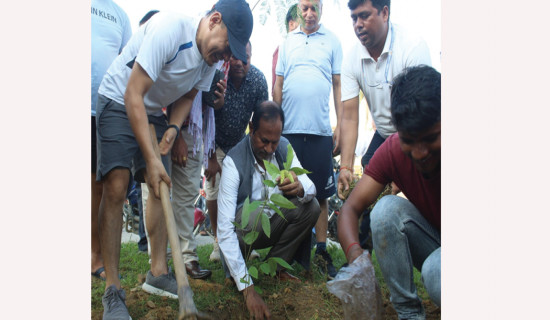
Siddharthanagar mayor planting trees equal to votes he received
Mayor of Siddarthanagar Municipality Ishtiyak Khan has started the campaign to plant trees equal to the number of votes he had received in the local level election. While taking oath Mayor Khan had committed to plant trees equal to the 9,134 votes that he received in the May 13 local election. The campaign took off from Belahiya from where the highest number of tourists enter the city. On Monday, the first day of campaign, 350 saplings of Birendra flower, Rajbriksha (Cassia Fistula), and Camphor tree were planted along the Siddartha Highway.
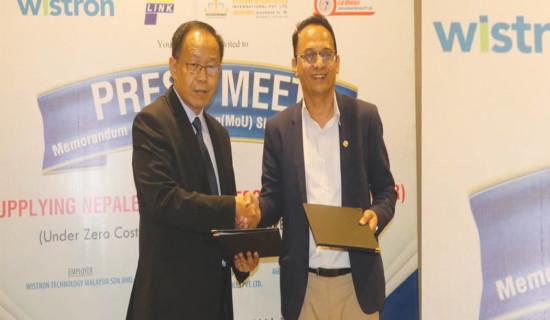
Akarshan and Laldhanush to send workers to Malaysia free of cost
Akarshan International and Laldhanush International are going to take Nepali workers to Malaysia free of cost. Malaysia's Wistron Technology and the two Nepali manpower companies reached an agreement in Kathmandu on Tuesday to send workers at zero cost. Malaysia is one of the prime destinations of foreign employment for Nepali workers. Wistron, an international technology company based in Malaysia, signed an agreement with the two manpower companies to take the workers free of cost.

Gold price declines by Rs. 1,600 per tola
The prices of gold and silver have declined noticeably on Wednesday. The price of gold has dropped by Rs. 1,600 per tola in the domestic market Wednesday as compared to Tuesday's price. According to the Federation of Nepal Gold and Silver Dealers’ Association (FENEGOSIDA), the price of gold decreased to Rs. 96,000 per tola (11.664 grams) today compared to Rs. 97,600 of Tuesday. Likewise, the price of silver has also decreased by Rs. 30 per tola to Rs. 1,175. Earlier on March 9, price of gold had reached Rs. 105,500 per tola in the local market.
Monetary Policy For Economic Remedies
Nepal’s economy is not in a good shape at the moment. The fast declining foreign reserves, soaring inflation, trade deficit and unemployment, food insecurity and corruption cases, among others, have risked the country to plunge into serious economic crisis. Of late, the people are bearing the brunt of the rising prices of essential commodities in the wake of Russia-Ukraine war that has disrupted the supply of fossil fuels and foods, and increased their prices exorbitantly. The country has been gradually recovering from the COVID-induced economic woes but the recent increase in the fuel prices has made the desired economic growth difficult. The government has adopted several measures such as restriction on imports and pro-business fiscal incentives to avoid potential economic downturns.
New Wheels In Politics
Nepal looks set to go through a process of leadership transition. This process is not in deed the case impacting a single or a maze of so-called leftist or the rightist political parties. This phenomenon has more or less occupied the entire political milieu in Nepal. The dominance of elder generation in party leadership (better termed as gerontocracy) has ruled the political roost incessantly and dictated its course of action for several decades. However, it is gradually facing the challenge of retaining its relevance, acceptability and legitimacy in the evolving political context of Nepal. The challenges to the senior generation of leadership have become more articulate and vociferous in noticeable terms after the local elections conducted during the previous month.
Making Remittance Transfer Safer
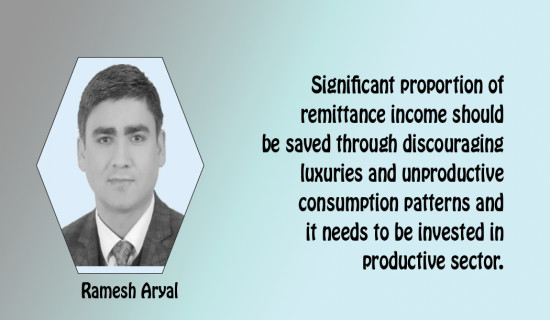
Remittance plays a vital role in Nepal’s economy. Remittance has had a positive impact on poverty alleviation and socio-economic development. It has also supported to achieve the Sustainable Development Goals (SDGs). As a main source of foreign exchange earnings as well as liquidity in the banking sector, remittance has also contributed to achieving the balance of payment.
A Love Triangle
There is a curious love triangle that sits at the centre of the new documentary “Fire of Love.” It’s between a man, a woman and a volcano. Well, all volcanoes really. The names might not be especially well-known today, but in the 1970s and ’80s, French scientists Katia Krafft and Maurice Krafft were to volcanoes what Jacques Cousteau was to oceans. The married couple travelled the world for some 20 years in pursuit of their studies, capturing the spectacles with 16mm cameras and writing colourfully about their findings until their deaths in 1991 on Mount Unzen in Japan.
Siliguri-Kathmandu bus service launched
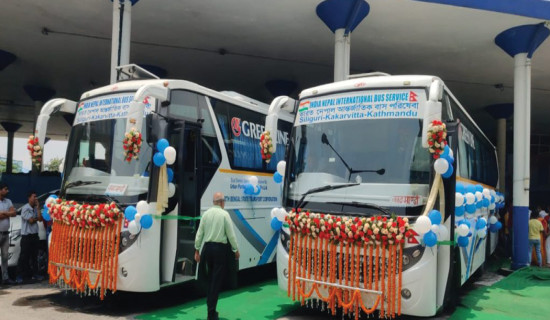
A direct bus service has been launched from Siliguri in West Bengal, India, to Kathmandu, the capital of Nepal, from Wednesday. Urban Paribahan Service Pvt. Ltd. has started Nepal-India bus service from vehicles with Indian number plates under the North Bengal State Transport Corporation (NBSTC), a government bus service provider of the Government of West Bengal. West Bengal Transport Minister Firhad Hakim inaugurated the bus service on Wednesday.
Students risking life to go to school
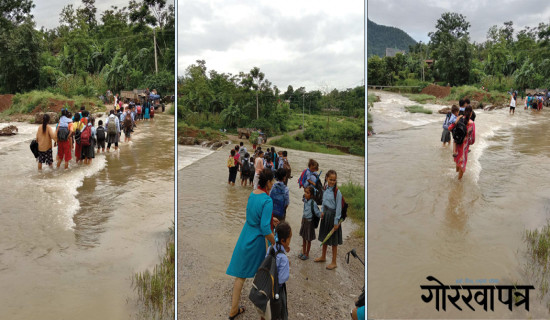
Yuvina Thapa, a 4-year-old student of Basanta Basic School in Sera, Byas Municipality-11, was injured after she fell into the Buldi River on June 16. Yuvina, who was critically injured after being swept away by the river, is now undergoing treatment at Fishtail Hospital in Pokhara. Not only Yuvina but also other students are always at a risk of being swept away while crossing the river during rainy season. They need a guardian to cross the river which has no bridge.