- Wednesday, 3 June 2026

Buddhist Heritage as Bridge in Sino-Nepal Cultural Connections
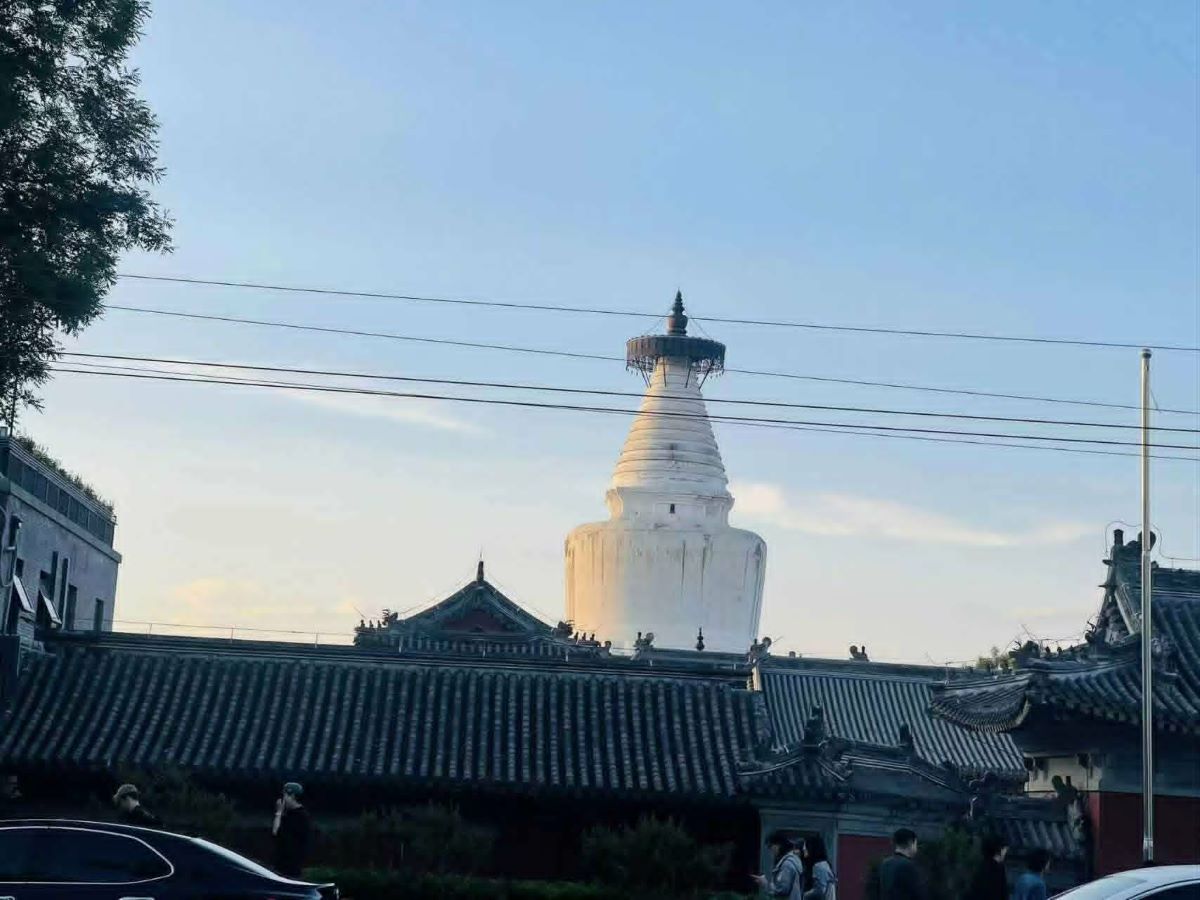
White Stupa at Beijing's Miaoying Temple. Photo: Saroj Gautam

Saroj Gautam

During my time as a student at China Foreign Affairs
University, I frequently visited nearby White Stupa at Beijing's Miaoying
Temple, where I felt a profound connection due to its design by Araniko, a
renowned 13th-century Nepali architect. This connection is further emphasized
by the privilege granted to Nepali citizens, who can enter the temple free of
charge, suggesting a recognition of symbolic ownership over this shrine. On my
first visit, I was struck not just by the Nepali essence of the stupa but also
by witnessing an elderly Chinese woman quietly praying before a gilded Buddha,
evoking reminiscent of similar scenes in Nepali stupas and monasteries. As I
traveled to different parts of China, I realized how deeply ingrained Buddhist
culture is throughout the nation and how much peoples living in the two countries
are connected.
White Stupa in Beijing is one of many monuments
illustrating China's rich Buddhist heritage with their historical, cultural and
architectural connections with Nepal. UNESCO World Heritage Sites such as Wutai
Shan in Shanxi, the Leshan Giant Buddha in Sichuan, the Mogao Caves in
Dunhuang, Gansu; are few examples. The Longmen Grottoes in Luoyang, Henan,
containing over 2,300 caves and more than 100,000 intricately carved Buddha
statues; further exemplify the vast Buddhist art collections in different parts
of China. Likewise, in Datong, Shanxi, another grotto complex features 53 caves
with over 51,000 Buddhist statues. Other significant sites include Mount Putuo
on Zhoushan Island, Mount Jiuhua in Anhui, the White Horse Temple and Shaolin
Temple in Henan, Lama Temple in Beijing, Jokhang Temple in Lhasa, Xizang,
Lingyin Temple in Hangzhou, Donglin Temple in Jiangxi, and Famen Temple in
Shaanxi.
The Buddhist Heritage sites in China, including
temples and pagodas, are also reminder of a deep-rooted civilizational
connection with Nepal, facilitating exchanges among pilgrims, artists, and
scholars across the Himalayas. In the context of scholarly exchanges and
Buddhist pilgrimage, the fourth and fifth centuries CE marked a significant
period of Sino-Nepal interaction, initiated by Chinese monk Faxian and Nepali
monk Buddhabhadra. Faxian made a momentous pilgrimage on foot to Nepal, where
he visited crucial Buddhist sites such as Lumbini, the birthplace of Buddha,
and Kapilavastu. He returned to China with Buddhist scriptures and worked in
collaboration with Buddhabhadra to translate them into Chinese. This
collaboration had a profound impact on the localized Buddhist practices in
China. In seven century, Xuanzang, another key figure, undertook a 19-year
pilgrimage from Chang'an to South Asia, including Nepal's Lumbini, providing
valuable historical insights and reinforcing cross-Himalayan civilizational
ties.
In the seventh century, a significant milestone was
recorded as the commencement of artistic and cultural exchanges between China
and Nepal. Bhrikuti, the daughter of Nepal's Licchavi king Amshuvarma, as queen
of King Songtsen Gampo of Tibet, played a pivotal role in introducing Buddhism
and Buddhist architecture to Xizang (Tibet) through Vajrayana scriptures and
Newari Buddhism. This introduction fostered the evolution of Tibetan Buddhism
while reinforcing Nepali traditions of spirituality as well as artistic
expression. During her marriage, accompanied with Bhrikuti were some skilled
craftsmen, paving enriched artistic exchanges, including notable figures such
as Arniko in later centuries. This interchange signifies a continuous and
enduring Sino-Nepal public diplomacy, highlighting centuries of cultural and
artistic collaboration.
The interwoven history of civilizational Sino-Nepal
ties has significantly influenced the localization of Buddhism in China.
Analyzing the various forms of Buddhism practiced, three primary branches
emerge: Han Buddhism, Tibetan Buddhism, and Theravada Buddhism, each finding
its unique expression. Han Buddhism, found in central and eastern areas like
Beijing and Sichuan, predominantly follows Mahayana traditions with significant
influence from Pure Land and Chan (Zen) schools, integrating Confucian and Daoist
elements for enhanced understanding. Similarly, Tibetan Buddhism, primarily
practiced in the Xizang Autonomous Region and adjacent areas, embraces
Vajrayana practices, with notable cultural sites such as Songzanlin Monastery.
The Theravada Buddhism is observed among specific ethnic groups in southwestern
Yunnan. The coexistence of Buddhist practices with local rituals, ancestor
veneration, and deities often results in hybrid forms of devotion, while
Buddhist shrines function as cultural rather than solely religious sites.
The Buddhist heritage in China illustrates not only
the cultural and civilizational connections between Sino-Nepal but also
highlights how these historical trajectories have significantly influenced
bilateral relations, promoting peaceful coexistence. Peace philosophy of Buddha
and Confucius is epitomized in the term Panchasheel, symbolizing the age-old
friendship between countries linked by mountains and rivers. Buddha's Middle
Path and Confucian Harmony serve as vital guiding philosophies for Sino-Nepal
relationship. Over the decades after the formalization, this friendship has
evolved into strategic cooperation, illustrated by Nepal's unwavering
commitment to One-China Policy and China's recognition for Nepal's sovereign
equality. These shared values and historical connections continue to underpin
the diplomatic landscape in the Himalayan neighborhood. However, in assessing
the potential for collaboration in Buddhist Heritage, it is evident that gaps
exist.
Trans-Himalayan Buddhist Heritage Circuit
Nepal attracts several hundred thousand tourists
from China each year; however, the pilgrimage routes connecting key Buddhist
sites such as Lumbini, Mustang, and various trans-Himalayan monasteries are
underdeveloped. This situation presents an opportunity to establish a
Trans-Himalayan Buddhist Heritage Circuit that encompasses the paths
historically traversed by figures like Faxian, Buddhabhadra, Bhrikuti, and
Arniko. Such a corridor could serve as a significant civilizational link
between the two countries residing on the two sides of Mt. Everest.
Furthermore, the potential for enhancing youth exchange programs focusing on
intangible Buddhist heritages under the Belt and Road Initiative (BRI) or
Global Civilization Initiative (GCI) also looks promising. The Buddhist
cultural heritages in China not only symbolize the historical friendship that
has been cultivated between two neighbors but also highlight a shared
civilizational legacy grounded in Buddhist philosophy and art. This enduring
bond has played a crucial role in fostering peaceful bilateral relations over
many centuries. With such tangible connections rooted in culture, an
institutional frameworks to fully express and enhance this cultural kinship is
imperative.
(The author is a PhD in International Relations, and is currently associated with Center for Nepal Studies at East China University of Technology as Researcher.)





-square-thumb.jpg)