- Wednesday, 3 June 2026

Book Review
Karma Path: A Practical Philosophy of Conscious Living and Inner Transformation


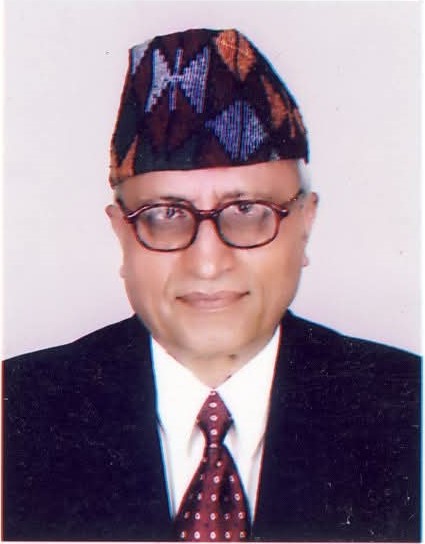
Prof. Dr.
Mohan P. Lohani
Karma Path by Satya Raj Joshi consisting of 206 pages with 12 chapters, each with a significant sub-heading, is a welcome addition to the repertoire of Knowledge. It is common knowledge that what distinguishes human beings from animals is the former's ability to think, judge and transform themselves in response to changing times and situations. Joshi's book opens with an affirmation: man’s journey of life becomes meaningful because of his quest for a purposeful life. Without a sense of purpose, the writer says forcefully, even the most luxurious life can feel hollow; with it, even the simplest of life becomes profound. Karmic path is like a compass for living with intention. The entire book focuses on the writer's striving to justify Karma not as an abstract doctrine or thought but a practical guide. This is further explained with genuine practice tips based on cogent case studies and illustrations. Very few would disagree with the view that living with purpose helps us align our thoughts, words and deeds with our inner values or even our higher self. To quote the writer, "the essence of Karmic living is to realise that every moment is a special opportunity, a built-in reminder of why we are here and every act a reflection of the divine purpose flowing through us".
All chapters constitute a coherent whole
.Self-discovery, exploring passion, overcoming inner blocks, mindfulness and
the present moment, choices and consequences, building meaningful relationship,
resilience through life's challenges, service and contribution and the journey
of transformation are important steps and components of Karmic Journey. All the
steps help us live our Karmic path with courage, conviction, commitment and
confidence.
To live your karmic path, the writer affirms, is to
awaken to the truth of who you are and align your daily actions with your
soul’s deepest purpose, the culminating point of self-awareness, inner
transformation and conscious living (p.176). We are told karma path–living is a
dynamic ever evolving process.
While the importance of success in life in terms of
societal expectations cannot be denied, more important than success in mundane
life is the recognition that life has a deeper meaning beyond such achievements.
There is a deep urge within us to make conscious choices and alignment that
resonate with our self, the result of our deeply felt desire to engage in
helping others. Life's challenges and obstacles cannot be wished away .It is
possible to bridge the gap between spiritual insight and practical living
through the process of integration .As human beings live, moment by moment,
even smallest moments such as exchanging a smile with a stranger can create a
positive impact in our life and community. While a soul-centered life is our
goal, it can radiate its light through apparently trivial and insignificant
events. In view of deeper connectivity between the inner and the outer world,
we are destined to integrate our karma with daily living through acts of
empathy, kindness and service to all sentient beings. There is no contradiction
between personal growth and the greater good.
There is recurring emphasis on the necessity of
daily practices to dovetail karmic awareness with everyday life. Joshi
highlights this linkage or fusion more
lucidly in the following words; when you consistently engage in habits that cultivate
mindfulness, compassion and intention, you deepen your connection to your inner
truth and align your actions with your higher purpose. Soulful living, mindful
meditation, conscious choices, emotional intelligence and consistent practice
are not rhetorical buzzwords to lure us into a false sense of security and
inner transformation, they are powerful tools with which to calm our mind,
bring clarity to our actions and respond to life's challenges. Inflated human
ego is the greatest obstacle to meaningful and peaceful Karmic living. It needs
to be and can be neutralized with humility. Karmic living is securely founded
on life sustaining virtues like compassion, patience, integrity, humility and
generosity. There is no need to feel demoralised by difficulty or hardship
which can be turned into a catalyst for positive Karma and deeper personal
transformation through resilience, awareness and a willingness to learn. There
is clarity and confidence in the writer's assertion that by eschewing old
Karmic patterns, a meaningful Karmic legacy can be created.
The book views Karmic legacy as a deliberate and
conscious process. In an important statement the writer explicitly affirms: 'In
the modern interconnected world, nurturing a Karmic legacy extends beyond
personal relationships to include environmental and social responsibility. The
health of our planet and the well-being of marginalized communities are deeply
intertwined with collective Karma.' (P. 190).
Dr. Sarvapalli Radhakrishnan, India’s former
president and a renowned scholar of eastern and western philosophy once said
religion can be intellectualized but it is more than an exercise in
intellectual fireworks .It is felt experience. Satya Raj Joshi comes closer to
this statement of former Indian president when he makes the following terse
assertion: Experiential insight is far more powerful than intellectual
understanding alone (pg.192).
Despite repetitions here and there scholar Joshi’s treatment of a serious subject like karma path (karmic path and legacy), I believe, will inspire readers and prompt them to critically read the book between the lines and respond with constructive feedback for further improvement. He deserves appreciation for the seriousness with which he has dealt with the theme of karma path in the book.
(Author Prof. Lohani is the Former Head, Central Department of English, Tribhuvan University)