- Friday, 29 May 2026

Accord Priority To Economic Diplomacy

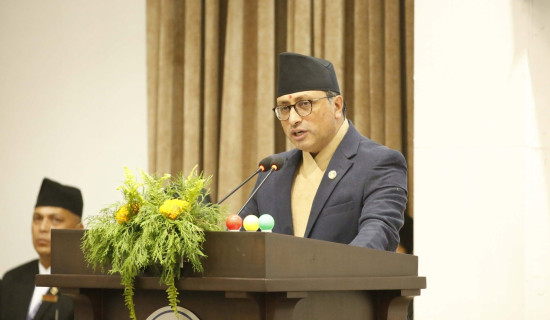
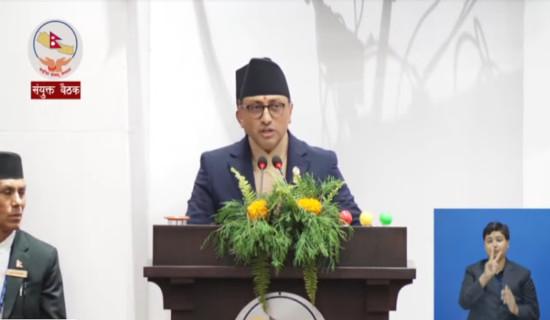
Nepal, under the leadership of Prime Minister Balendra Shah, stands at a crucial juncture in redefining its relationship with the rest of the world. The recent transition in domestic politics has created renewed optimism amongst Nepali citizens. The rise of young leadership creates significant questions on the country's foreign policy priorities and its ability to navigate through the global and regional complexities.
Shah's party, the Rastriya Swatantra Party (RSP), is comparatively new party that is planning to organise its first convention to complete the process of becoming a political party. However, this newness presents a significant opportunity and offers ample space to tactfully design, refine and implement strong and future-oriented policies, though the government is at present facing criticism and challenge to define its unique foreign policy identity.
Economic growth
Additionally, Nepal is scheduled to graduate in November 2026 from its Least Developed Country (LDC) status. Therefore, at this stage, Nepal's foreign policy must not only focus on safeguarding its sovereignty but also actively support economic growth with different global players, and make Nepal competent in the international market after graduation.
As global geopolitics and geo-economics have shifted into a very complex landscape, Nepal must redefine its foreign policy beyond traditional practices into a more pragmatic and interest-driven approach that also must be futuristic. At the core, there should be a stronger emphasis on attracting more foreign investment, accelerating technology transfer and expanding development partnerships. Currently, Nepal extensively requires foreign capital and expertise to speed up its development trajectories. It is equally important that the country strategically leverage its comparative advantage.
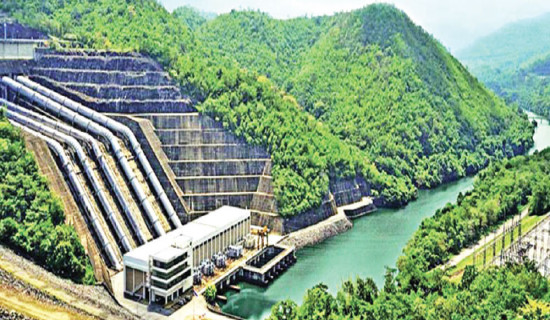
Nepal poses significant potential in sectors like hydropower, tourism, agriculture and agro-processing, not to forget information technology (IT) and data centers. With its vast and largely untapped water resources, Nepal offers a promising destination for investment in hydropower generation, power trading and development of transmission lines, not only within the country but beyond the borders. The country agreed with India in 2024 to export 10,000 MW of electricity over the next decade, and a trilateral agreement between Nepal, India, and Bangladesh provides investors with a reliable and assured market. Similarly, Nepal's rich cultural diversity and natural beauty offer vast opportunities in the tourism sector, promoting niche sectors like medical and wellness tourism, Ayurveda, spiritual, and religious tourism presents avenues for diversification and value addition, apart from adventure tourism.
For decades, Nepal has been viewed as a geopolitical hotspot in the region, situated between the two Asian giants, China and India. Now it's time Nepal moves beyond this perception and projects itself as a trustworthy and profitable destination for investors and development partners with bilateral and multilateral trade and investment agreements that encourage more investment, innovation and international collaboration. The Trade and Investment Framework Agreement (TIFA) – a long-forgotten priority of Nepal with the USA – and the new Bilateral Investment Agreement (BIA) format – already prepared for signing with investment-origin countries – have been gathering dust on the shelves of the Industry Ministry and Foreign Ministry. These ministries need to accelerate such beneficial propositions of Nepal before focusing on any new initiatives. Additionally, the Nepali diaspora, who are in organised form as the Non-Resident Nepalis Association (NRNA) in around 90 countries across the globe, serves as a significant asset in promoting Nepal. The government can utilise its networks, financial and human capital, and technical expertise in promoting tourism, investment, facilitating knowledge transfer, and enhancing Nepal's presence globally.
Nepal must restructure diplomatic practices alongside redefining foreign policy priorities. Diplomatic missions should serve as key instrument of national economic transformation by adopting a proactive and result-oriented approach in its economic diplomacy instead of continuing the old tradition of reactive and ceremonial engagements. As Nepal prepares to graduate from LDC status, transforming diplomatic practices becomes increasingly urgent due to the challenges accompanying this milestone. Nepal will lose privileges that come with LDC status, including concessional foreign aid and preferential trade schemes. Therefore, a more economy-focused diplomatic framework is needed to sustain economic progress and navigate this transition outside the country, while the government must concentrate on upgrading the private sector’s competitiveness inside the country.
A central element of this lies in reforming the role of diplomatic missions, including envoys and the staff. The embassies must be tasked with identifying investment opportunities, building business networks, and promoting Nepal's unique offerings. This not only involves participation in international forums and exhibitions but also direct engagement with the government bodies, private sectors, and relevant stakeholders in the host countries. In addition to promotion, embassies must also play a facilitative role, which involves mediating potential foreign investors with domestic institutions at home, and connecting business communities from both home and host countries.
Roadmap
To make it effective, a clear roadmap, Terms of Reference (ToR), and Key Performance Indicators (KPIs) should be given to each mission, aligning them with the national economic goals. Additionally, ensuring transparency and accountability is equally important. Nepal's economic diplomacy thus can be driven by performance.
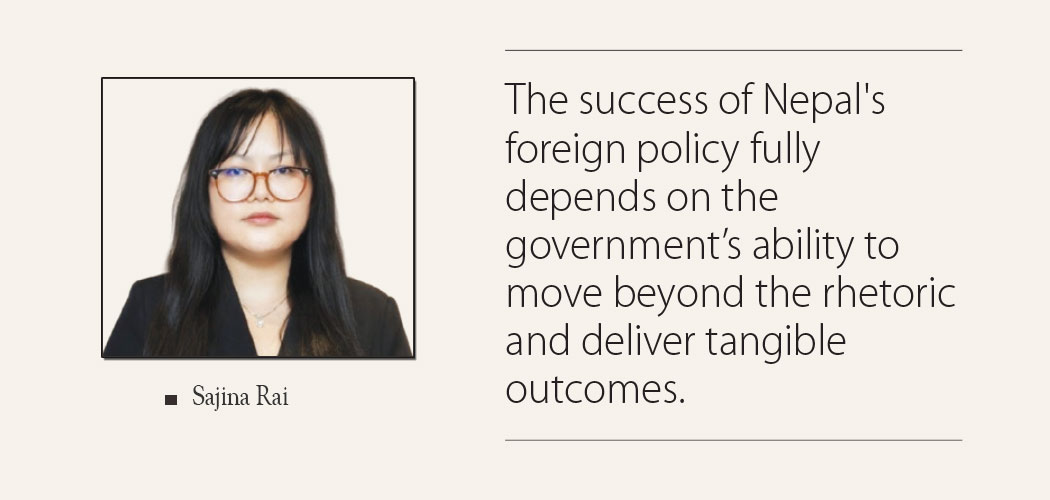
For Nepal, the domestic economic ambition and global competitiveness demand a clear and proactive economic diplomacy. The shift in political leadership offers a thrust for change; however, the real test lies in the execution. The government has proposed that Nepal position itself as a vibrant bridge and adopt the 'Nepal First, Nepali First' doctrine. Now, it's time for the government and foreign policy experts to determine how to manage the shift without ruffling feathers. Finally, the success of Nepal's foreign policy fully depends on the government’s ability to move beyond the rhetoric and deliver tangible outcomes.
(Rai is Programme Director and Research Fellow at the Asian Institute of Diplomacy and International Affairs (AIDIA).