- Sunday, 7 June 2026

Misinformation on declining fertility rate risks undermining family planning
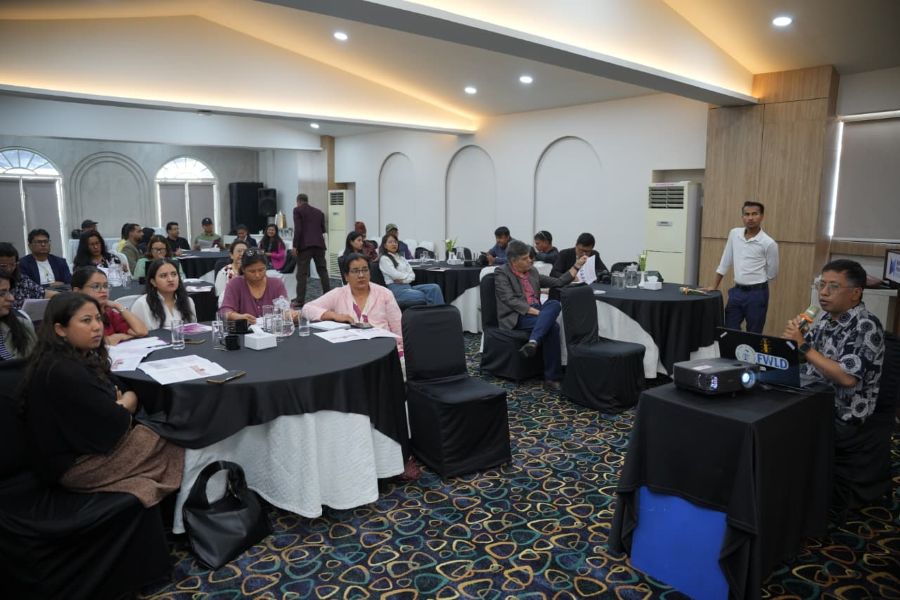

By TRN Online, Kathmandu, May 1: Misleading claims that Nepal's population is rapidly declining and facing near-term negative growth threaten to derail crucial family planning programmes.
At an interaction program on family planning organised by the Forum for Women, Law and Development (FWLD) and Amplify Change, experts clarified that the decline in fertility and population growth rates is not primarily due to increased use of contraceptives. Instead, large-scale migration and separation of couples have played a significant role.
It was shared that around 34 percent of married women in Nepal have husbands living abroad, contributing to lower birth rates. Delayed marriages, higher education, and economic factors leading couples to have children later or fewer children have also influenced the trend, according to an advocacy paper titled “Need for Family Planning: Even Greater Priority.”
Despite concerns, Nepal’s population has continued to grow. Over a decade, the population increased by 2.67 million from 26.49 million in 2011 to 29.16 million in 2021. The paper notes that it could take another 25 to 40 years for Nepal’s population growth to turn negative.
The programme also highlighted misinformation suggesting that family planning services should be discontinued in 33 districts where population growth rates are negative.
Experts clarified that negative population growth in these 33 districts is driven by multiple factors, with outmigration playing a far more significant role than attributing it solely to contraceptive use.
Lack of basic amenities such as to lack of basic infrastructure such as food security, drinking water, healthcare, roads, employment, and education have led to massive out-migration in the area.
Similarly, claims that Nepal now needs policies to boost population growth were also dismissed as misleading.
Nepal’s constitution and laws recognize reproductive health and family planning as fundamental rights, emphasizing that decisions about whether and when to have children are individual choices.
A network of 18 organizations warned that the narrative suggesting family planning is no longer necessary could harm public health efforts.
Family planning is not only about controlling population but also plays a crucial role in improving maternal and child health, empowering women, preventing HIV and sexually transmitted infections, managing infertility, reducing poverty, and supporting education and livelihoods.
Speaking at the event, Sharmila Dahal, chief of the Family Planning Section at the Ministry of Health and Population, noted a decline in international support.
Previously, UNFPA supplied contraceptives worth $32 million, but this assistance has decreased.
Government spending has increased from Rs 60 million annually to Rs 170 million this year, though Dahal said around Rs 250 million is now needed to meet demand.
Dr Mahesh Puri of Crehpa Foundation stressed that family planning should now focus on population management rather than control.
With Nepal’s population growth rate still at 0.92 percent, he said it may take about 75 years for the rate to decline significantly.
The current fertility rate stands at around two children per woman, indicating that management not reduction is the key priority.




-square-thumb.jpg)
-square-thumb.jpg)