- Thursday, 28 May 2026

Snowfall disrupts life in Mustang
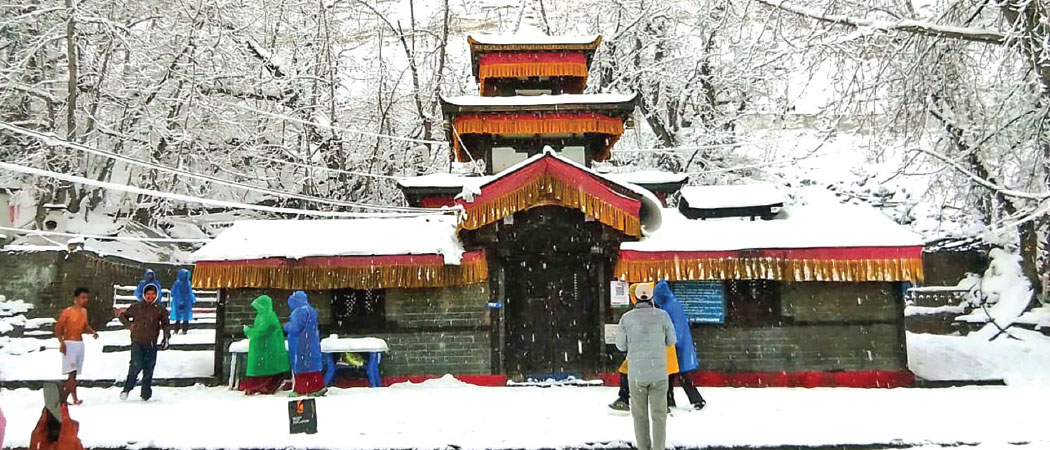
Photo: Harikrishna Sharma Snowfall at the Muktinath Temple area in Baragung Muktikshetra Rural Municipality-1.
By Harikrishna Sharma,Muktinath (Mustang), Mar. 22: Continuous heavy snowfall has made daily life difficult in Mustang. Snowfall accompanied by rain has disrupted communication and electricity supply in the Upper Mustang areas of Lo-Ghekar Damodarkunda and Lomanthang rural municipalities since Friday afternoon.
Heavy snow has also affected settlements such as Muktinath Temple, Ranipauwa and Khinga in Baragung Muktikshetra Rural Municipality-1. Pilgrims and tourists who arrived early in the morning to visit the temple have faced difficulties.
Following the sudden change in weather and snowfall, the Mustang District Administration Office has urged tourists and pilgrims travelling to Lower Mustang to remain cautious and ensure safe travel.
Pramesh Gurung, ward chairperson of Baragung Muktikshetra-1 and treasurer of the Muktinath Temple Management Committee, said that although the snowfall that began on Friday stopped on Saturday morning, thick snow has made travel risky. “Pilgrims have started heading towards the temple, but we have advised caution as vehicles may be prone to accidents on snowy roads,” he said.
According to temple manager Dinesh Bhusal, the Muktinath Temple and surrounding areas are covered in a thick blanket of snow. Deep snow has accumulated from the entrance gate to the water taps and bathing ponds around the temple.
Health workers have also reached the high-altitude centre in the temple area early in the morning, considering the risk of altitude sickness among stranded tourists.
Santosh Basyal, information officer at the District Police Office, Mustang, said that communication has been cut off at a police post in Lomanthang due to snowfall, making it difficult to collect details. However, updates are being gathered regularly from other areas.
The snowfall and rain have increased the cold. This is the sixth snowfall of the season in Mustang, which has also helped reduce the spread of various diseases.
According to the Agriculture and Livestock Development Office, Mustang, snowfall and rain during the months of February and March are beneficial for agriculture, helping to improve production across the district, especially in Upper Mustang, where farming is limited to one crop a year, and irrigation is scarce.
-original-thumb.jpg)

-original-thumb.jpg)