- Saturday, 6 June 2026

Voter education hype fails to reduce invalid votes

Kathmandu, Mar. 12: A significant number of invalid votes were recorded in the March 5 election to the House of Representatives (HoR). This raised questions about the effectiveness of the Election Commission's voter education programme.
The preliminary report shows that around 3.5 per cent invalid votes were recorded under the proportional representation (PR) electoral system, and above 5.0 per cent in the first-past-the-post (FPTP) system. Many districts reported a relatively high rate of invalid ballots.
Despite an intensive voter education campaign carried out ahead of the election, the outcome has been less effective than expected.
According to reports received from our district correspondents, the invalid vote rates exceeded 6.0 per cent in most districts, while in some districts, like Dhankuta, the invalid votes stood at 7.72 per cent.
Election officials informed many ballots were invalidated because voters stamped more than one election symbol, used thumbprints instead of the official swastika stamp, or placed the stamp unclearly within the designated box of the electoral symbol. One of the major problems occurred while folding the ballot paper, as the ink often smudged onto other symbols.
Officials also reported cases where ballots were placed in the wrong ballot box, stamped outside the designated area or submitted without any stamp.
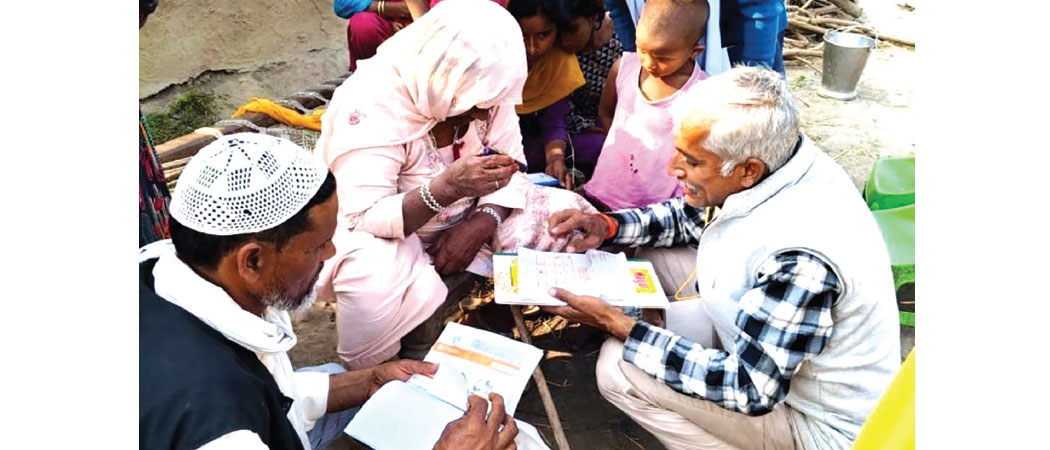
The EC had invested millions of rupees in voter education and deployed volunteers in all 6,743 wards of 753 local units for voter’s education programme. The Commission had claimed that the volunteers had reached the settlements and doorsteps of the general voters to inform them about the importance of the election and the voting process through sample ballot papers.
The Commission had also appointed the focal point at the local level as the monitor of the election voter education programme and the orientation programme has also been completed.
However, the number of invalid ballots suggests that the initiatives were not sufficiently effective in ensuring proper voting practices.
EC’s Information Officer, Suman Ghimire, said the final nationwide figure of invalid votes is yet to be received. However, the Commission’s preliminary report shows that around 3.5 per cent invalid votes were recorded under the proportional representation (PR) electoral system and above 5 per cent in the first-past-the-post (FPTP) system.
See Page 6
Ghimire argues that voter education efforts alone cannot guarantee success, as outcomes are deeply influenced by the political environment.
He said this time the election was held in special circumstance and the established political parties were engaged in the electoral process just few days before the filing of candidacy.
“There is a need for a systematic review to address declining voter turnout and the relative ineffectiveness of traditional outreach strategies despite significant resource investments.
In the federal parliament elections of 2022, as many as 5.06 per cent of the total number of votes cast were invalid.
According to our Hile correspondent, Kabiraj Ghimire, a higher number of votes were invalidated under the first-past-the-post (FPTP) system than under the proportional representation (PR) system in Dhankuta.
According to the District Election Office, Dhankuta, 7.72 per cent of the votes cast under the FPTP system were invalid, while 5.54 per cent were invalid under the PR system.
Out of a total of 118,425 registered voters, only 64,091 (54.1 per cent) votes were cast in the FPTP category. Among them, 4,883 votes were declared invalid, informed Madhav Prasad Adhikari, Chief of the District Election Office, Dhankuta.
Similarly, under the PR system, 64,886 votes were cast out of 120,064 registered voters, of which 3,594 votes were invalid, he said.
Data from the District Election Office shows that the rate of invalid votes in this election is the highest since the 2017 House of Representatives election.
According to Suraj Shrestha, Information Officer at the District Election Office, most invalid votes occurred because voters stamped more than one election symbol on a ballot paper, stamps were placed across two symbols, or thumbprints used instead of the official swastika stamp.
Some ballot papers were also found without the official signature of the polling officer, he added. Shrestha said that despite voter education programmes, such errors might have occurred because voters made mistakes while marking their ballots.
In accordance with the election schedule of the EC, voter education programmes were conducted in all wards of Dhankuta from February 15 to March 1, with volunteers deployed for the campaign. Chiefs of the Social Development Sections of all seven local levels in Dhankuta were assigned as monitoring officers for voter education.
Chief Election Officer Harishchandra Ingnam said that maximum efforts had been made in voter education.
Meanwhile, according to our Makwanpur correspondent, Anil Parajuli, more than 10,500 votes were declared invalid under the FPTP system in Makwanpur district in the House of Representatives election held on Mar. 5.
According to the Provincial Election Office, Hetauda, a total of 10,615 votes were invalid out of the votes cast in the district’s two constituencies.
Altogether, 186,959 votes were cast in both constituencies, representing 59.29 per cent voter turnout, of which 5.68 per cent were invalid, informed Provincial Election Officer Hari Prasad Dhakal. Under the PR system, 7,457 votes were invalid. Out of a total of 188,266 votes cast, this accounts for 3.96 per cent.
Data from the Provincial Election Office shows that nearly 6 per cent of votes were invalid under FPTP and around four per cent under PR in Makwanpur.







-original-thumb.jpg)