- Friday, 5 June 2026

Put Nature First To Save Climate

A farmer waiting for rain in Madhesh, a pastoralist woman searching for grazing land in the mountains, and a family living downstream of a melting glacier are all experiencing the same reality: the growing impact of climate change. Across Nepal, climate change is reshaping lives, livelihoods, and landscapes in real time. On World Environment Day 2026, this reality demands renewed urgency. Under the global theme “Inspired by Nature. For Climate. For Our Future,” the message is clear: nature is under threat, and yet it remains central to the solution.
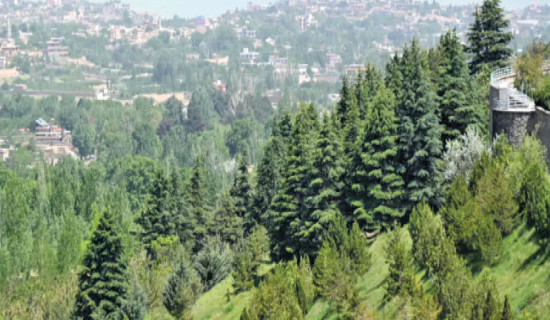
Healthy ecosystems, forests, rivers, soils, and wetlands absorb carbon, regulate water cycles, protect biodiversity, and sustain agriculture. They are the quiet infrastructure that supports food systems, economies, and human well-being. But when these systems degrade, the impacts are immediate and far-reaching. Few countries illustrate this reality more starkly than Nepal. Nestled in the fragile Himalayan ecosystem, the country is highly vulnerable to climate change despite contributing negligibly to global emissions. The signs are now unmistakable: erratic monsoons, prolonged droughts, floods, landslides, rising temperatures, forest fires, and rapidly melting glaciers.
Inequality
For millions of Nepalis, particularly smallholder farmers, indigenous peoples, women, youth, persons with disabilities, Dalit communities, pastoralists, and other marginalised groups, these changes directly threaten food security, livelihoods, and economic opportunities. Climate change often exacerbates existing inequalities, placing disproportionate burdens on those with the least access to resources, services, decision-making processes, and adaptive capacities. Ensuring that climate action addresses these disparities is therefore not only a matter of resilience but also of social justice. Yet within this challenge lies an opportunity. Nepal’s rich biodiversity, strong tradition of community forestry, and local stewardship offer a powerful foundation for climate resilience.
Equally, youth are emerging as architects of change, bringing innovation, energy, and accountability to environmental action and ensuring that policies reflect the aspirations of future generations. At the same time, the voices and rights of marginalized and vulnerable groups including Dalit communities and persons with disabilities must be central in environmental decision-making, as they face heightened risks and systemic exclusion despite possessing critical local knowledge and solutions. Building inclusive, gender-responsive, and youth-driven environmental policies is a matter of equity for achieving lasting climate resilience and ensuring that no one is left behind in the journey toward a healthier planet.
The link between environment and food systems is central. Agriculture depends on healthy soils, water availability, and stable climatic conditions. When ecosystems fail, food systems fail with them. This is why climate action in Nepal cannot be separated from efforts to transform agrifood systems. The Food and Agriculture Organisation of the United Nations (FAO), working alongside the Government of Nepal, is supporting this transition through its Country Programming Framework (2023–2027), which prioritises sustainable natural resource management, climate resilience, and disaster risk reduction. Across the country, these priorities are being translated into concrete action.
One notable example is the Forest and Farm Facility (FFF), which supports forest and farm producer organisations - community-based groups of smallholders, women, and indigenous peoples. By strengthening capacity, improving market access, and promoting sustainable resource management, it helps transform livelihoods while preserving ecosystems. These organisations are key to resilient landscapes. Their knowledge, collective action, and local leadership ensure climate solutions are effective and inclusive.
Similarly, the Building a Resilient Churia Region in Nepal (BRCRN) programme demonstrates how integrated, landscape-level approaches can address environmental degradation. In one of the country’s most fragile regions, the programme focuses on restoring ecosystems, managing water resources, and strengthening community resilience through sustainable land-use practices. The pathway toward a climate-resilient Nepal is being strengthened through strategic partnerships and innovative environmental investments. Programmes supported by the Global Environment Facility (GEF), including ongoing interventions under GEF-7 and GEF-8 initiatives, are advancing integrated approaches that connect ecosystem restoration, biodiversity conservation, sustainable land management, and climate resilience.
At the same time Nepal’s REDD+ journey highlights forests’ vital role in tackling climate change while delivering benefits for communities, livelihoods, and ecosystems. It reflects a growing recognition that healthy landscapes are productive, and that protecting natural capital underpins food security, resilience, and sustainable economic development. Ongoing efforts are also addressing rising forest fire risks - an increasingly visible sign of ecological stress. Strengthening early warning systems, improving community preparedness, and combining scientific tools with indigenous knowledge are shifting responses toward proactive risk management.
What emerges through these initiatives is a common lesson: solutions must be rooted in nature and driven by communities. Scaling these solutions requires sustained investment and political commitment, with climate finance reaching frontline farmers, forest groups, and municipalities. Investments in restoration, sustainable agriculture, and disaster risk reduction deliver strong returns, while Indigenous and local knowledge, combined with science and innovation, enables context-specific, effective, and sustainable solutions.
Climate policy
Nepal has a strong climate and environmental policy framework, but the challenge is turning commitments into action through stronger institutions, better coordination, and empowered local governments and communities. World Environment Day is often a moment of reflection. But in 2026, it must also be a moment of acceleration. The climate crisis leaves no room for incremental change. It can either continue to manage environmental pressures in isolation or embrace a more integrated path one that places nature at the centre of development.
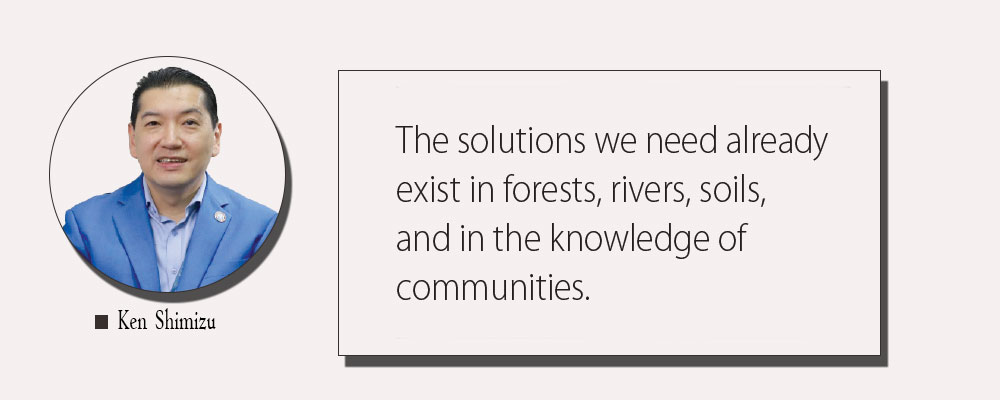
The stories of the farmer, pastoralist, and glacier-fed household show that climate change is personal, immediate, and shared. Yet Nepal has reasons for optimism - its commitment to community-led resource management, rich natural capital, and growing portfolio of innovative initiatives. If these strengths are harnessed and investments, policies, and partnerships align, Nepal can move from vulnerability to leadership, demonstrating that environmental protection and economic development are mutually reinforcing. On this World Environment Day 2026, the message is clear: the solutions we need already exist in forests, rivers, soils, and in the knowledge of communities. The task now is to act decisively, collectively, and with nature as our guide.
(The author is FAO Representative for Bhutan and Nepal.)