- Friday, 5 June 2026

AI cannot beat literature: Minister Timilsina
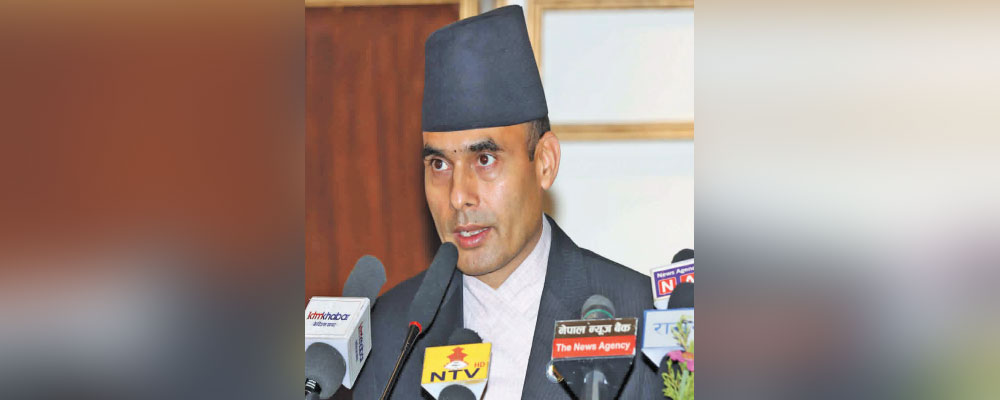

By A Staff Reporter, Kathmandu, June 5: Minister for Information and Communication Dr. Bikram Timilsina has said that, even in today’s world driven by artificial intelligence, technology and algorithms, literature continues to be the most powerful medium for understanding human civilisation, emotions and life itself.
Addressing the Himalayan Literature Festival and Writers’ Workshop 2026 in Kathmandu, Minister Timilsina said that literature plays a vital role in connecting people with self-reflection, empathy and human relationships.
“In a world shaped by algorithms, data and rapid change, why do people still write poetry? Why do they continue to tell stories? It is because literature is the most powerful means through which humanity understands itself,” he said.
Referring to this year’s theme of the festival as timely and relevant, Minister Timilsina said that although the world is undergoing rapid changes in politics, economics and technology, people are still searching for meaning, dignity, identity and new hope in life.
Discussing the role of writers, poets and translators, he said that literary creation is a collective endeavour to preserve humanity. Sharing his experience of hosting a radio programme focused on Nepali literature and music for nearly a decade, he said that literature and music have the power to build relationships beyond politics, geography and social divisions.
Reflecting on his own literary journey, Minister Timilsina recalled publishing a Nepali ghazal collection in 2006. According to him, poetry is a medium capable of expressing truths that statistics, policies and formal speeches often cannot convey.
Speaking about Nepal’s linguistic and cultural diversity, he said that every language spoken in the country carries its own worldview.
He further added that even before the advent of modern communication systems and social media, storytelling, folk songs and oral traditions had helped bind society together. Literature, he added, has continued to evolve and refine itself alongside the development of human civilisation.
Speaking about the Nepali literary tradition, he said that writers ranging from Bhanubhakta Acharya to Laxmi Prasad Devkota connected local realities with universal human concerns.
He added that today’s generation of writers, journalists, translators and creative artists is carrying this tradition forward by engaging with contemporary challenges.
Minister Timilsina emphasised that building a society requires not only infrastructure, institutions and a strong economy, but also imagination, language, culture and collective memory.
The minister also expressed the view that literary festivals and international gatherings of creative minds help ideas cross borders and expand opportunities for creative dialogue.
He voiced confidence that the presence of international writers in Kathmandu would help bring Nepal’s mountains, culture, languages and stories to a wider global audience.