- Friday, 5 June 2026

Experts stress on nature-based solutions on Environment Day


Kathmandu, June 5: World Environment Day (WED) is being marked on Friday amid growing warnings that the planet is nearing a 1.5 degrees Celsius temperature threshold.
According to World Meteorological Organisation, the temperature has already risen by about 1.2 degrees Celsius to 1.3 degrees Celsius compared to pre-industrial times above pre-industrial levels.
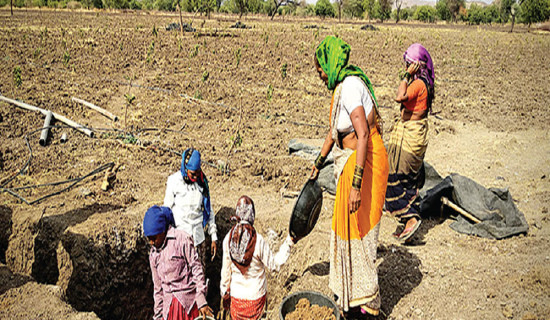
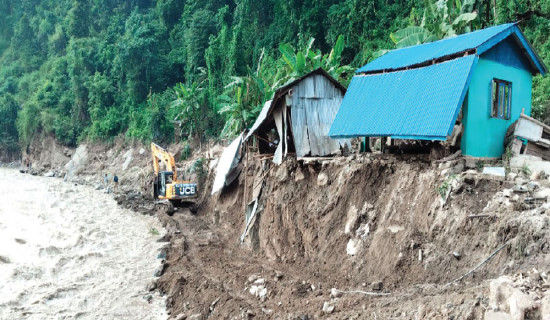
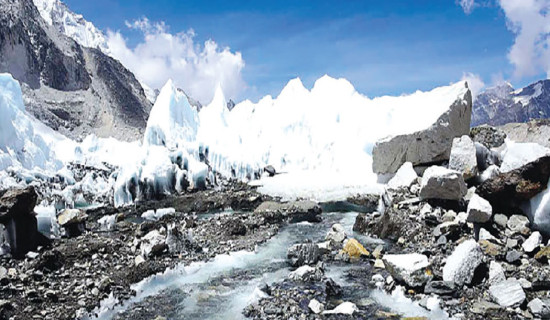
With Nepal already facing rising climate impacts such as rapid glacier melt, floods, landslides and droughts, experts said that nature-based solutions are the key to tackle the impact of climate change and protect the environment as a whole.
World Environment Day is being marked this year under the theme “Inspired by Nature. For Climate. For Our Future,” which not only focuses on the future impacts of climate change but also on learning from nature.
Manjeet Dhakal, Head of LDC Support Team and Director Climate Analytics South Asia, said that this year’s WED once again highlights the urgency of the climate crisis. As the world moves closer to a 1.5 degree Celsius overshoot, countries like Nepal face increasingly severe impacts from accelerated glacier melt to more frequent floods, landslides and droughts.
Climate action is not just an environmental issue; it is fundamental to our economy, security, livelihoods, and development aspirations, Dhakal said. "Urgent global action is needed to reduce emissions and support countries on frontline in building a resilient future."
Talking to The Rising Nepal, environmentalist Bhusan Tuladhar said that discussions on climate change should focus not only on future impacts but also on learning from nature. While it is clear that climate change will affect the future, he stressed the importance of looking back at traditional practices and drawing inspiration from nature to manage future challenges.
He said country’s traditional way of life has long been closely connected to nature. Communities have conserved natural resources while sustaining their livelihoods through practices such as soil conservation, community forestry and composting organic waste.
According to him, these nature-friendly approaches have helped maintain a balance between human activities and the environment and should continue to be integrated into modern lifestyles.
Tuladhar cited rainwater management as an example. He said rainwater should be allowed to recharge groundwater as much as possible rather than being quickly drained away. Groundwater recharge can help reduce flood risks while also increasing water availability during droughts. Given that climate change is expected to increase the likelihood of both floods and droughts, such measures can address both challenges simultaneously.
Hasana Shrestha, an environment inspector at the Department of Environment said that that the current government has given special priority to climate change and environmental issues across various sectors.
She said the country traditionally aligns its annual climate-related themes with global climate campaigns and adapts them to the national context. This year's theme has also been developed in line with that approach.
Speaking about ongoing efforts, Shrestha said the Ministry of Agriculture, Forests and Environment, particularly its climate change-related agencies, has been actively working on climate issues.
She highlighted that the country has recently begun the process of revising its climate change policy, which is scheduled to be reviewed every five years. A major programme has already been launched to support the revision process, with broad stakeholder participation aimed at identifying ways to strengthen climate action in the country.
She also pointed to country’s updated climate commitments under its Nationally Determined Contributions (NDCs), saying the government has submitted ambitious targets and plans to address climate change. According to her, efforts are underway to implement these commitments and strengthen measures to reduce greenhouse gas emissions.
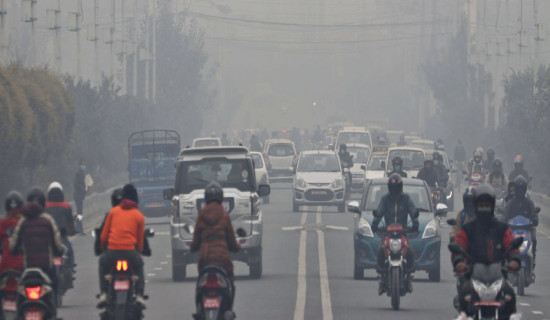
She further said the government is revising the Kathmandu Valley Air Pollution Action Plan. As part of the process, a consultation meeting was recently held with stakeholders to gather feedback and discuss improvements. During the discussions, several measures were proposed to align air pollution control efforts with country’s climate commitments and NDC targets.