- Friday, 22 May 2026

Exercise your sovereign right wisely to elect competent candidates
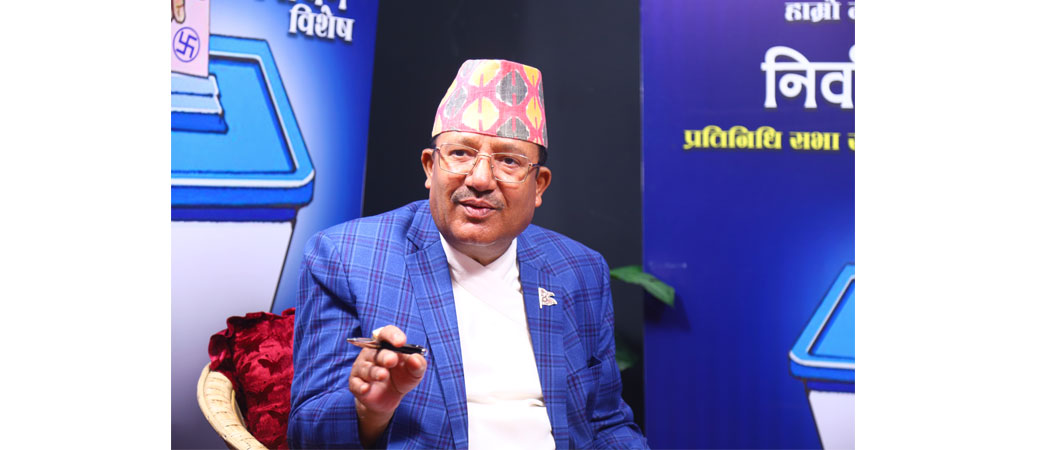
Photo: Manoj Ratna Shahi/Keshab Gurung

The election to the House of Representatives (HoR) is set for March 5, marking one of the most closely watched polls in the country’s history. To ensure free, fair, credible and fear-free electoral process, the Election Commission (EC) has stepped up its preparations.
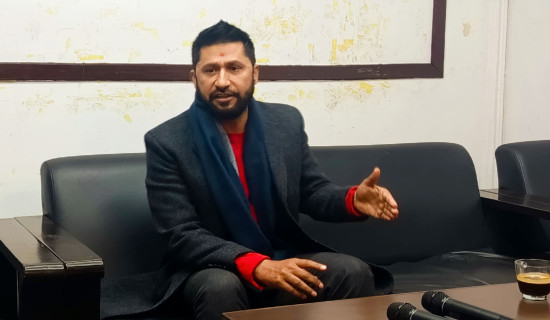
In this context, Arpana Adhikari of The Rising Nepal, along with the team of Gorkhapatra talked to Acting Chief Election Commissioner Ram Prasad Bhandari about the Commission’s final preparations, security arrangements, manpower deployment, voters’ education, measures to reduce invalid votes, voter identity cards, enforcement of the code of conduct and the upcoming silence period. Excerpts
With the election day approaching, would you briefly tells us about the overall status of the preparations?
The overall election preparations have been completed. All necessary election materials, including ballot papers, have been dispatched to the respective constituencies and District Election Offices. Returning officers have completed their training, received the required materials and have already departed for their designated polling stations and centres. Apart from the actual voting, vote counting and the announcement of results, all management-related work has been completed.
Compared to previous polls, the EC has said that this poll appears more organised and mature despite the timeframe being shorter. Could you elaborate on this?
The Election Commission conducts periodic elections, in every five years. Typically, preparations being two years in advance and carried out over the five-year cycle leading up to the polling day. However, this particular election followed the unprecedented developments of September 8 and 9, after which the President announced the election date on September 12. It was declared that the HoR election would take place on March 5, officially starting the electoral process.
Normally, the government announces the date of a general election based on the Commission’s recommendation. For by-elections, the Commission itself sets the date after consulting with the government. However, in this case, the election date was not fixed through the usual consultation with the government or stakeholders. The President announced it in line with constitutional provisions, taking into account certain aspects related to constitutional amendments.
As a result, the election was announced unexpectedly, with only six-month lead time, leaving the Commission without prior preparations. This created some challenges regarding timing and logistics. Despite this, the Election Commission developed a detailed election schedule, carefully planning which tasks needed to be completed by when, and carried out the necessary work in a systematic manner. It is through that planned and organised approach that we have arrived at the present stage.
How has the Commission managed manpower nationwide, from administrative staff to security personnel, to ensure the election runs smoothly?
When it comes to managing manpower across the country, the EC directly deploys civil servants from various regions to carry out the work. Experts from different fields are also brought in to assist. In addition, the staff needed at polling stations and polling centres in each district are organised through coordination between the District Election Officer and the Chief District Officer. The Commission provides the necessary guidelines, systems and procedures and the local officials then deploy the manpower accordingly to conduct the election. All of these arrangements have now been completed.
As there are two ballot papers this time, one for the first-past-the-post system and another for the proportional representation, how much time is a voter likely to need to cast their vote?
On average, a healthy voter requires around one and a half to two minutes to cast both ballot papers. Voters are provided with two separate ballots under two distinct electoral system. The first ballot is issued under the FPTP and displays red election symbols in white background. The second ballot paper for proportional representation is printed in black on a white background. Once the first ballot has been placed in the ballot box, the voter is immediately handed the second ballot and cast in the same manner.
While the exact time may vary from person to person, the overall procedure is very short. Voting at the polling stations is designed to be easy. Queues will be well-organised, and voters can move through without difficulty. People have already been informed about their polling centres, which lines to join and exactly how to cast their votes, so the process is hassle-free and the voting process is not time-consuming.
Previous election recorded a high rate of invalid votes. What measures has the Commission put in place this time to minimize that figure?
We expect higher voter turnout and a lower rate of invalid votes. Around one million new voters, particularly enthusiastic young citizens, have been added to the voter’s list. Extensive voter awareness campaigns have been conducted, reaching households and communities, with volunteers providing voters education in local languages. Additionally, the EC’s website offers voter education materials in multiple mother tongues.
Invalid votes largely occur when the voter stamp (swastika) is placed incorrectly. Proper guidance ensures that voters mark their chosen candidate correctly, significantly reducing invalid votes. For example, in the National Assembly election held on January 25, approximately four per cent of votes were invalid among eligible provincial and local-level voters. The key factor was voter unfamiliarity and rushing during stamping. This time, with broader voter education and awareness, authorities expect higher turnout and a reduced percentage of invalid votes, reflecting better-informed participation.
When you receive your ballot, first check where your candidate’s symbol is. Place your stamp exactly on that symbol, without going left, right, up, or down. Once stamped correctly, fold the ballot and submit it as instructed. Even if the stamp ink touches the blank area on the back, your vote will still be valid. The stamp will dry quickly, making the process simple and straightforward.
What documents or proof should a voter bring when going to the polling station?
A voter must bring their Voter ID card to the polling station. If it is lost or not yet issued, any official ID, such as a citizenship certificate, national ID, driving licence, land ownership document, or other government-issued ID, can be used. The polling officer will verify your identity by checking your photo and matching it with your physical appearance. Once confirmed, you are allowed to vote immediately. The Election Commission ensures that no eligible voter is left out and that everyone can participate smoothly in the process.
Our geographical terrain varies, some areas are very accessible, while others are extremely remote. How has the Commission managed to make voting easier for both remote and urban voters?
Even in the most remote areas, we have ensured that voters do not face unnecessary hardship or long travel to cast their votes. For communities of up to around a thousand people, we have set up a single polling station. This reduces waiting time and allows voters to easily access the symbol they wish to vote for. Any challenges such as difficult terrain or unexpected circumstances, are managed by our election personnel. They assess the needs of each location and ensure that voters can participate smoothly in the electoral process. Voters need not endure long or difficult journeys to reach a polling station. Assistance is provided where necessary. For example, in some areas of western Nepal, voters live at higher-altitude mountainous regions and have to descend to the lower areas during the winter months. Once they have descended, the polling stations we have designated are still located at higher-altitude locations, while the voters are now residing in the lower valleys. To facilitate the process, we relocated the polling station so that voters can cast their votes from where they are currently living. After polling, they can return to their villages.
In certain remote mountainous areas, there is no road or state access between the polling station and the voters’ location. In such cases, we will transport manpower via helicopter, manage the voting process there, and then bring the ballot boxes back by helicopter for counting. Therefore, there is no difficulty in the voting process, voters can cast their votes in a smooth and convenient manner.
What measures the Election Commission has put to make elections accessible for people with disabilities, senior citizens, and all genders?
We ensure that voters do not have to wait in long queues. Separate lines are arranged for women, pregnant or postnatal women, people with disabilities and senior citizens. They do not need to stand in the general queue. Depending on the area and the specific circumstances of each voter, we identify their needs and facilitate their participation in the voting process as quickly as possible. This is done according to our established policies and procedures, which have already been communicated to the relevant voters. So, there is no difficulties for them. The queues are separated, making it much easier for them to vote, and they receive special facilities to ensure a smooth and convenient experience.
With the Election Code of Conduct 2082 now in effect, there have been reports of violations, especially on social media. What measures is the EC taking to monitor and address these breaches?
As information is circulating widely through various media outlets, we have also seen an increase in allegations and counter-allegations, particularly on social media. From the outset, the Commission has repeatedly urged the public to verify whether information shared online is accurate or false before believing or sharing it. There is a significant amount of misinformation being disseminated, and people should not accept such content at face value. To address this, the Commission has been working in coordination with Techpana and fact-checking organisations to verify suspicious content promptly. Once information is identified as false, we immediately write to the relevant media platforms requesting its removal. Many such misleading posts have already been taken down, and the process is ongoing. We urge the public to distinguish truth from falsehood, trust only verified information, and discard misinformation. While the Commission removes false content from platforms, it is equally important for individuals to mentally disregard any false news they encounter.
How is the EC addressing instances where candidates or their workers are physically displaying election symbols or putting up flags and pamphlets in violation of the code of conduct?
We have been closely monitoring this situation. Looking back at past elections, during the final phase, no flags, banners, or physical election symbols were allowed inside polling stations and nothing extra was brought in. It is important to note that candidates must not take physical election symbols to voters’ homes. Voters should rely only on the candidate’s assigned symbol, not on any physical object. Carrying such items can be risky. The key message for voters and political parties is clear.
In sensitive electoral areas, ensuring physical security at polling stations is a major challenge. How has the state prepared to manage overall security for both voters and the entire election process?
Election security goes beyond simply guarding polling stations, particularly in constituencies identified as highly sensitive. It involves creating a comprehensive security environment so that voters can exercise their franchise freely, confidently and without intimidation. Just yesterday, I personally visited areas that had been categorised as high-risk during the 2022 local and provincial elections. I conducted on-site inspections and engaged directly with local stakeholders to understand the challenges they had faced. They informed that certain circumstances had previously prevented voters from casting their ballots freely. After identifying these concerns, we promptly made the necessary arrangements to address them.
Following these consultations, the Commission took formal decisions and implemented targeted security measures. As a result, areas previously regarded as high-risk should now be considered secure.
However, election dynamics can change rapidly. A location assessed as sensitive may remain calm, while an area considered normal could suddenly become vulnerable. For this reason, all security agencies across Nepal have been directed to maintain close coordination and heightened vigilance. The Commission has formally instructed them to ensure seamless cooperation at all levels.
Security arrangements have been structured in three to four layers. In addition to protecting polling centres, we have focused on securing access routes. Past experiences have shown that intimidation and obstruction sometimes occur on roads leading to polling stations. Therefore, security personnel have been deployed not only at polling sites but also at entry points and along critical approach routes.
Our priority is clear, voters must feel secure while travelling to polling stations, be able to cast their votes freely and return home safely afterwards. Above all, voters are the central and most respected stakeholders in the democratic process, more important than candidates or party workers. The vote is sovereign. Accordingly, all security agencies have been instructed to prioritise voter protection. Given these comprehensive preparations and coordinated efforts, we do not anticipate any major security concerns at present.
A documentary, recently released by BBC, has been widely discussed across digital platforms. How would you respond to that, and what would you like to clarify for voters and general public?
Attempts to interfere with elections in order to serve vested interests are not new. Such activities often emerge in the period leading up to polling. Various groups may adopt different tactics to create confusion or stir controversy. Nevertheless, it is the responsibility of the Election Commission, in coordination with the government, to manage and contain such actions and to ensure that the electoral process proceeds in a free, fair and orderly manner.
When the report was broadcast by the BBC, we responded promptly. It is reasonable to question both the factual basis of the content and the appropriateness of its timing. Broadcasting such material on the eve of an election inevitably raises concerns and in doing so, may undermine its own credibility. Political leaders, party workers, supporters and voters engaged in the electoral process are fully aware of the issue. If the intended audience itself chooses not to give it significance, there is little justification for prolonging the debate.
The silence period will begin at Monday midnight. It is often said that most manipulation or behind-the-scene manoeuvring takes place during this silence period, and that the electoral outcome can even change overnight. What arrangements has the Election Commission put in place to manage this period and prevent any such activities?
Rather than simply calling it a silence period, I prefer to describe it as “zero hour”. This zero hour will begin at midnight on the March 2. Political parties are permitted to campaign only until 7 pm before that date. From midnight onwards, once the silence period comes into effect, candidates must cease all campaign activities completely. This period is intended for voters to reflect independently. They should consider which voters the candidate reached, what issues were identified in the constituency, what commitments were made at the local level and whether the candidate has the capacity to fulfil those promises. Voters should also assess whether the candidate would be able to deliver through the future government, how they conducted themselves during campaigning, and whether they were respectful and responsible. It is for voters to review all these matters in their own minds and decide freely whom to vote.
To ensure proper monitoring, we have deployed observation officers, particularly in relatively remote or sensitive areas where such activities are more likely. Micro-observers have been stationed on the ground to closely monitor developments during this period. The Commission remains on standby to respond swiftly. Moreover, in a competitive electoral process, rival parties and their workers are themselves vigilant. If any candidate is found to breach the laws in a manner that affects the integrity of the election, appropriate legal action will be taken. Their nomination can also be cancelled in accordance with the law. Additionally, under the law, the individual may be barred from participating in any elections for the next
six years.
How long will it take for the direct and proportional representation results to be announced?
The voting process will conclude at 5:00 pm on March 5. After that, ballot boxes will be sealed and representatives of all parties present will verify the seals and sign the records. Once this is completed, ballot boxes are collected from polling stations and transported for counting.
As soon as the ballots arrive at the counting centres, counting begins. We can announce the results within 24 hours. First, the direct (first-past-the-post) votes are counted, followed by proportional representation votes. Additional staff have been deployed across multiple centres to ensure the process is fast and accurate. Voters naturally want to know the results of their chosen candidates as soon as possible. The Election Commission is committed to start counting immediately and announcing results quickly, without unnecessary delays. Voters will be able to receive updates of the vote counting results directly through their mobile phones.
How is manpower organised for counting across multiple locations?
Counting is conducted in layers. Observers and authorised personnel manage the ballot counting, while security personnel ensure order. The number of representatives from candidates and political parties is adjusted based on the location’s requirements. Additional staff are deployed in multiple centres to speed up the process.
How do you plan to manage post-election celebrations and rallies?
The election code of conduct prohibits celebrations such as feasts or parties. Any candidate who organises such events will face strict action and it could damage the reputation of their victory. Winners are also informed that even during the distribution of their victory certificates, no feasting or large gatherings should take place. We ensure that all celebrations remain controlled and orderly.
As the election enters its final stage, what message do you have for parties, candidates, cadres and the public?
So far, their role has been very positive, showing an election-friendly approach. I respectfully urge all political parties and candidates to remain disciplined during the remaining period and participate faithfully in the voting process to ensure a smooth and credible election.
Voters are the ultimate stakeholders. How do you see their role in ensuring this election is conducted seriously and credibly?
In Nepal, the greatest right to ensure good governance lies with the voters. Your sovereign vote selects representatives who will govern the country. Exercise this sacred duty responsibly: choose candidates with integrity, the ability to deliver good governance, and a clear understanding of local needs. Don’t deprive yourself from the voting process, as abstaining undermines the country’s governance. Voters are the most respected participants, and the Election Commission will thank you for participating fully and responsibly.
1662885410-original-thumb.jpg)