- Friday, 22 May 2026

Time To Break Mental Health Stigma
 Deepika Bista
Deepika Bista
Deepika Bista
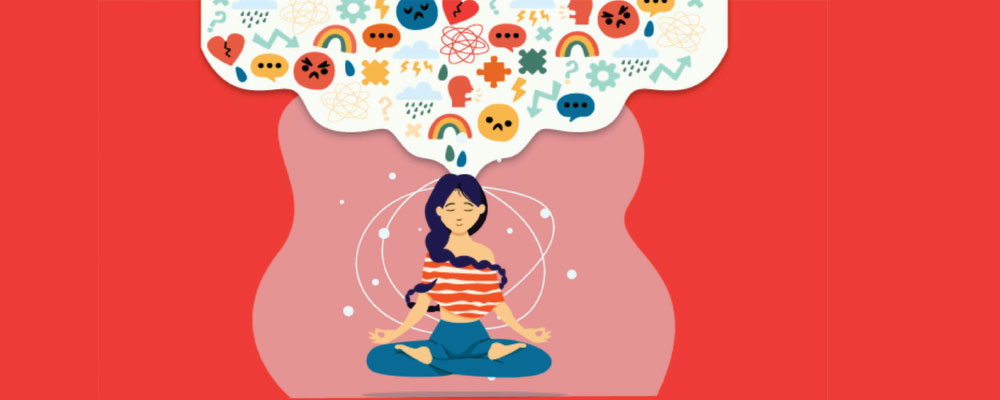
One of the most pressing yet unmentioned public health issues in Nepal is mental health. Physical disease is well understood and managed, but psychological suffering remains not spoken of, not diagnosed, and not addressed. This is a worrying situation that is brewing for millions of people in this country, especially for the young, the working class and other marginalised groups.
A nationwide mental health survey conducted in Nepal estimated that about one in ten adults and 5.2 per cent of adolescents have a mental disorder such as depression, anxiety or related mental disorders.
Notably, approximately 7.2 per cent of adults have had suicidal ideation, and 1.1 per cent have attempted suicide at least once in their lives. The data shows mental health is not a sideshow and is a national priority.
In the world, mental health issues are one of the major causes of disability, and in Nepal also, similar trends are observed. Studies conducted globally indicate that the prevalence of anxiety disorders can reach 16 per cent or more in Nepal, and a significant proportion of people suffer from depression, particularly in urban centres. While these symptoms are indeed medical, they are also linked to social and economic issues.
The mental health problems in Nepal can only be understood in the context of the other difficulties faced by the population. They are tied closely to structural and social factors like poverty, family members moving out, unemployment, lack of emotional support systems, and academic pressure.
Although mental health issues are becoming more widely recognised, only about a third of people who have them seek professional help. The others do not receive treatment because they are afraid of stigma, they are not aware of mental health care, they are unable to afford it or it is not available to them. The situation is even worse in rural areas where there are few or no psychiatric services available.
The mental health support system is concentrated in cities such as Kathmandu, with significant parts of the population lacking access to such support. There is a shortage of trained psychologists and psychiatrists, and even in urban areas, mental health professionals are inadequate in comparison to the need.
The youth is among the most vulnerable groups in Nepal. Adolescence and early adulthood are important periods of emotional growth but can be characterized by the presence of strong future doubts, social demands, and academic stressors.
It is estimated that 15-20 per cent of adolescents in Nepal suffer from some kind of mental health disorder, such as anxiety, depression and behavioural disorders. High-performance-driven academic systems may exacerbate stress instead of promote well-being. Students who are studying for national exams are often found to be experiencing burnout, sleep deprivation and anxiety without it being addressed, as it is considered a normal occurrence. Without counselling services, early intervention is restricted even more in rural areas.
There's now a layer of psychological pressure added by social media. Low self-esteem and emotional distress among youth are the result of constant comparison with curated lives and establishing unrealistic standards.
Stigma and systemic gaps
Stigma is one of the longstanding challenges and is a major obstacle in the mental health agenda in Nepal. Mental illness remains a threat that is vastly misunderstood and frequently linked to weakness, instability or shame. Words in common use in everyday language further reinforce negative perceptions.
This stigma results in silence. A lot of people with depression or anxiety shy away from getting treatment because they are afraid they'll be judged by society and their families. Emotion is still often not seen as a medical problem but rather a private problem that is suppressed silently within the family.
Consequently, mental health issues are not treated until they are quite serious and sometimes are so serious that they result in a crisis, like self-harm or suicide. Stigma persists as a barrier to early intervention, which has been shown to have significant long-term consequences.
Nepal has included mental health in the national health policies, but implementation is weak. There is far less funding for mental health services than for physical health, and integration in primary health care remains limited in many areas.
Global health assessments indicate that untreated mental health issues also incur significant economic costs associated with reduced productivity, absenteeism and long-term disability. But funding for mental health services is still not adequate to address the need. A lack of mental health care professionals is another major challenge. One professional can find himself caring for thousands of individuals in many districts, which makes good care almost impossible. This imbalance results in long wait times, poor follow-up care, and a lower quality of care.
Real-life observations
In real life, it is easy to see signs of mental health issues and difficult to recognise them. Students are taken off their friends; people with sudden behaviour changes or people who are constantly tired are usually misunderstood, not supported. At school, emotional distress can be misinterpreted as laziness or poor discipline. In the workplace, too, stress and burnout are often regarded as a normal phenomenon in the working world and not a health issue.
This normalisation of suffering has the potential to instil a culture of silence over emotional pain over time.
Mental health is intricately connected with general health, productivity and social security. It has an impact on an individual's learning, working, and societal interactions. It's not a problem that is eradicated by ignoring it; it's one that's made worse over time.
Untreated mental health issues can lead to social and economic impacts such as poor work productivity, dysfunctional family relationships and healthcare expenses.
This is a necessary shift in approach. This is a shift in approach that is necessary. The mental health situation in Nepal is complex, and a multi-layered approach is needed to tackle it. First of all, the education of mental health should be introduced in school to establish awareness in the early stage. Second, there is a need for better integration of psychological services at local levels. Third, stigma and misinformation need to be actively addressed with public awareness campaigns.
It is also essential to provide supportive spaces where people feel free to talk about their emotions without judgement. Mental health care should be as normal as physical health care. Early intervention and prevention can be important at the community level through counselling services, school mental healthcare programmes, and increased training for healthcare workers.
Mental health in Nepal is an issue that is out of the closet, but it is not in the light. There is abundant evidence of increased levels of anxiety, depression and psychological stress, especially among young people. But the biggest obstacle is not just awareness, it's the cultural silence and stigma.
To achieve real progress, emotional and psychological health should be added to the national list of indicators, alongside infrastructure and economic indicators. Mental health is not a personal problem: it's a societal responsibility. If society won't listen without judgement and responding with empathy, there will be many more people living in silence. Then, of course, the most crucial question: how long can a country go without listening to its own people?
(The author is pursuing higher education at St Xavier’s College, Maitighar.)