- Wednesday, 13 May 2026

Nepal is going to be a hub for global cinema: Bham
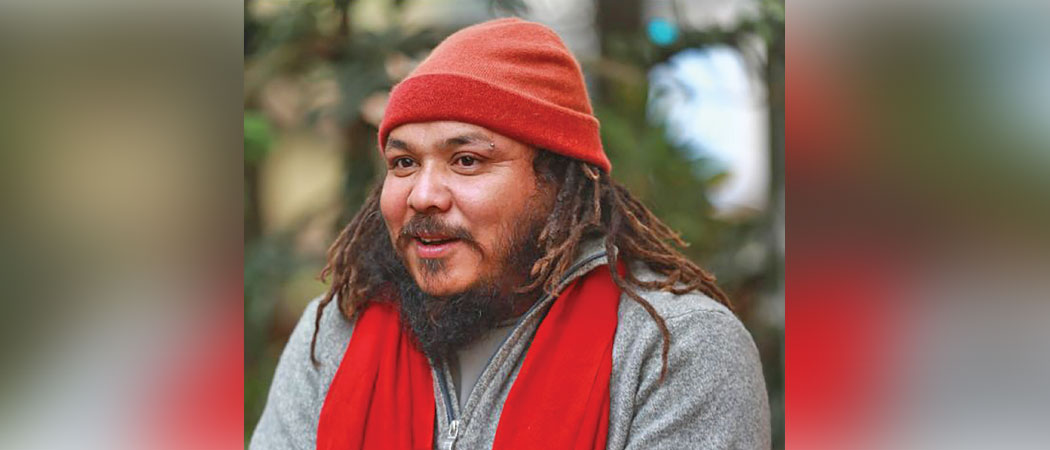

Renowned Nepali filmmaker Min Bahadur Bham has been selected as a jury member for the Berlin International Film Festival 2026, along with six other colleagues chosen from among thousands of filmmakers worldwide. With this achievement, Director Bham has become the first Nepali filmmaker to serve as a jury member at this world-renowned festival.
Bham will share the jury stage with Bay Duna from South Korea, Shivendra Singh Dungarpur from India, Ewa Puszczynska from Poland, and the internationally acclaimed Wim Wenders. German filmmaker Wenders will serve as the Chairman of the 2026 International Jury panel.
The film Sambhala, directed by Bham, competed in the main category at the Berlinale Festival in 2025. Raman Paudel from The Rising Nepal interviewed Bham, focusing on his experiences and the future possibilities for Nepali cinema.
You produced the film Bansuli as your first project. How do you recall your entire journey from Bansuli to becoming a Berlinale Jury member? Is this your topmost achievement, or is there more to achieve ?
Honestly, I never thought of it as the biggest moment in my filmmaking career. I take it simply as a step. As you mentioned, I started my journey in 2012 with Bansuli, and now it has been more than a decade as an artist and a filmmaker. It is a long journey, and in fact, the journey never ends as long as I continue to create films.
I am not in the mood or position to say that this is the peak of my career. I still have a long way to go.
Even if I someday go to other festivals as a jury member, or present my own films, or even attend the Oscars, I truly believe that these are just milestones in a long journey as a filmmaker. I never get overly excited because of such success. I believe in hard work and karma. I am always more aware of my internal growth during this long journey.
I would not be disappointed if I could not go to Berlin, and I would not be overly excited if I went to the Oscars. These are just part of the game. I see them as simple incidents—like a bus stop during a long journey on a highway.
A huge number of audience members and filmmakers, including those in the global film industry, expect more from you. How do you feel about the challenges ?
There are always two kinds of challenges that I foresee. The first is external—like the expectations of the industry, the audience, film critics, and fellow filmmakers. That is very normal. I always respect those opinions.
But I am even more aware of the internal challenges and motivations. That is more interesting to me than external expectations. Of course, I respect whatever people expect from me in the future.
However, what truly matters to me is not only my growth as a filmmaker but also as a human being. I am more concerned about my internal growth—my spiritual growth. That is the real challenge for me.
What additional factor contributed to you becoming a jury member ?
Officially, they never explained why they chose the other jury members. It is probably based on their own protocol, structure, and ideology regarding whom to invite.
If you look at the previous examples of the Berlinale, they have mostly invited actors as jury presidents, and often women. This time as well, among the seven jury members, the majority were women.
The Berlinale always focuses on inclusion and minority communities. They try to represent different regions—Africa, Asia, transgender filmmakers, and other marginalised communities.
My previous film was screened in Berlin, which likely made a strong impression. They also aim to maintain continuous relationships with filmmakers and film industries globally. That is one of the strengths of the festival.
A few days ago, I read an interview with the Berlin festival director. She mentioned that from 2012 to 2026, seven Nepali films have been screened at the Berlinale. The first was Highway by Deepak Rauniyar. Two years ago, it was Sambhala. And now, they invited me as a jury member.
This shows that they truly want to be part of the growth of the Nepali film industry. They do not want to lose this momentum or break this relationship. I am optimistic that they are paying more attention to Nepali cinema.
In the coming years, they may give more space to Nepali filmmakers or invite more filmmakers to serve as jurors in different sections. This is a very important relationship that filmmakers, the industry, and even our government and Film Development Board should understand.
I also want to add that Nepali audiences have very high visual literacy compared to many other countries. Young readers in Nepal are reading Paulo Coelho, Haruki Murakami, Khalil Gibran, and other global writers. They listen to Lady Gaga and Pink Floyd. There is still an audience for jazz, modern pop, and global hip-hop.
We are very international in our tastes. The visual literacy of Nepali audiences is dynamic, and this is a positive sign for our future.
Looking at the larger pattern of world cinema, the wave has shifted from Japan during the time of Akira Kurosawa, to India during Satyajit Ray, then to Iran during Abbas Kiarostami and Jafar Panahi, and recently to South Korea.
Now, I believe the wave is moving toward Vietnam, largely due to supportive government policies, economic growth, and young filmmakers who dare to express their vulnerability.
In that context, I believe Nepal is in a strong position within South Asia. I am optimistic and proud to say that after Vietnam, the next wave of world cinema could turn toward Nepal. Within a decade, Nepal could become a major hub in global cinema—if we are strategically aware and prepared to hold that position.
Some writers and activists criticised your film Kalopothi, saying it was dominated by a Western perspective and overlooked the Maoist Revolution. How do you respond ?
I accept all kinds of criticism. I truly value criticism and take it as a compliment. However, to be honest, neither positive nor negative comments deeply affect me as an artist.
Being a filmmaker means being human first. I have my own limitations. Naturally, my perspective, strength, and opinions will reflect in my films. That includes political beliefs, spiritual beliefs, and how I see life and nature.
That is the beauty of being an artist. I create art not for the sake of making everyone happy, but to express my own truth.
You mentioned that you are not affected by external reactions. Is this because of your achievements or your belief in Buddhism ?
Neither. It is not because of Buddhism, nor due to my film making or participation in major festivals.
The beauty of being an artist is that the more success you achieve, the more grounded you become. That is the power of art.
Of course, I respect my audience and value criticism. I respect journalists and critics. But the reason I say that praise or criticism does not affect me is because I want to remain internally light. I want to express my suffocations. I want to explore my vulnerability with courage.
Nabin Subba once said that we need to explore our own craft—from Thangka or the Mahabharata. Do you feel that challenge ?
Yes, I am very close to Nabin Subba. We often discuss our history, tradition, culture, and artistic values.
I deeply value these sources. They can be a great inspiration for young filmmakers. I always look toward spiritual, religious, and cultural elements when building narratives.
For example, in Bansuli, the idea was inspired by Hindu mythology—where Lord Krishna never allowed the gopis to play the flute. These are elements we need to rediscover and reinterpret. That is very important for an artist.
You seem like a Buddhist monk, yet you are involved in politics and are also a powerful filmmaker. How do you manage all these roles ?
First, let me clarify why I am involved in politics. It is not new for me. I have been involved since my student union days. I am not here to become Prime Minister or Home Minister. I do not carry such ambitions.
I want to reform the art industry—cinema, theater, music, literature. I want to improve policies and create a better position for art and culture.
Regarding spirituality, there is a saying that sometimes the most extreme or passionate individuals can achieve spiritual growth quickly because of that intensity. Contrast is powerful.
The contrast between politics, cinema, and spirituality is something I enjoy. These three elements are interconnected. We just need to find the connecting points.
For me, managing these roles is about understanding that they are not separate worlds—they are different expressions of the same inner search.