- Sunday, 3 May 2026

Sharat Singh's unending tryst with elections from early 1980s

BY AJAY SAH
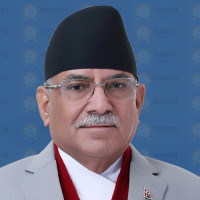
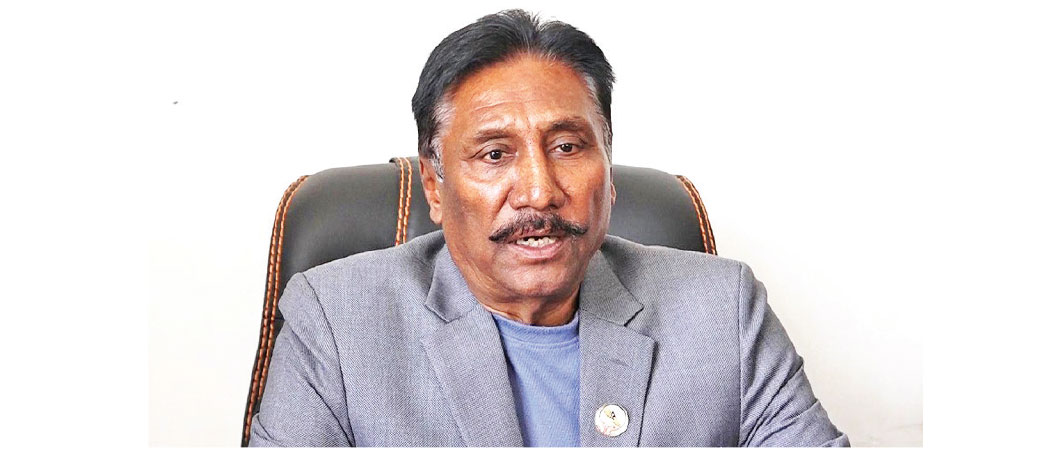
Gaushala (Mahottari), Feb. 12: Nepal’s political history has been shaped by constant change, movements and experimentation. Amid this shifting landscape, only a few figures have consistently subjected themselves to the people’s verdict regardless of the governing system. One such figure is Sharat Singh Bhandari, whose electoral journey spans more than four decades.
Bhandari has remained active in electoral politics since 1981, a rare continuity in Nepali politics. From the Panchayat system to multiparty democracy, the Constituent Assembly and the current federal democratic republic, his political engagement has remained uninterrupted. He began his career by winning the National Panchayat election from Mahottari in 1981, marking his entry into national politics. Since then, he has contested every major election.
He was re-elected in the second National Panchayat election in 1986 and continued his political journey even after the restoration of multiparty democracy. In the 1991 House of Representatives election, he contested from the Rastriya Prajatantra Party but was defeated. However, defeat did not deter him. He returned stronger in the 1994 mid-term election, winning as an independent candidate, and later secured another victory in 1999 as a Nepali Congress candidate.
Bhandari later shifted toward Madhes-based politics and contested the first Constituent Assembly election in 2007, though unsuccessfully. Despite suffering defeats in two constituencies in 2013, his political journey did not end. He went on to win the House of Representatives elections in 2017 and 2022 from Mahottari-2, representing the Rastriya Janata Party and later the Loktantrik Samajwadi Party. Currently, he is contesting once again from Mahottari-2 under the Janata Samajwadi Party (JSP) Nepal, marking his tenth electoral contest.
Alongside his electoral career, Bhandari also has notable ministerial record. From the Panchayat era to the present, he has served as a minister nearly 20 times. His portfolio has included key ministries such as Health, Defence, Tourism, Labour, Energy, and Youth and Sports. He has served in governments led by leaders ranging from Marich Man Singh Shrestha to Sher Bahadur Deuba, Krishna Prasad Bhattarai, Surya Bahadur Thapa, Madhav Kumar Nepal, Dr. Baburam Bhattarai, KP Sharma Oli and Pushpa Kamal Dahal.
Despite frequent party changes and ideological shifts, Bhandari’s commitment to electoral democracy has remained firm. His continuous participation in elections from the Panchayat era to the federal republic reflects his political determination, experience and confidence.
In the House of Representatives election scheduled for March 5, Bhandari is contesting from Mahottari Constituency No. 2, though the race is expected to be highly competitive. The constituency has 37 candidates, 15 from political parties and 22 independents, including candidates from the Nepali Congress, CPN-UML and the Rastriya Swatantra Party.
Bhandari said he considered all contestants equally competitive, stating that voters will decide based on performance and commitment to public service. He expressed confidence that if he has served the people well, they will give him another opportunity.
Mahottari-2 comprises several wards of Bhangaha, Balwa, Loharpatti, Aurahi municipalities, and Mahottari, Pipra and Ekaradara rural municipalities. The constituency has 107,594 registered voters, with 133 polling centres across 62 polling stations, according to election officials. Security arrangements have been strengthened to ensure a free and fear-free election.
Locals stated flooding, river erosion, inundation during the monsoon, and drinking water shortages during the dry season as major concerns. They said they will support candidates who commit to permanent flood control measures, irrigation facilities, and improved access to safe drinking water and agricultural inputs.
-original-thumb.jpg)