- Sunday, 3 May 2026

Martyrs' families in Chhintang left in utter misery

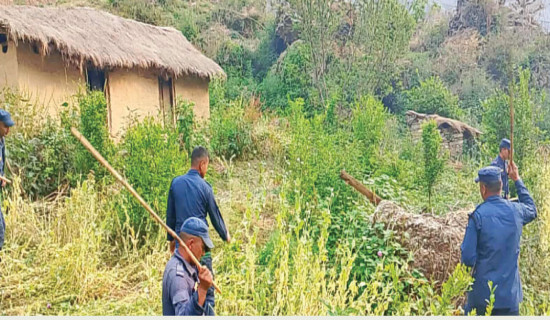
BY KABIRAJ GHIMIRE,Hile, Feb. 2: Bhailal Rai, the eldest son of martyr Randhwaj Puma Rai of the Chhintang massacre, lives in Lower Dandagaún of Panchakanya, Sahidbhumi Rural Municipality-3. His father was killed in 1979, after which his mother, Shashikala Rai, raised the family in hardship.
Once Bhailal became old enough to work, he supported himself by doing daily wage labour and farming. Due to extreme poverty, he was unable to provide proper education to his children. His two sons also work as labourers to make ends meet.
Although there is a water tap near his house, water rarely flows from it. As a result, the family must walk about half an hour every day to fetch drinking water from a well.
As elections approach, candidates, political parties, and leaders visit his home, seeking votes. They promise employment, free healthcare and education, drinking water, and integrated settlements for martyr families. However, none of these promises has ever been fulfilled.
“In every election, leaders come asking for votes with hopes of jobs, free healthcare, education, drinking water, and integrated settlements for martyr families, but once elected, they forget all their promises,” Bhailal said.
Between November 8 and 15, 1979, 16 locals of Khoku, Chhintang, and Aankhisalla were killed. Among them, six martyrs, including Randhwaj Puma Rai, Chandra Bahadur Nepali, Ganga Bahadur Tuprihang, Lakhman Sadhu, Tanka Bahadur Bishwakarma, and Gambhir Man Darji, were from this village. Their families still live here today. Although the sacrifices of these martyrs led to political change in the country and many elections have since been held, the condition of the martyr families remains unchanged. Healthcare, education, employment, and drinking water continue to be their persistent problems.
A dusty road has barely reached the village, but with many unresolved issues, the expressions on the faces of martyr families reflect uncertainty about which future election will finally bring relief.
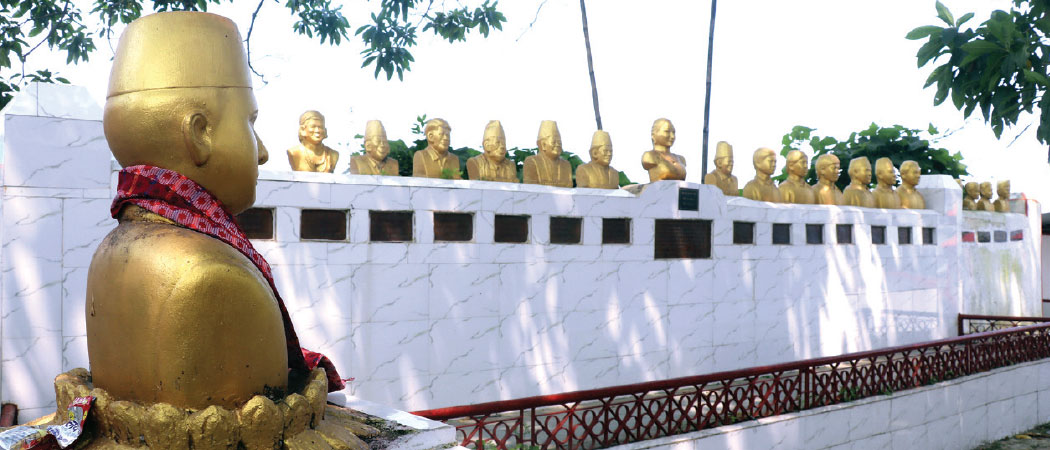
Nearly four decades after the Chhintang massacre, the then government declared those killed as national martyrs in 2018. However, despite this recognition, martyr families said they were still living as second-class citizens. According to Sombir Damai, son of martyr Dhanbir Damai, the families have yet to receive even martyr identity cards. “Apart from building a park in the name of martyrs, nothing meaningful has been done,” he said.
“Where are the promises of one water tap per martyr family, one job per family, integrated settlements, free healthcare, education, and scholarships?”
So far, martyr families have received Rs. 625,000 in financial assistance. However, they said that more than cash support, they needed sustainable solutions such as employment opportunities, free healthcare and education, reliable drinking water, and martyr identity cards.
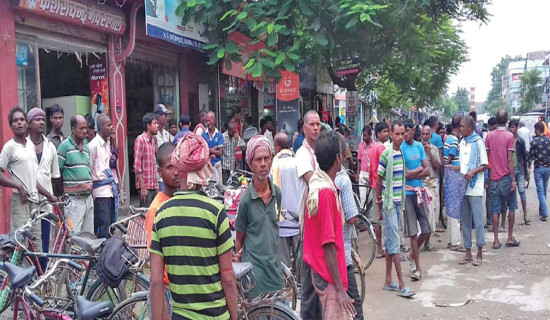
Locals said that aside from naming the municipality Sahidbhumi and building a memorial park, little has been done for martyr families. Chairperson of the Martyrs’ Foundation, Rup Lal Rai, said that the government should designate the martyrs’ village as a special area. Instead of being recognised as a place of honour, he says, the village has become a destination for distributing election-time assurances. “Every election, leaders come here only to make promises,” Rai says.
He added that not only martyr families but also many residents of the municipali ty remained deprived of healthcare, education, drinking water, and infrastructure. Despite repeated demands for basic needs such as food security, shelter, clothing, healthcare, education, and employment, little has changed.
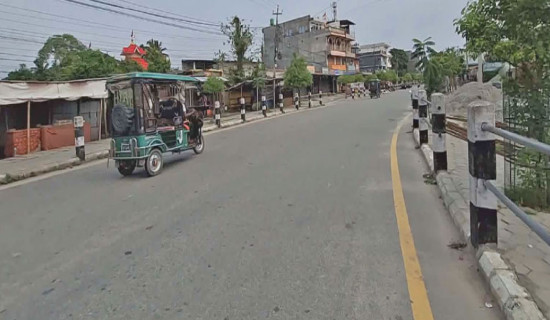
Although work to blacktop the main road connecting Sahidbhumi to Hile began nearly three decades after the road track was opened, only half has been completed. The rest remains unpaved, and most roads are unusable during the five-month monsoon. Many residents are forced to migrate abroad for work, while the spread of cannabis cultivation and trade has pushed many youths into jail. Even today, many villagers must walk hours to wells and streams for water, while access to healthcare and education remains extremely limited.
In this context, locals demanded that martyr families in Sahidbhumi not be reduced to mere election slogans, and that the next government formed after the upcoming election turn the area into a model municipality.
-original-thumb.jpg)