- Sunday, 3 May 2026

Homage To Martyrs

The dawn will not break unless the stars have fallen. A nation is not built unless a few brave sons lay down their lives.
These famous lines from poet Bhupi Serchan's poem In Memory of Martyrs highlight the importance of martyrs in ushering in political changes in the country. The powerful poem serves as a true eulogy to martyrs. In tune with these lines, the country marked Martyrs' Day the other day, paying tributes to scores of known and unknown martyrs. President Ramchandra Paudel, Vice President Ramsahay Prasad Yadav, Prime Minister Sushila Karki, party presidents, chief ministers, and ministers all paid tributes to the martyrs through statements or attending functions organised on the occasion.
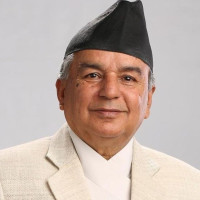
In his message, President Paudel said that working towards lasting peace, good governance, development and prosperity through the federal democratic republican system would be the true tribute to the martyrs. Likewise, Vice President Yadav said that the martyrs' ideals could be honoured by strengthening unity, civic awareness, and democratic values to build a prosperous Nepal. Prime Minister Sushila Karki, meanwhile, said that no mother would have to lose her child again, hinting that there should be no situation that produces further martyrs.
The country officially marks Magh 16 (January 30) as Martyrs' Day every year to commemorate the execution of four great martyrs—Shukraraj Shastri, Dharma Bhakta, Gangalal Shrestha, and Dashrath Chand in late January 1941. It is marked for a week, paying tribute to each of the martyrs on the date of their execution. Shukraraj was executed on January 23, Dharmabhakta on January 25 and Shrestha and Chand on January 28, 1941. Members of Prajaparishad, the first political party of Nepal, the four were arrested and executed for attempting to overthrow the Rana rule.
However, the Rana rule could not survive even a decade. Inspired by these martyrs, the Nepali people could usher in the dawn of democracy in Nepal by overthrowing the Ranas in 1951. Indeed, these four martyrs laid the solid foundation for the epoch-making revolution of 1951, when Nepal embraced not only democracy but also took its first step on the journey of modernity. Nevertheless, several others were martyred in the course of bringing about the political changes of 1951.
Even after 1951, Nepali people had to launch struggles to restore the democratic achievements of 1951, resulting in the sacrifices of more people. Several leaders, associated with the Nepali Congress and the then Communist Party, were executed in the struggles against the Panchayat system, which ended in April 1989. Even after the political change of 1990, Nepali youths continued to be martyred, with 45 only during the Gen-Z movement of September last year. The government, over the years, has added more names to the list of martyrs.
Martyrs are those who sacrificed their lives for the people and the nation. They do not belong to any particular political party or group. However, in Nepal, some martyrs are treated as if they belonged to specific parties—the Nepali Congress, CPN-UML, and the Maoists, with the four great martyrs being the only exceptions. We must shun these practices, show equal respect to all of them and work sincerely to realise their dreams. Only then can we truly pay tribute to those who attained martyrdom for the nation.
-square-thumb.jpg)
-original-thumb.jpg)